German courses, camps & schools abroad

German connects you to opportunity at every stage of life.  German also plays an important role in engineering, science, technology, and global trade.

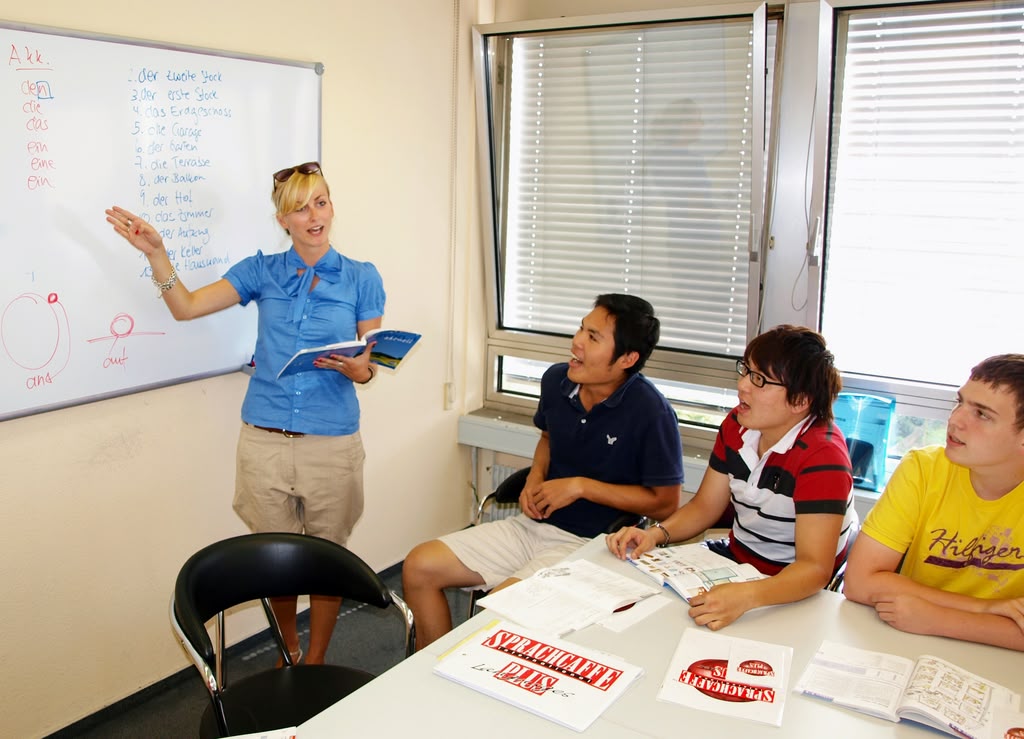
German courses abroad combine structured classroom lessons with daily communication in authentic situations. You practise in cafés, shops, museums, and public spaces, turning theory into real confidence. Language becomes part of your routine, not just a subject in a textbook.

For teenagers, this experience builds independence, intercultural awareness, and lasting friendships. For adults, it supports professional growth, academic pathways, and recognised certification. For parents, it offers safety, supervision, and clear academic standards. At SPRACHCAFFE, German courses abroad become structured learning journeys guided by experience, personal support, and genuine care.


True Daily Immersion

Practice German naturally beyond the classroom.

Cultural & Travel

Thanks to our international nationality mix, you practise German naturally every day while connecting with students

Career & Salary

Strong German skills enhance career opportunities and increase your potential for professional advancement.

Certificates

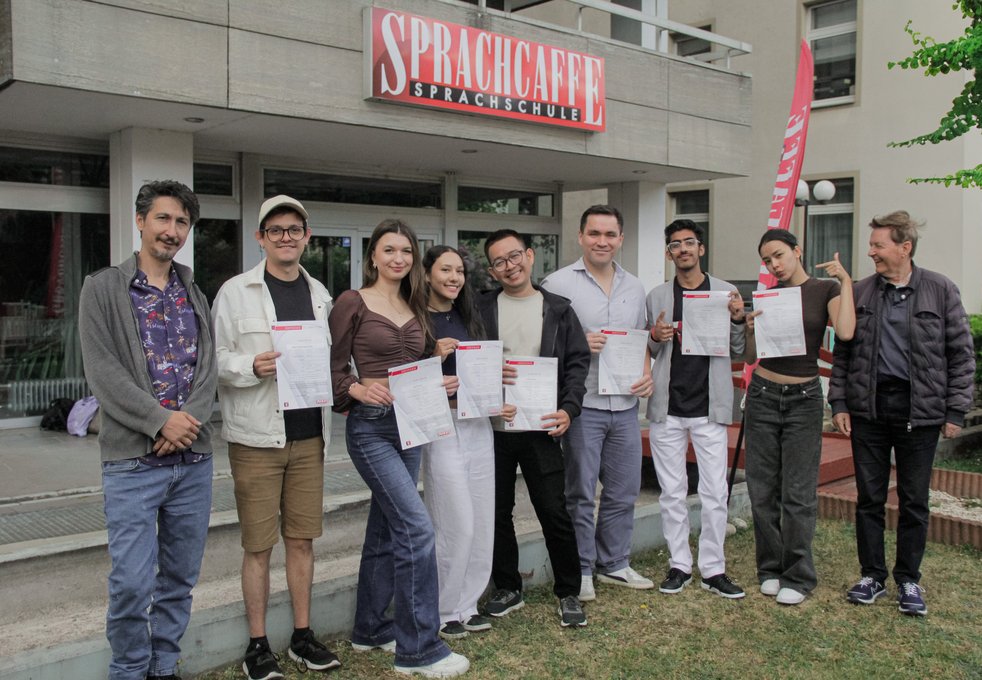
Preparation for Goethe-Zertifikat and Telc exams.

Learn German Abroad at Every Stage of Life

When you learn German abroad, the language becomes part of daily life. Teenagers practise during activities, excursions, and shared meals. Adults use German in shops, museums, and professional contexts. This constant exposure leads to a substantial improvement in listening and speaking skills. German courses abroad offer different formats to match age and goals. Teenagers often attend supervised German language camps abroad. These camps include academic lessons and organized activities. These summer camp programs balance safety with independence.

  • Young getting ready to study in Germany can choose from intensive courses aimed at exam prep. CEFR-based classes get you ready for Goethe-Zertifikat and Telc certifications. Universities and institutions like the Goethe-Institut recognize these.
  • Adults learning German abroad can pick business German modules or combine work and study options. Blended learning mixes classroom lessons with online study. This setup offers flexibility, making it easier to balance work and study.

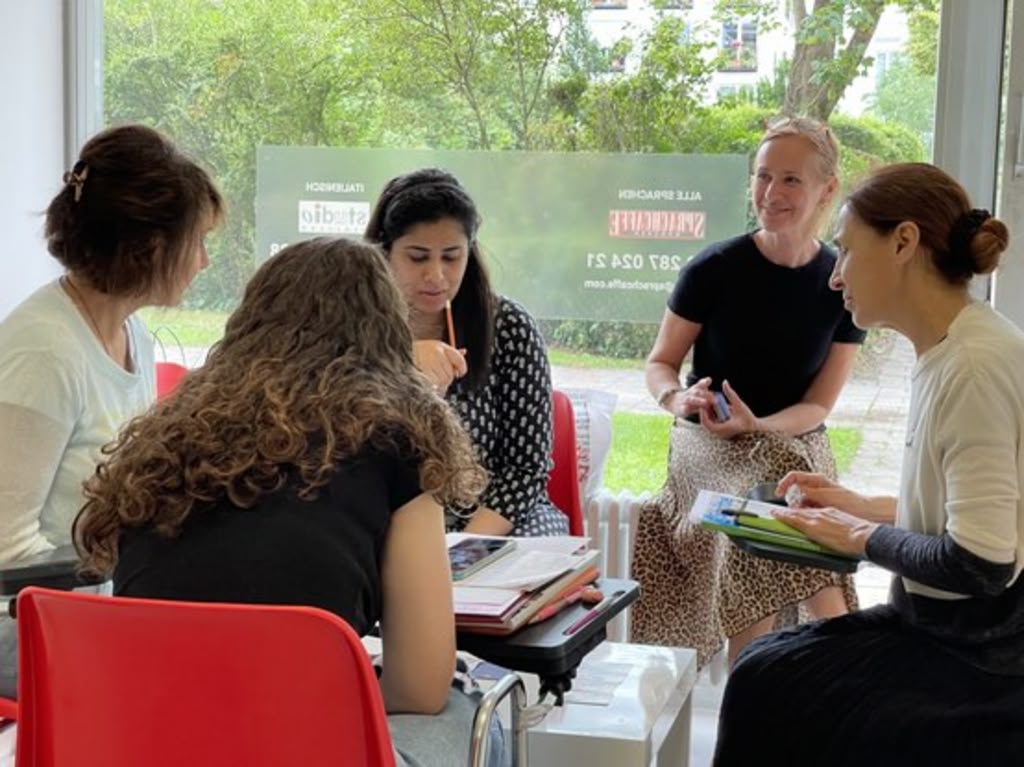
German for adults focuses on practical communication and measurable results. At the same time, younger learners build confidence in a safe international community.

Our students reviews about German schools

Sprachcaffe Language School Frankfurt
4.6

Based on 160 reviews

Mary Armstrong
M
Mary Armstrong
13.08.2025

The class is excellent; well-organized, thorough and well-paced. The teacher is friendly, supportive and has a lot of patience. I enjoy the classes and will continue to study at Sprachcaffe. I am a resident of Frankfurt.

Salvatore G
S
Salvatore G
01.08.2022

it was a nice experience, helpful and kind staff. the teachers do not remain the same throughout the course but they are all prepared and Engaging, Especially Aysha . it is an experience which I would like to do again in the future. The structure is well maintained and The cooking is good. No complaints : D

Communication is key

Clear and regular communication is essential when learning German. In class, you build strong grammar foundations and expand your vocabulary step by step. Outside the classroom, you apply what you have learned in everyday situations.

Conversations with teachers, local people and international classmates increase your confidence and fluency. You practise real-life dialogue, express your opinions and become comfortable understanding natural pronunciation and different speaking styles.

At SPRACHCAFFE, German becomes part of your daily routine. You use the language during lessons, activities and in your accommodation. With frequent practice, you stop translating word by word. Instead, you begin to think directly in German. That is when steady progress becomes visible and lasting international friendships begin to grow.


Adult Courses vs Camps for Kids – What Is the Difference?

Adult German courses are designed around independence, flexibility, and clearly defined objectives. Many participants learn German for professional development, university admission, relocation, or personal growth. Lessons focus on practical communication, structured German grammar, and measurable progress aligned with CEFR standards. In cities such as Frankfurt and Munich, adults benefit from dynamic urban environments where they can practise German in everyday situations, from business districts to cultural venues. The learning atmosphere is focused and goal-oriented, supporting efficient progress and recognised certification pathways.

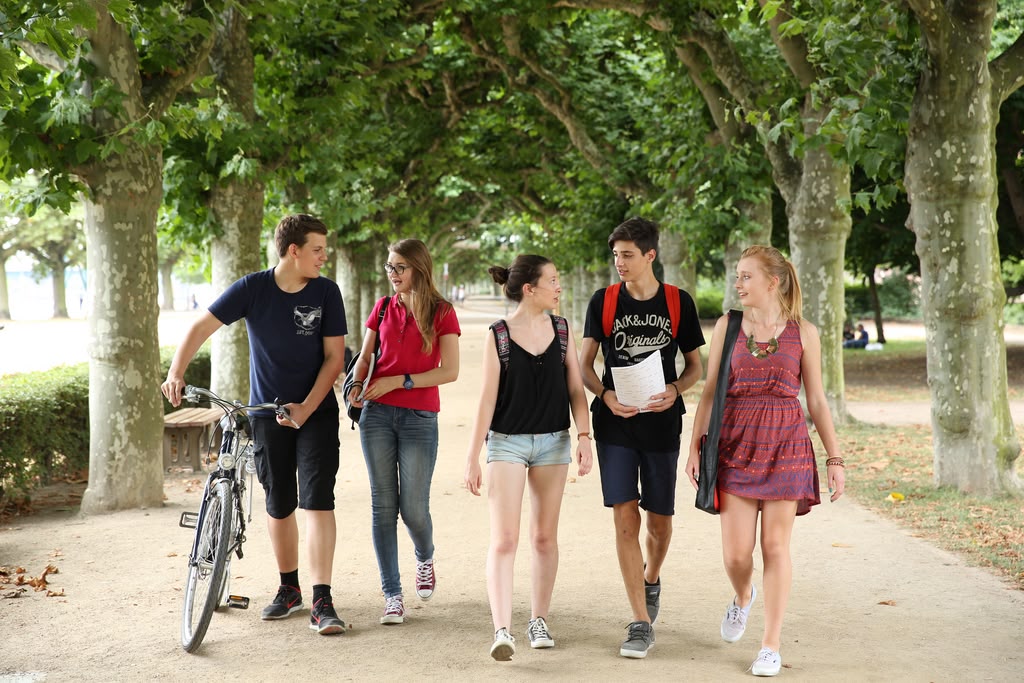
German language camps for children and teenagers combine structured German lessons with supervision and organised activities. In Frankfurt and Munich, young learners experience safe, well-planned programmes that balance classroom learning with sports, excursions, and cultural exploration. Classes are interactive and adapted to age groups, encouraging steady vocabulary development and speaking confidence. Supervised activities ensure safety while gradually fostering independence.

While adults often prioritise academic and professional results, younger learners develop confidence, intercultural awareness, and lasting friendships within a supportive international German-speaking environment.

Frankfurt vs. Munich – City Comparison Overview

Aspect Frankfurt Munich
City Character Modern, international and business-oriented Traditional, elegant and culturally rich
Atmosphere Fast-paced and dynamic Relaxed, safe and well-structured
International Environment Strong financial centre with global companies Strong mix of local tradition and international influence
Ideal For Teenagers Urban experience with supervised programmes Safe environment with cultural depth and clear structure
Ideal For Adults Business German, finance, career-focused learners Cultural immersion, academic goals and long-term stays
Academic Focus Close to financial institutions and global firms Strong university presence and academic reputation
Lifestyle Skyline, museums, river Main, urban diversity Parks, historic centre, Alpine proximity, strong traditions
Cultural Experience Contemporary art, multicultural districts Bavarian culture, classical architecture, festivals
Public Transport Efficient and well-connected Very organised and easy to navigate
Overall Feeling International career hub Safe, traditional city with strong identity

Find out more

Most German universities require proof of advanced language competence, usually at CEFR level B2 or C1. The exact requirement depends on the university and the chosen degree programme. Commonly accepted certificates include TestDaF, DSH, or Goethe-Zertifikat at the required level. For English-taught programmes, lower German levels may be sufficient, but daily life still requires communication skills.

Reaching B2 allows you to follow lectures and participate in seminars confidently. C1 ensures greater academic precision and independence. Structured preparation courses and exam training help you reach the required level step by step with measurable progress and clear goals.

The time needed to improve your language skills depends on your starting level, learning intensity, and consistency. With regular study and guided practice, noticeable improvement can be seen within a few weeks. Reaching the next CEFR level usually requires several months of structured learning. Intensive courses accelerate progress because you practise daily and use the language actively. Language immersion and real communication strengthen retention significantly. For academic or professional goals, steady weekly practice over a longer period ensures sustainable results. Clear milestones and measurable objectives help you stay motivated and track your development effectively.

A balanced international nationality mix creates a motivating and authentic learning environment. Students typically come from across Europe, Asia, Latin America, and other regions worldwide. This diversity encourages communication in the target language, as learners naturally use German as their shared language. In summer months, the mix is especially international, while in other seasons European participants may dominate slightly. Small group sizes ensure interaction with classmates from different cultural backgrounds. This multicultural atmosphere strengthens intercultural competence, builds global friendships, and supports confident speaking practice in real situations both inside and outside the classroom.

German courses are suitable for teenagers, university students, and adults at different life stages. Young learners benefit from structured guidance and supervised programmes that combine language learning with cultural activities. University students often prepare for academic pathways or exchange programmes.

Adult learners frequently focus on career development, relocation, or personal enrichment. Courses are adapted to the age group to ensure appropriate teaching methods, topics, and learning pace. Whether you are 16, 25, or 50, structured levels and personalised support ensure that learning remains effective, motivating, and aligned with your individual goals.

Germany offers a stable, safe, and academically respected environment for language development. The country combines high educational standards with cultural diversity and strong economic relevance. German is widely spoken in business, engineering, science, and international trade. Daily exposure to the language in real-life situations strengthens communication skills quickly. Students benefit from structured academic systems, modern infrastructure, and clear certification pathways aligned with CEFR standards. Cultural experiences, historical cities, and regional diversity enrich the learning process. Studying in Germany means combining language progress with academic credibility and long-term professional opportunities.