
Language learning is the ability to understand and use another language in real communication. It goes far beyond grammar rules and vocabulary lists. Picture yourself ordering coffee in a café in Rome. You catch every word and reply without hesitation. That ease is what language learning is really about. According to the European Commission's Eurobarometer survey, around two thirds of EU citizens say a foreign language is useful for their career. You do not need a rare talent to reach that point. You need a clear method, steady practice and a realistic goal. SPRACHCAFFE has supported learners on this path since 1983.
Career value
It widens your opportunities. A new language connects you to international careers and gives you greater mobility in the global job market.
Cultural access
It deepens cultural access. Films, news and conversations become directly understandable, without translation.
Cognitive growth
It strengthens your mind. Research links regular language use to gains in memory, attention and mental flexibility.
Social connection
It reshapes your social life. A new language lets you connect with people you would otherwise never meet, and those bonds often outlast the course itself.
Learn where the language lives

The best age to learn a language
The best age to learn a language matters less than most people assume. The science shows a clear pattern. A major 2018 study by Joshua Hartshorne, Joshua Tenenbaum and Steven Pinker, working at MIT, Harvard and Boston College, analysed data from nearly 670,000 English learners. Their results appeared in the journal Cognition.
The findings are encouraging. Your ability to master a language's grammar stays strong until around age 17 or 18. After that, it declines more sharply. Native-like fluency usually needs an earlier start, before age 10. Scientists call this window the critical period.
Adults should take heart. Motivated learners reach a high level every day. They simply lean a little more on structure, repetition and steady exposure. In the end, drive matters more than age alone.
Which languages are worth learning
The best language to learn depends on your own goals, whether career, study, travel or a move abroad.
A handful of languages carry global weight. English is the working language of international business, science and aviation. Spanish connects Europe with most of Latin America. French remains an official language at the United Nations, the European Union and the African Union. German has the most native speakers in the European Union. Mandarin Chinese drives trade across the Asia-Pacific. Arabic is spoken across the 22 countries of the Arab League.
The table below compares the major world languages by speakers and commercial value.
| Language ▲▼ | Speakers ▲▼ | Value ▲▼ |
|---|---|---|
| English | ~1.5B | Global business, science, aviation, tech. |
| Mandarin Chinese | ~1.1B | Trade, supply chains, Asia-Pacific. |
| Hindi | ~600M | India markets, services, tech growth. |
| Spanish | ~560M | Americas, tourism, trade, diplomacy. |
| Arabic | ~420M | Energy, finance, MENA trade. |
| French | ~320M | Diplomacy, Africa, EU institutions. |
| Portuguese | ~260M | Brazil, Lusophone Africa, business. |
| Bengali | ~270M | South Asia, regional business. |
| Russian | ~255M | Eastern Europe, Central Asia, energy. |
| Urdu | ~230M | South Asia, community + media. |
| German | ~135M | Engineering, EU economy, research. |
| Japanese | ~125M | Innovation, tech, corporate world. |
| Swahili | ~200M | East Africa trade, regional access. |
| Turkish | ~90M | Bridge markets, logistics, tourism. |
| Korean | ~80M | Global brands, tech, pop culture. |
| Italian | ~85M | Design, fashion, tourism, culture. |
| Vietnamese | ~95M | SE Asia growth, manufacturing. |
| Persian (Farsi) | ~110M | Regional culture, business links. |
| Indonesian | ~200M | Tourism, SE Asia commerce. |
| Dutch | ~25M | Logistics, trade, EU business. |
Speaker estimates come from Ethnologue (2024 edition) and cover native and second-language speakers. The value tags reflect the main industries and regions where each language is used commercially. Across the European Union, English is the most widely spoken foreign language, used by around 47% of citizens, up five points since 2012. French follows on 11%, German on 10% and Spanish on 7%. The same Eurobarometer survey found that 85% of parents rate English as the most important foreign language for their children, followed by Spanish, German, French and Chinese.
The easiest and hardest languages to learn
Language difficulty depends on your native language and its distance from your target.
For English speakers, the easiest languages to learn are Spanish, Italian, French and Dutch. They share vocabulary and structure with English, so they feel familiar quickly.
The hardest languages to learn sit further away. Mandarin Chinese, Arabic, Japanese and Korean top most lists, mainly due to new writing systems, pronunciation and grammar. Even so, all of them can be learned with consistent practice and a clear structure.
How to learn a language, from apps to fluency
There is no single correct method for language learning. Most successful learners combine several approaches.
Digital tools are often the starting point. Popular language learning apps such as Duolingo, Babbel, Anki and Rosetta Stone support vocabulary building and recall. AI language learning tools increasingly add real-time feedback and conversation practice. Podcasts on Spotify improve your listening, while platforms like iTalki and LingQ offer direct interaction with tutors. Courses on Coursera keep your study organised.
Tools alone are not enough. Real fluency develops when the language becomes part of daily life. You start to use it while speaking, listening and reacting in real situations. Living abroad or attending a structured language school speeds this process up significantly. That is how classroom knowledge turns into confident, real conversation.
What actually drives progress
Three factors have the strongest impact on your progress.
Consistency comes first. Short, daily practice works better than rare, long study sessions.
Speaking comes second. Active use from the start reduces hesitation and builds confidence.
Clear goals come third. The Common European Framework of Reference, or CEFR, defines levels from A1 to C2 and lets you track progress objectively.
Language certificates that prove your level
A recognised certificate gives you international proof of your level. Employers and universities trust these results worldwide. The right one depends on your language.
- English: IELTS, TOEFL and Cambridge English (B2 First, C1 Advanced, C2 Proficiency)
- French: DELF and DALF
- Spanish: DELE
- German: the Goethe-Zertifikat
- Italian: CILS
- Chinese: HSK

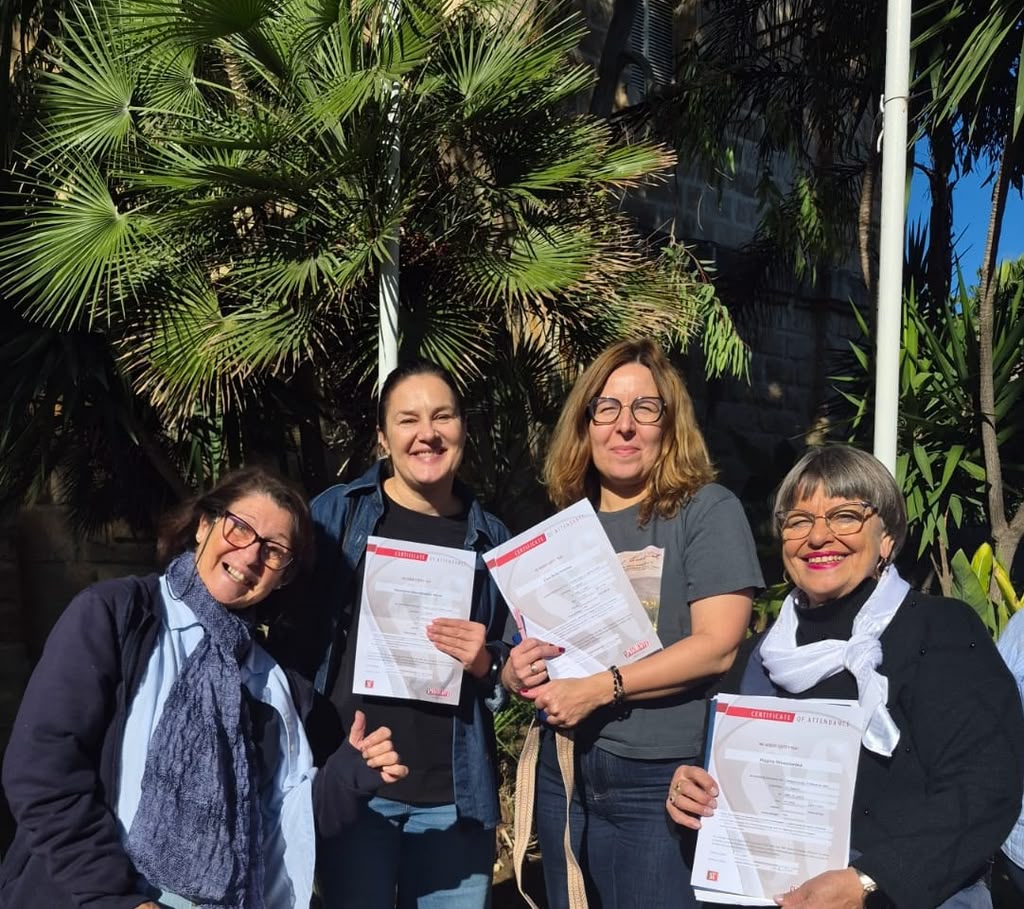
Language skills also carry measurable economic value. The American Council on the Teaching of Foreign Languages (ACTFL) found that nine in ten employers rely on staff with languages beyond English. A study by Wharton and Lehman College estimated a wage premium of about 2% for each additional language. The European Commission's 'Languages Mean Business' report found that 11% of surveyed small and medium businesses had lost export contracts through weak language skills. At SPRACHCAFFE, we prepare you for these exams through dedicated preparation courses.
What the CEFR levels mean
The CEFR is the international standard for language ability. It runs through six clear levels, from A1 for beginners to C2 for near-native users. Schools and employers across Europe rely on this scale.
| Level | Stage | What you can do |
|---|---|---|
| A1 | Beginner | Use familiar everyday phrases and simple sentences |
| A2 | Elementary | Handle routine tasks and short, direct exchanges |
| B1 | Intermediate | Cope with travel situations and describe experiences |
| B2 | Upper intermediate | Speak with fluency and follow complex texts |
| C1 | Advanced | Use language flexibly for academic and professional life |
| C2 | Proficiency | Understand almost everything and express ideas precisely |
At SPRACHCAFFE, every learner takes a placement test on arrival. We then group classes by CEFR level, from A1 to C2.
The cognitive benefits of learning a language
Language learning improves far more than communication. It also strengthens the brain in measurable ways.
The evidence is solid. A 2010 meta-analysis reviewed 63 separate studies. Adesope, Lavin, Thompson and Ungerleider published it in the Review of Educational Research. Bilingual people consistently outperformed monolingual peers in attention, working memory, abstract reasoning and metalinguistic awareness.
The effects can last a lifetime. Research led by Professor Ellen Bialystok at York University in Toronto links lifelong bilingualism to a delay of roughly four to five years in the onset of dementia symptoms, regardless of education level.
Children gain too. The Bilingualism Matters centre at the University of Edinburgh, founded in 2008 by Professor Antonella Sorace, has recorded similar advantages in bilingual children. These benefits come from regular use, not from certificates alone.
Learn more about the cognitive benefits of language learning
Discover all the languages





Frequently asked questions about language learning
For English speakers, Spanish is generally the easiest language to learn. Italian, French, Portuguese and Dutch follow closely, thanks to their similarities with English. The U.S. Foreign Service Institute groups them among the fastest languages to reach professional proficiency. With steady practice, real progress comes within months.
For English speakers, Mandarin Chinese and Arabic rank as the hardest languages to learn. Japanese and Korean follow close behind. The main challenges are new writing systems, pronunciation and grammar. None are impossible, though, and a clear structure keeps even these within reach.
The U.S. Foreign Service Institute (FSI) sets clear benchmarks for English speakers. Spanish, French or Italian need roughly 600 to 750 classroom hours to reach professional level. German takes around 900 hours. Arabic, Mandarin, Japanese and Korean need about 2,200 hours. Your own pace depends on study hours and real exposure. Intensive study abroad shortens these timelines significantly.
The best way to learn a language combines daily practice, speaking from the start and structured learning. Apps support your vocabulary, while tutors and classes add feedback and direction. Real-world use builds fluency. Most experts agree that consistency matters more than intensity.
Immersion is not strictly required, though it speeds learning up. Many people reach fluency through structured study combined with regular real-life practice. What counts most is your total hours of meaningful exposure. Language immersion simply increases that exposure. It also surrounds you with the natural speech, slang and culture that textbooks tend to miss.
We have offered language courses since 1983. We teach group and one-to-one courses in eight languages: English, Spanish, French, German, Italian, Arabic, Chinese, and German as a foreign language. Our schools sit in Malta, the United Kingdom, Germany, France, Spain, Italy, Cuba and Canada, with online courses too. In Malta, our school is located in St. Julian's. Courses run from one to 52 weeks. Standard group courses include 20 lessons per week of 45 minutes each, with an average class size of around ten learners. Every learner takes a CEFR placement test on arrival and joins a class at their level, from A1 to C2. Junior programmes for ages 12 to 17 include round-the-clock supervision, adult programmes start at age 18, and gap-year participants can take longer stays abroad. Our accreditations include EAQUALS, ALTO, FELTOM, the British Council, English UK and Instituto Cervantes, depending on the school.