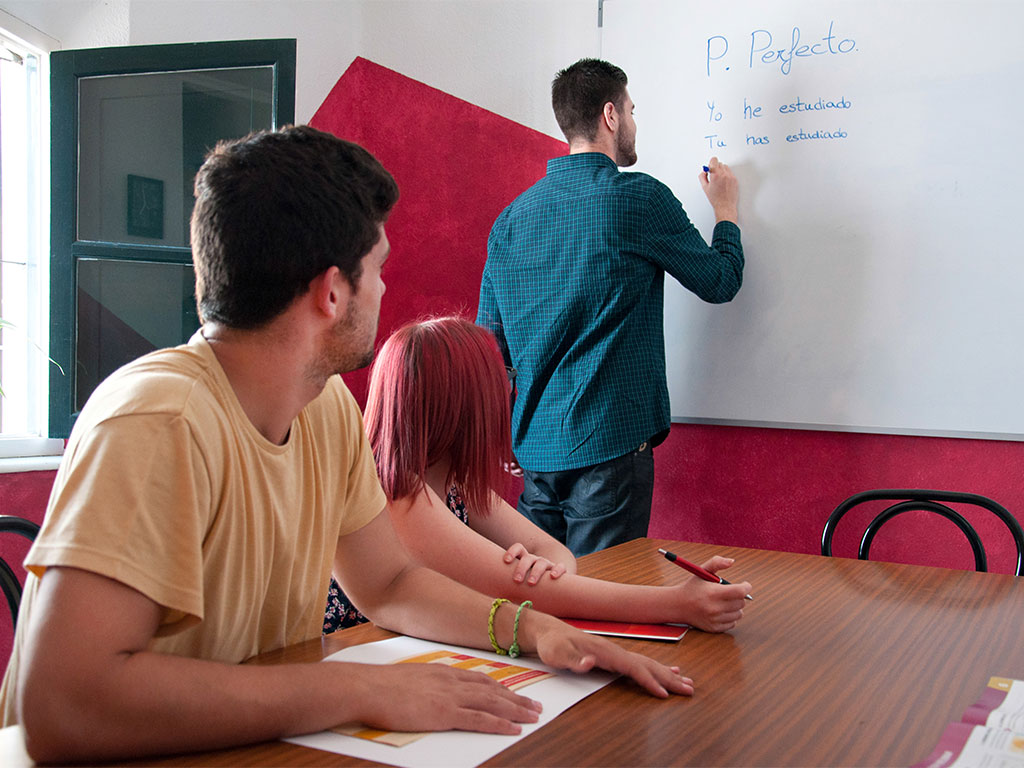
Learning Spanish

Learning Spanish is most effective when integrated into your daily routine.   Spanish is spoken globally, with approximately 635 million speakers worldwide, including over 519 million native speakers. According to the Instituto Cervantes and its Global Observatory of Spanish, this language is a significant global phenomenon. It is one of the most practical languages for travel, study, and work.
 

At SPRACHCAFFE, we support learning  abroad with care and realism, emphasizing steady progress, meaningful application, and learning paths tailored to real lives. We do not make unrealistic promises.

Global Language

It is one of the world's most used languages for travel, study, international cooperation, and everyday communication

Cultural & Travel

Spanish opens the door to global culture: movies, music, books and traveling.

Career & Salary

Spanish skills significantly improve job prospects, open access to international companies, and support career

Access to Knowledge

Spanish connects you to over 20 countries across Europe and the Americas.

Accent is key

Good Spanish pronunciation can enhance your presence in both social and work situations. When you pronounce words clearly and speak with a natural rhythm, your message is easy to understand and follow. This reduces misunderstandings in meetings, negotiations, presentations, and everyday conversations.

Across Spanish-speaking countries, the way you speak shapes first impressions. Clear speech and smooth expression show competence, cultural awareness, and strong communication skills. In fields like international business, trade, tourism, healthcare, media, and diplomacy, speaking Spanish well boosts credibility. A neutral accent and good intonation help you connect from Spain to Latin America.  

Refining your  pronunciation also transforms your own confidence. You express your thoughts openly and participate in discussions with enthusiasm. You express complex ideas clearly and easily. Clear pronunciation boosts understanding. It also enhances your presence, authority, and genuine connection.

Spanish language

It comes from Vulgar Latin, evolving on the Iberian Peninsula. Arabic influenced it during the medieval period. Later, the Castilian Crown helped spread it worldwide. Today, it connects Europe, Latin America, and large Spanish-speaking communities worldwide.

Classes help students achieve better grades and perform well in oral exams. For adults, Spanish strengthens CVs and supports careers in international environments. Spanish has a clear sound system and consistent spelling. This helps many learners progress faster than they expect. Spanish is easier to learn with structure, exposure, and practice. So, instead of asking if it's easy, focus on these key elements.

Spanish speaking countries

Country / Region Status Native Speakers
Spain Official language ~43 million
Mexico Official language ~125 million
Colombia Official language ~51 million
Argentina Official language ~45 million
Peru Official language ~30 million
Chile Official language ~19 million
Ecuador Official language ~17 million
Guatemala Official language ~17 million
Cuba Official language ~11 million
Bolivia Official language (with indigenous languages) ~9 million

Step by Step learning

Effective Spanish learning follows a clear rhythm: input → output → immersion.

You begin with comprehensible input. Listening to podcasts, watching graded YouTube videos, and reading simple texts helps your brain identify patterns with greater ease. Tools like Dreaming Spanish, Language Transfer, and curated playlists on Spotify or Apple Music help a lot now.

Next comes output. Speaking early turns passive knowledge into an active skill. Online tutors on Preply, language exchanges on Tandem or Meetup, and guided Spanish classes provide learners with a safe environment for practice and feedback. Immersion strengthens everything. You can learn Spanish online with daily routines or take courses abroad. Everyday situations become great learning moments.

Vocabulary, Grammar, and Pronunciation That Actually Stick

A strong foundation comes from high-frequency vocabulary, not long word lists. Flashcards and spaced repetition assist learners in retaining essential vocabulary.

Grammar matters where it affects meaning. Core areas include verb conjugations, tenses, object pronouns, and gender agreement. We can add other rules one by one. Pronunciation improves through shadowing, repeated listening, and recording short speaking exercises. Media techniques work especially well. Using Spanish subtitles instead of English helps with listening and pronunciation. Rewatching short clips and listening to Spanish music also boost these skills.

Tools and Resources for Learning Spanish

If you're ready to ditch the English explanations and dive into full immersion, level up with YouTube creators like Español con Juan, who uses high-energy storytelling to teach context, or Spanish and Go for a deep dive into Mexican culture and travel. For a more cinematic approach, Lingopie and FluentU transform real TV shows, news, and movie trailers into interactive lessons with "clickable" subtitles that let you save new words instantly.

If you prefer learning through rhythm, Lirica helps you decode grammar through popular Latin music, while News in Slow Spanish bridges the gap between classroom exercises and native-speed broadcasts. For those who want to practice speaking without the pressure of a human tutor, Langua provides sophisticated AI-driven conversation practice, while Spanish Playground offers simplified "Spanish-only" series like Buena Gente for beginners. Round out your toolkit with WordReference for deep dives into regional slang or StudySpanish.com for rigorous grammar drills, ensuring you have every angle covered for total fluency.

A practical way to learn Spanish

Spanish improves most effectively when structure, speaking, listening and writing are combined. Use trusted tools and regular practice to build steady confidence.

📘

Structure

  • Clear grammar guidance (A1–C1)
  • Short daily sessions (15–30 minutes)
  • Practical sentence patterns
  • Course apps: Babbel, Busuu, Duolingo, Mondly
  • Grammar support: StudySpanish.com, SpanishDict
🗣️

Speaking

  • Speak from day one
  • Regular conversation feedback
  • Exchanges: Tandem, HelloTalk
  • Tutors: italki, Preply, Verbling
  • Community groups and language cafés
🎧

Listening

  • Real rhythm and intonation
  • Learning news: BBC Mundo, RTVE
  • Video: Dreaming Spanish, YouTube
  • Pronunciation audio: Forvo
  • Media: Netflix, Lingopie, Spanish podcasts
✍️

Reading & Writing

  • Short texts and graded readers
  • Read with support: LingQ, Readlang
  • Review: Anki, Quizlet, Memrise
  • Write short diary entries weekly
  • Accuracy help: SpanishDict, Reverso

Find out more

Immersion is possible without living abroad when Spanish becomes part of everyday routines. Listening to Spanish podcasts, watching videos on YouTube with Spanish subtitles, and using platforms such as Dreaming Spanish provide regular exposure and build understanding naturally. Speaking practice through online tutors or language exchange platforms like Tandem or Meetup helps turn this input into real communication.

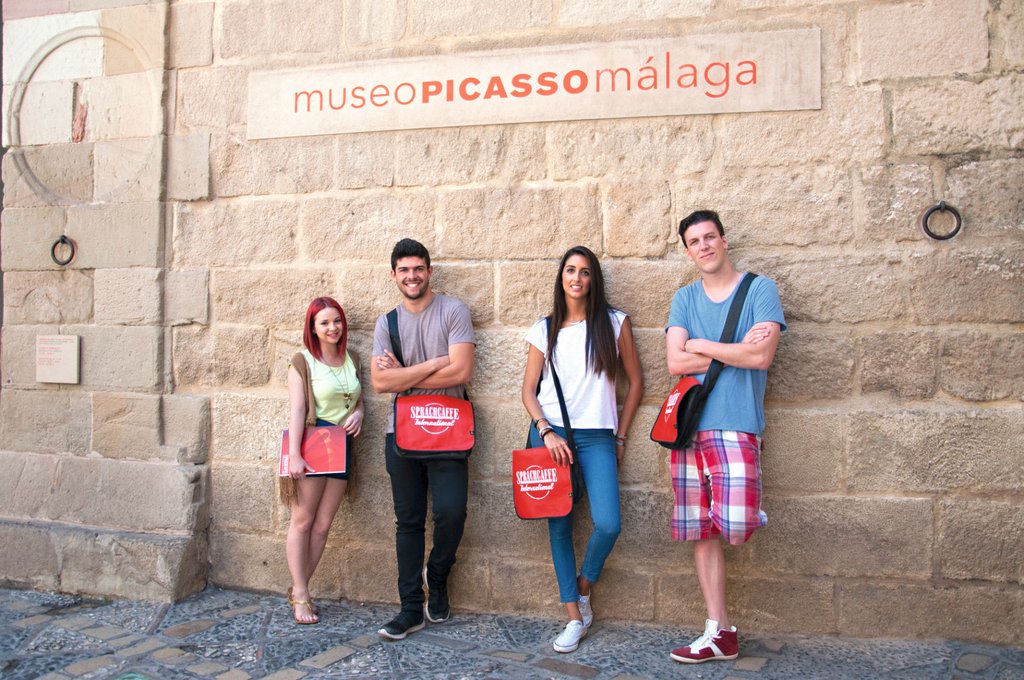
For learners who want deeper immersion, attending a language school abroad adds a powerful real-life dimension. At SPRACHCAFFE, Spanish courses in Spain, including locations such as Barcelona and Málaga, combine structured Spanish courses with daily contact in shops, cafés, and social activities. This guided environment allows learners to practise Spanish naturally while feeling supported, making immersion effective and reassuring rather than overwhelming.


Becoming conversational in Spanish usually takes three to six months with regular daily practice. At this stage, you can manage simple conversations, understand familiar topics, and express everyday needs. Reaching a confident conversational level around CEFR B1 often takes nine to twelve months, depending on consistency and exposure. Regular short practice supports progress better than occasional long study sessions.

No single app is the best for learning Spanish. Different tools meet different needs. Pimsleur is the top app for learning Spanish. It helps you build conversational skills fast with audio lessons. It focuses on speaking and listening from the start. It uses spaced repetition for better retention. Apps like Duolingo and Busuu help create daily routines and build basic vocabulary. SpanishDict supports grammar explanations and verb conjugations. Meanwhile, platforms like Preply focus on real speaking practice with tutors. Apps work best when combined with listening, speaking, and real communication.

Learning Spanish at home works best with a clear and balanced structure. Daily listening builds comprehension, followed by short speaking practice to activate vocabulary. Using common words, easy grammar rules, and flashcards helps you learn for a long time. Combining apps, podcasts, reading, and regular speaking creates steady progress.

Spanish is often considered one of the more accessible languages to learn. Pronunciation is clear, spelling is consistent, and sentence structure follows logical patterns. The main challenges are verb conjugations, tenses, and gender agreement, but these become manageable with regular exposure and practice. With consistency and realistic goals, Spanish feels approachable and rewarding.