
It is 9 a.m. in Frankfurt and you have already used German three times: to order a coffee, to ask for directions, and to greet a classmate from Brazil. That is what it means to study German in Germany. Classroom lessons give you the structure, and daily life in cafés, shops, on public transport, and with a host family turns that knowledge into real fluency. The U.S. Foreign Service Institute estimates around 750 classroom hours to reach professional working proficiency in German (CEFR B2 to C1). Full-day immersion abroad compresses that timeline far more than one or two weekly lessons at home. At SPRACHCAFFE, we run German courses and junior camps in Frankfurt and Munich.
Study German in Germany
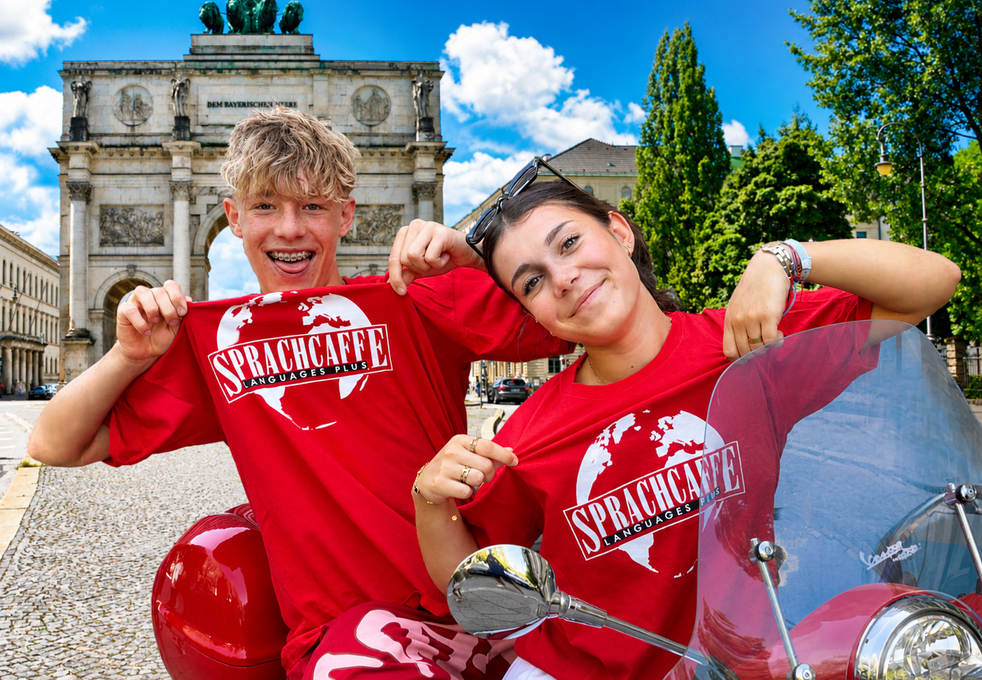
True daily immersion
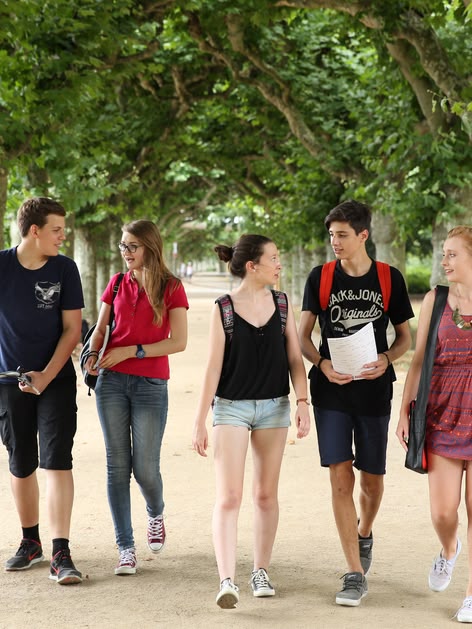
You practise German everywhere, every day: in cafés and shops, on public transport, in museums, and with your host family.
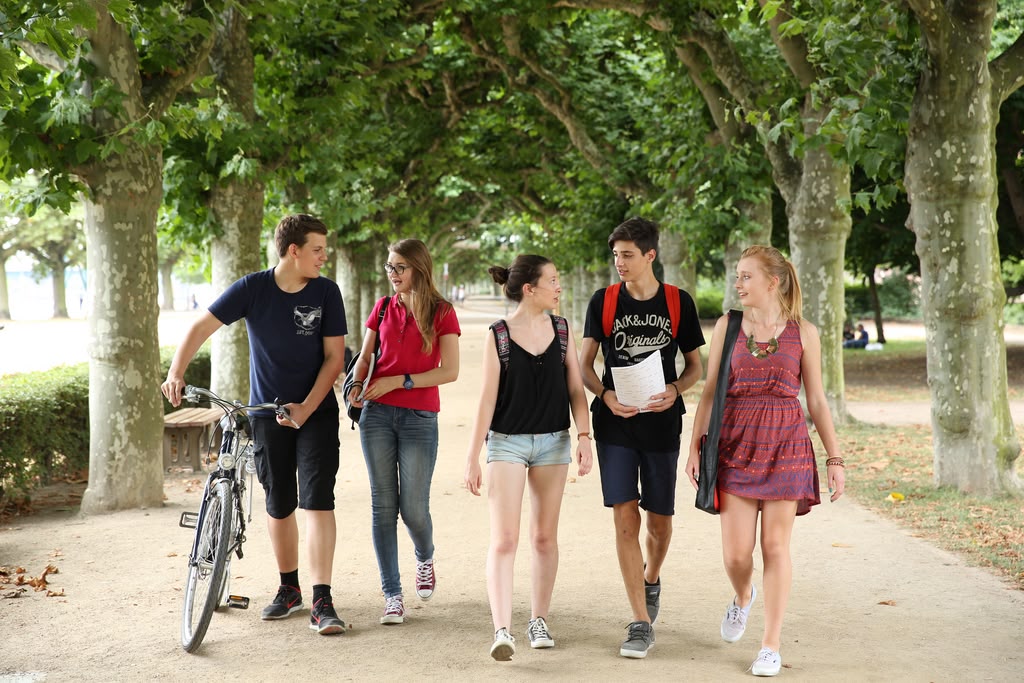
Friends from around the world
Your classmates come from across Europe, Asia, and Latin America. You learn together, explore together, and many stay in touch long after the course ends.
A real career advantage
Strong German opens doors across Europe, and a recognised CEFR certificate proves your level to universities and employers.
Recognised certificates
We prepare you for the Goethe-Zertifikat and telc Deutsch, both accepted by German universities, employers, and immigration authorities.


German courses and camps for every age
SPRACHCAFFE Languages Plus, founded in 1983 and accredited by the FDSV (Fachverband Deutsche Sprachreise-Veranstalter), runs German language schools in Frankfurt and Munich. All courses follow CEFR levels A1 to C2, run from 1 to 52 weeks, and prepare learners for the Goethe-Zertifikat and telc Deutsch exams. The SPRACHCAFFE Frankfurt school holds a 4.6 / 5 rating across 168 Google reviews.
When you learn German in Germany, the language enters daily life at every age. Teenagers practise during meals, excursions, and supervised activities, while adults use German in shops, on public transport, and in professional settings. This daily exposure accelerates listening comprehension and speaking fluency more than the same number of classroom hours at home, especially at the B1 to B2 transition, where authentic input matters most.
German courses for adults (18+)
Our adult courses suit professional development, university preparation, relocation, and personal growth. Standard courses include 20 lessons per week, and intensive courses add ten more for a total of 30, each lesson lasting 45 minutes. Average class size is around 10 learners. Every learner takes a CEFR-aligned placement test on arrival and joins a group at their level, from A1 to C2. Course durations range from 1 to 52 weeks, with exam preparation available for the Goethe-Zertifikat and telc Deutsch, including telc Deutsch C1 Hochschule for university admission. You can stay with a host family, in a shared student apartment, or in an on-campus residence.
German camps for teenagers (13 to 17)
Our junior camps combine 20 lessons per week with full-board accommodation in supervised residences, round-the-clock staff presence, and an organised programme of sports, excursions, and cultural activities. Classes average around 10 students, grouped by CEFR level and age. Camps typically run for 2 to 4 weeks during the school holidays, including our German summer camps. The structure gives parents reassurance and gives teenagers the freedom to make friends from all over the world.
The class is excellent; well-organized, thorough and well-paced. The teacher is friendly, supportive and has a lot of patience. I enjoy the classes and will continue to study at Sprachcaffe. I am a resident of Frankfurt.
Mary Amstrong, Frankfurt, Germany
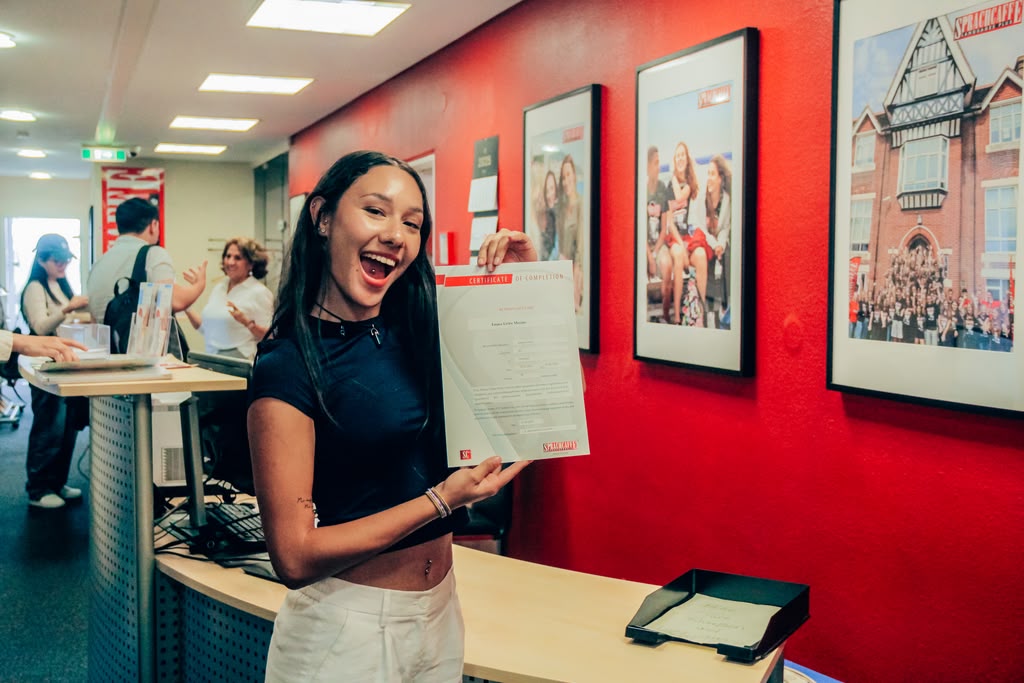
How learning German in Germany actually works
Learning German works through two parallel channels: structured classroom instruction and real-world communicative practice. The Common European Framework of Reference (CEFR), developed by the Council of Europe, defines proficiency around communicative competence, meaning what learners can actually do with the language at each level from A1 to C2, not just which grammar rules they know.
At our schools in Frankfurt and Munich, classroom lessons build grammar and vocabulary step by step, while daily life in the host city, host family, or shared accommodation turns passive knowledge into active fluency. Learners typically report a shift from word-by-word translation to thinking directly in German between CEFR levels B1 and B2. Research on automaticity in second-language processing (DeKeyser, 2007) places this point where comprehension and production stop requiring conscious effort.

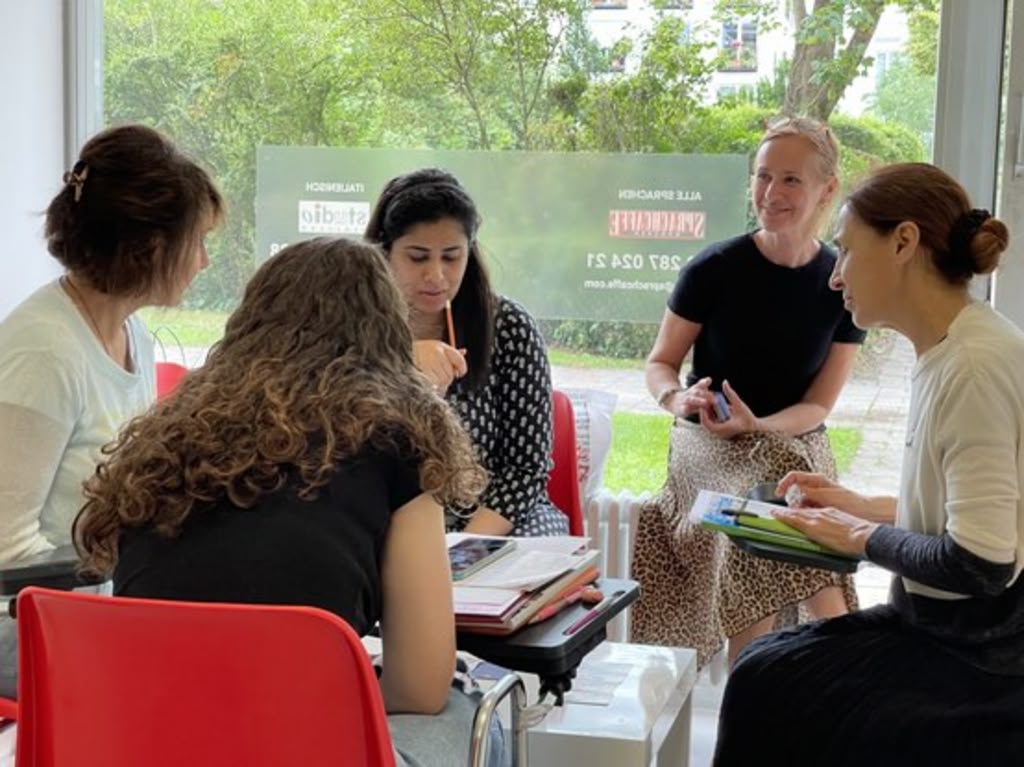
The teachers do not stay the same throughout the course, but they are all well prepared and engaging, especially Aysha. It is an experience I would like to repeat in
Salvatore G., Frankfurt, Germany
Frankfurt or Munich
Both cities are excellent places to learn German, and they offer a different daily experience. The table below compares them so you can choose the setting that fits you best.
| Aspect | Frankfurt | Munich |
|---|---|---|
| City Character | Modern, international and business-oriented | Traditional, elegant and culturally rich |
| Atmosphere | Fast-paced and dynamic | Relaxed, safe and well-structured |
| International Environment | Strong financial centre with global companies | Strong mix of local tradition and international influence |
| Ideal For Teenagers | Urban experience with supervised programmes | Safe environment with cultural depth and clear structure |
| Ideal For Adults | Business German, finance, career-focused learners | Cultural immersion, academic goals and long-term stays |
| Academic Focus | Close to financial institutions and global firms | Strong university presence and academic reputation |
| Lifestyle | Skyline, museums, river Main, urban diversity | Parks, historic centre, Alpine proximity, strong traditions |
| Cultural Experience | Contemporary art, multicultural districts | Bavarian culture, classical architecture, festivals |
| Public Transport | Efficient and well-connected | Very organised and easy to navigate |
Why learn German abroad
Learning a language in the country where it is spoken changes how fast and how deeply you learn it. These are the main advantages of choosing to study German abroad rather than at home.
- Faster progress. Real-world immersion accelerates learning, because you practise German everywhere, every day.
- Culture first. Frankfurt and Munich put you inside German life, so you do not just study the language, you live it.
- A career boost. German fluency and a recognised CEFR certificate open doors across Europe and beyond.
- Global connections. Your classmates come from all over the world, and many become lifelong friends.
- Trusted quality. SPRACHCAFFE has operated since 1983, over 40 years, and is accredited by the FDSV. You learn with qualified teachers, a CEFR-aligned curriculum, and structured progress from day one.
Goethe exams for younger learners
The Goethe-Zertifikat A1: Fit in Deutsch 1 and A2: Fit in Deutsch are exams developed by the Goethe-Institut specifically for young people aged 10 to 16. Both are aligned with the Common European Framework of Reference (CEFR) and are recognised by schools and education ministries worldwide as proof of beginner-level German. (Source: goethe.de)
German requirements for university admission
Most German universities require proof of German proficiency at CEFR level B2 or C1 for German-taught degree programmes. According to uni-assist, the central application service used by over 170 German universities, and the DAAD (German Academic Exchange Service), the four most commonly accepted certificates are:
- TestDaF (Test Deutsch als Fremdsprache), issued by the TestDaF-Institut, typically at TDN 4 or higher in all four sections for most undergraduate and master's programmes.
- DSH (Deutsche Sprachprüfung für den Hochschulzugang), issued by individual German universities, usually at DSH-2 or DSH-3.
- Goethe-Zertifikat C1 or C2, issued by the Goethe-Institut.
- telc Deutsch C1 Hochschule, issued by telc gGmbH and recognised by most German universities for admission.
For English-taught programmes, German is not formally required, but a B1 level is recommended for daily life and integration. We offer structured preparation for the Goethe and telc certificates at our schools in Frankfurt and Munich.

Find out more
The U.S. Foreign Service Institute classifies German as a Category II language for English speakers and estimates approximately 750 classroom hours to reach professional working proficiency (CEFR B2 to C1). Intensive immersion in Germany, with 20 to 30 lessons per week combined with daily real-world use, typically lets learners progress one CEFR level every 8 to 12 weeks, depending on their starting point. Your exact pace depends on your starting level, learning intensity, and consistency. Intensive courses speed up progress, because you use the language actively every day.
Most German universities require proof of German proficiency at CEFR level B2 or C1 for German-taught degree programmes. According to uni-assist (the central application service used by over 170 German universities) and the DAAD (German Academic Exchange Service), the four most commonly accepted certificates are:
- TestDaF (Test Deutsch als Fremdsprache), issued by the TestDaF-Institut - typically TDN 4 or higher in all four sections for most undergraduate and master's programmes
- DSH (Deutsche Sprachprüfung für den Hochschulzugang), issued by individual German universities - DSH-2 or DSH-3 is the standard requirement
- Goethe-Zertifikat C1 or C2, issued by the Goethe-Institut
- telc Deutsch C1 Hochschule, issued by telc gGmbH and recognised by most German universities for higher education admission
For English-taught programmes, German is not formally required, but a B1 level is recommended for daily life and integration. SPRACHCAFFE offers structured exam preparation for Goethe and telc certifications at its schools in Frankfurt and Munich.
SPRACHCAFFE junior camps are open to teenagers aged 13 to 17, and adult courses are open to learners aged 18 and above. Both groups are placed by CEFR level after a placement test.
Germany offers a stable, safe, and academically respected environment for language development. The country combines high educational standards with cultural diversity and strong economic relevance. German is widely spoken in business, engineering, science, and international trade. Daily exposure to the language in real-life situations strengthens communication skills quickly. Students benefit from structured academic systems, modern infrastructure, and clear certification pathways aligned with CEFR standards. Cultural experiences, historical cities, and regional diversity enrich the learning process.
Most effective are German courses abroad to chose from Munich or Frankfurt in Germany. Studying in Germany means combining language progress with academic credibility and long-term professional opportunities.
Learners typically come from across Europe, Asia, and Latin America, so German naturally becomes the shared language inside and outside the classroom. The mix is most international during the summer, while European participants are more strongly represented in other parts of the year.