Study German in Germany

Picture yourself ordering breakfast in fluent German at a café, then walking to class with classmates from a dozen different countries.

Founded in 1983, SPRACHCAFFE offers accredited adult German courses (A1–C1) in Frankfurt and Munich with small classes and flexible intensities. Every enrollment includes placement testing, an official certificate, and nearby apartment or homestay accommodation.

Germany is the most important non-English-speaking study destination in the world: more than 400,000 international students were enrolled at German universities according to the DAAD

 Whether you're investing in your career, preparing for university admission, or rediscovering a passion, learning German in Germany combines structured instruction with daily real-world practice.


Adults
Two Cities, One Goal

Study in Frankfurt or Munich with courses tailored to your level.

Courses for Every Level

From complete beginners (A1) to advanced learners (C1)

Live Where You Learn

Stay in our on-site apartments or with a local host family.

Over 40 Years of Trust

SPRACHCAFFE has been bringing people together since 1983.

Great experience! nice and helpful staff, prepared tecahers. and Many new landscapes to see Highly recommended :D

Andrea Villanueva [Frankfurt, Germany]

Your German Course in Germany

Studying German in Germany is most effective way of learning. The U.S. Foreign Service Institute classifies German as a Category II language for English speakers and estimates approximately 750 classroom hours (around 30 weeks of full-time study) to reach professional working proficiency, equivalent to CEFR B2-C1. Intensive immersion compresses this timeline significantly compared with one or two weekly lessons at home.

SPRACHCAFFE offers identical course options at both schools:

  • Standard Course - 20 lessons per week (15 hours), Monday to Friday mornings, with free afternoons
  • Intensive Course - 30 lessons per week (22.5 hours), with additional afternoon sessions for faster progress
  • One-to-One Course - fully personalised teaching at your own pace
  • telc Exam Preparation Course - minimum 4 weeks, covering CEFR levels A1 to C1, preparing students for the telc Deutsch certificate issued by telc gGmbH and recognised by employers and universities across Europe

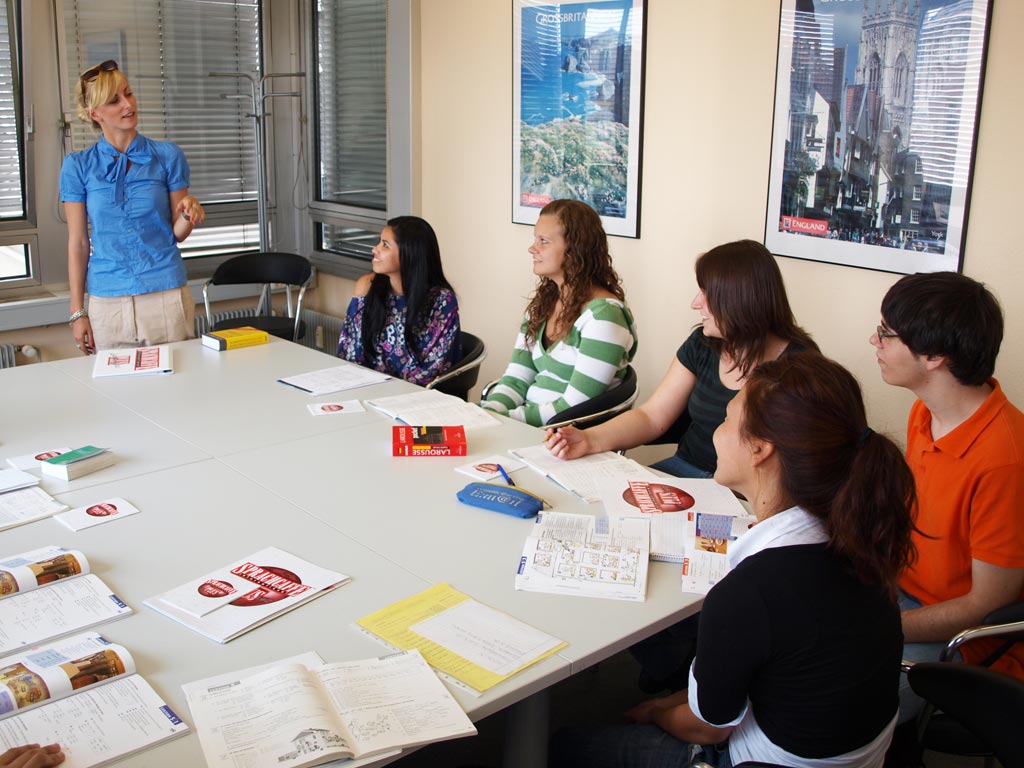
All lessons are 45 minutes. Class sizes range from 8 -12 students. Every course includes a free placement test on arrival, a Study Club, and a certificate.

Frankfurt am Main - Germany's financial capital and headquarters of the European Central Bank - places students in the Sachsenhausen district, a short walk from the iconic Eiserner Steg bridge, with the restored Old Town, the Senckenberg Natural History Museum, and weekend escapes to Heidelberg and the Rhine Valley (a UNESCO World Heritage Site) within easy reach.

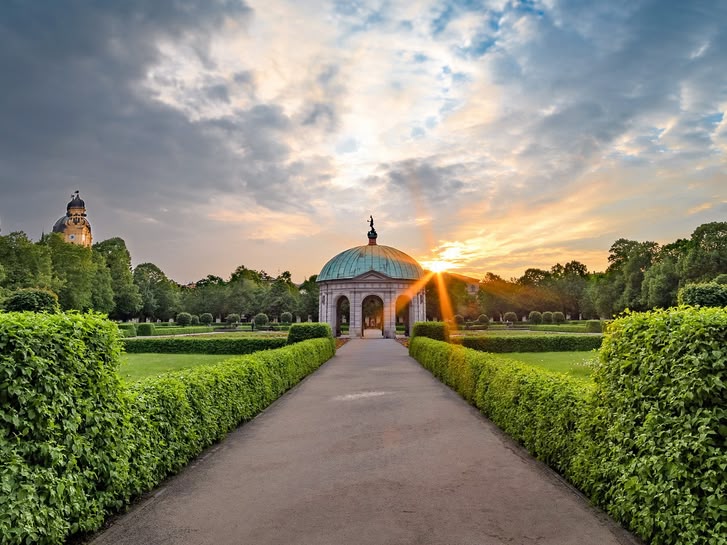
Munich - Bavaria's capital and Germany's third-largest city - places students in Schwabing-West, steps from the Englischer Garten (one of the largest urban parks in Europe, larger than New York's Central Park), Marienplatz, and the Bavarian Alps roughly one hour away by train.

I recently attended Sprachcaffe for a language learning program, and I couldn't be happier with my experience. The school's welcoming staff, highly qualified instructors, and well-structured curriculum created an exceptional learning environment. The immersive approach, engaging activities, and cultural events provided a comprehensive language learning experience. The facilities were modern and the support services outstanding. I highly recommend Sprachcaffe for anyone looking to enhance their language skills. 😊

Anus Ullah Shakir [Frankfurt, Germany]

Frankfurt vs Munich

Aspect Frankfurt Munich
City Character Modern, international and business-oriented Traditional, elegant and culturally rich
Atmosphere Fast-paced and dynamic Relaxed, safe and well-structured
International Environment Strong financial centre with global companies Strong mix of local tradition and international influence
Ideal For Teenagers Urban experience with supervised programmes Safe environment with cultural depth and clear structure
Ideal For Adults Business German, finance, career-focused learners Cultural immersion, academic goals and long-term stays
Academic Focus Close to financial institutions and global firms Strong university presence and academic reputation
Lifestyle Skyline, museums, river Main, urban diversity Parks, historic centre, Alpine proximity, strong traditions
Cultural Experience Contemporary art, multicultural districts Bavarian culture, classical architecture, festivals
Public Transport Efficient and well-connected Very organised and easy to navigate
Overall Feeling International career hub Safe, traditional city with strong identity

German universities offer almost 2,400 English-language degree programmes, including around 420 bachelor's and 1,930 master's programmes." - DAAD, as of summer 2025: almost 2,400 English-language programmes (about 420 bachelor's and 1,930 master's), with English-language courses making up about 18% at master's level and 4% at bachelor's level

source: monitor.icef.com

Communication is key

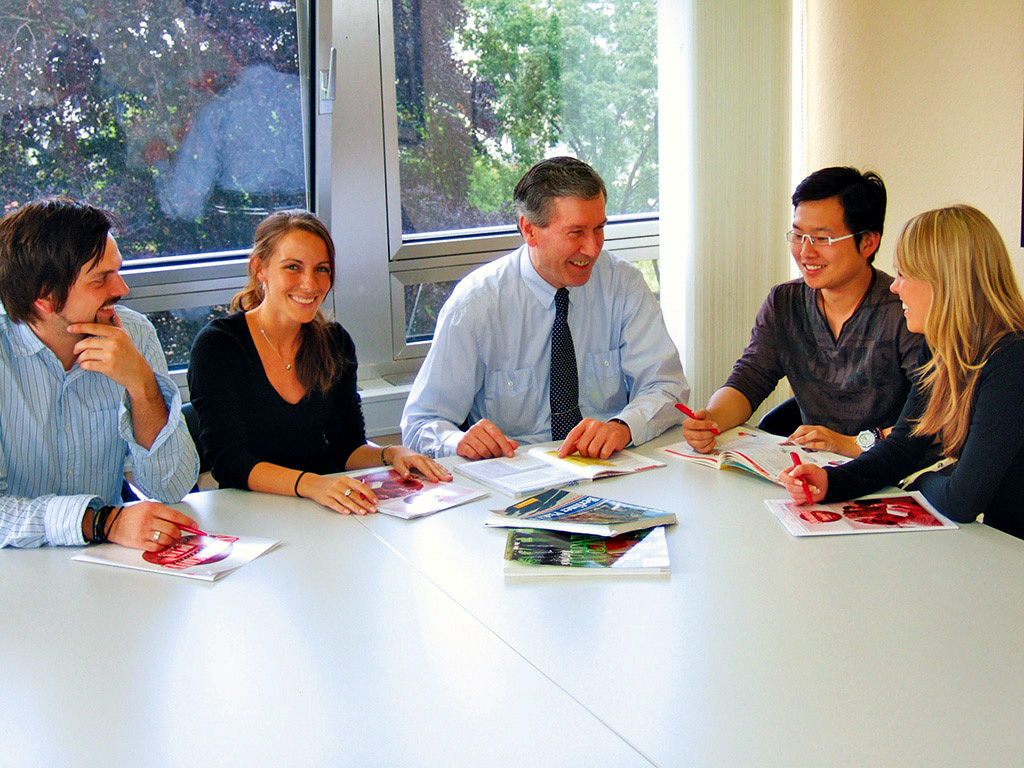
Communicative practice — not grammar drills alone — is the mechanism through which classroom German becomes active fluency. 

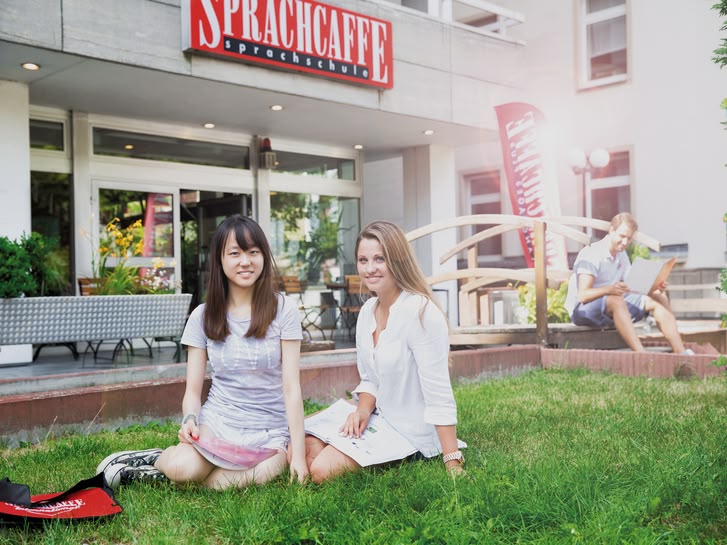
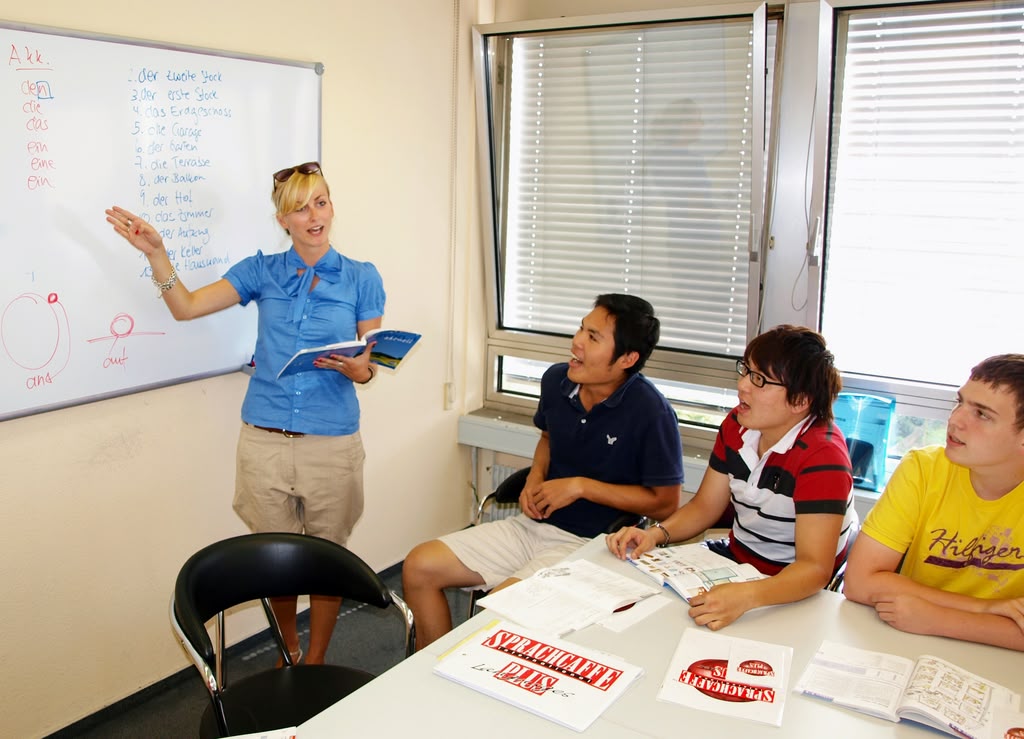
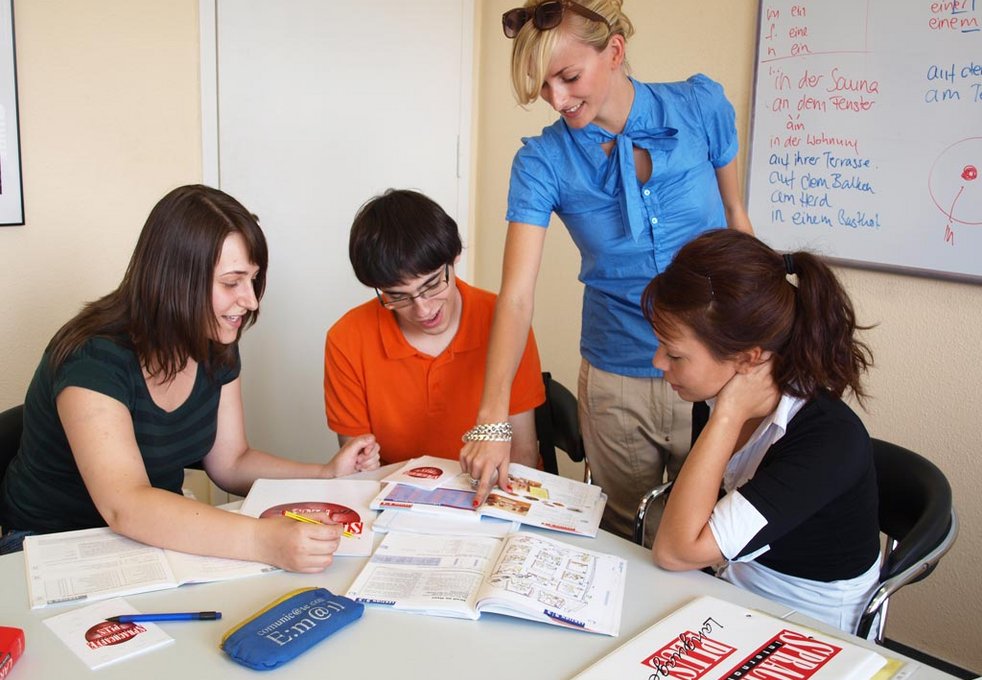
At SPRACHCAFFE, qualified native-speaking teachers build your grammar and vocabulary in class — and real life takes over outside it. You chat with your host family over breakfast, order coffee on the way to school, and swap stories with classmates from Europe, Asia, America. In Frankfurt, bright classrooms with skyline views and a student lounge sit in the school's Sachsenhausen building. In Munich, lessons take place in an elegant New Baroque building with a green terrace, fifteen minutes from the Englischer Garten.

Students typically report a shift from word-by-word translation to direct thinking in German between CEFR levels B1 and B2 — the point at which research on automaticity in second-language processing (DeKeyser, 2007) shows comprehension and production stop requiring conscious effort.

Our language schools location

Accommodation

Booking accommodation with your course extends immersion beyond the classroom.

  • Frankfurt - Standard and Comfort Apartments (in the school building): shared kitchen and bathroom with international flatmates, weekly cleaning, WiFi included.
  • Frankfurt - Homestay: live with a local family, breakfast or half board included, real conversation practice from day one.
  • Munich - Homestay: placements with welcoming families, breakfast or half board, easy access to the school by public transport.

The standard week runs Sunday to Sunday: you arrive on Sunday, settle in, and start your first class on Monday morning. Mornings cover communicative, practical exercises - role-playing restaurant orders, navigating public transport, handling job interviews - while Frankfurt's specialised Workshops also cover Business German and Communication Skills for professionals.

Afternoons are for the city. In Frankfurt, the cultural programme includes guided city tours, visits to the Senckenberg Natural History Museum (one of the largest natural history museums in Germany), and traditional Äppelwoi taverns in Sachsenhausen. In Munich, activities range from bowling nights and BMW Welt visits to full-day excursions to Neuschwanstein Castle (the 19th-century Bavarian castle that inspired Disney's Sleeping Beauty Castle).

Public universities in Germany have been tuition-free since 2014, charging only a small administrative fee of €150-€250 per semester." - Studying-in-Germany.org, confirming tuition-free public education since 2014 with administrative fees of €150-€250 per semester

source: studying-in-germany.org

Meet some of Frankfurt teachers

I was born in the longest country in the world: Chile. I moved to Germany almost three years ago because my husband had a new job and we were looking for new opportunities for our sons Gian (15) and Oliver (11). Besides my native Spanish, I was lucky enough to learn German at a German school in Chile, so I can say that I am bilingual, Spanish - German. For me, the best way to learn a language is through immersion: living it, reading it, and speaking it. Perfection is not the goal; communication is. This philosophy guides my teaching. For example, when we were learning how to ask for something in a store, I took my students to a German Bäckerei so they could practice in real-life situations. Plus, we enjoyed some delicious German treats.

Languages Spoken: - Spanish (native), German (C2), English, Basic Italian and French

Academic background:
Journalism at the Catholic University of Chile

Certificates/Courses:
Teacher Training for teachers of Spanish as a foreign language at Instituto Cervantes
Teacher training at Instituto Cervantes Frankfurt, 2022.

I am Bi-lingual (German/English). My students appreciate and enjoy the vital mix of both language and culture. " Fluency and accuracy are crucial pillars for language learning. Making mistakes should be regarded as mere "learning steps", forming an integral part of my effective, efficient and fun language sessions, both in English and German. I always work with my students as a team. All syllabi are planned and executed according to my students` needs.

Languages Spoken: English and German (mother tongue and second native language, French (lower intermediate level)

Academic Background:
(1978 - 1982) University of Heidelberg
(2001) St. Giles College in Brighton/ UK ( connected with Cambridge University)
(1986 - 2002) Lecturer of German at Brighton University / UK
(2003 - 2018) English trainer and CEO at " Ideal Language and Culture - English Courses " in Brighton / UK

Certificates/Courses:
OCR and CELTA ( Cambridge University ) in 2001

Find out more

Each lesson at SPRACHCAFFE lasts 45 minutes. The Standard Course includes 20 lessons per week (15 hours), spread across five mornings from Monday to Friday. The Intensive Course gives you 30 lessons per week (22.5 hours), with additional afternoon sessions. Both options keep groups small, with a maximum of 8 to 12 students, so you get plenty of speaking time and personal feedback from your teacher.

Not at all. We welcome complete beginners at level A0/A1 through to advanced learners at C1. On your first day, you'll take a free placement test so we can match you to the right group. If the level feels too easy or too challenging after your first sessions, our team will move you to a better fit. Beginner courses start on set dates throughout the year; all other levels can join any Monday.

How long does it take to learn German in Germany?

The U.S. Foreign Service Institute classifies German as a Category II language for English speakers and estimates approximately 750 classroom hours (around 30 weeks of full-time study) to reach professional working proficiency, equivalent to CEFR B2-C1. Intensive immersion in Germany - 30 lessons per week of in-class instruction plus daily real-world use - typically allows learners to progress one CEFR level every 8 to 12 weeks, depending on prior experience.

Yes. Every participant receives a SPRACHCAFFE certificate confirming the number of lessons completed and the CEFR level achieved. For an internationally recognised qualification, students can add the telc Exam Preparation Course, which runs for a minimum of 4 weeks and covers CEFR levels A1 through C1. The telc Deutsch certificate - issued by telc gGmbH ("The European Language Certificates"), a non-profit subsidiary of the German Adult Education Association - is aligned with the CEFR and recognised by employers, universities, and immigration authorities across Europe. telc C1 Hochschule is recognised by most German universities for admission to German-taught degree programmes.

Can I study at a German university?

SPRACHCAFFE's adult courses prepare students for the telc Deutsch certificate, including telc C1 Hochschule, which is recognised by most German universities for admission to German-taught degree programmes. For students who don't yet meet the language requirement, German universities also offer almost 2,400 English-language degree programmes as of 2025 according to the DAAD, including around 420 bachelor's and 1,930 master's programmes. Reaching CEFR B2 is the recommended minimum for daily life and integration even on English-taught programmes.