Junior German Courses in Germany

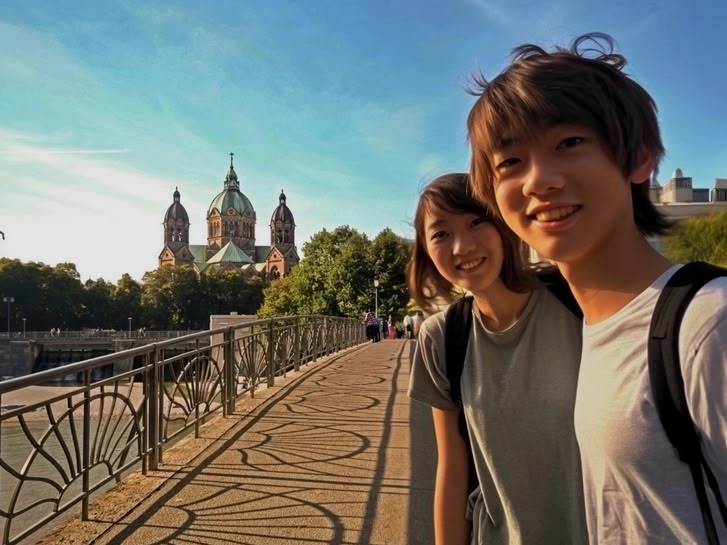
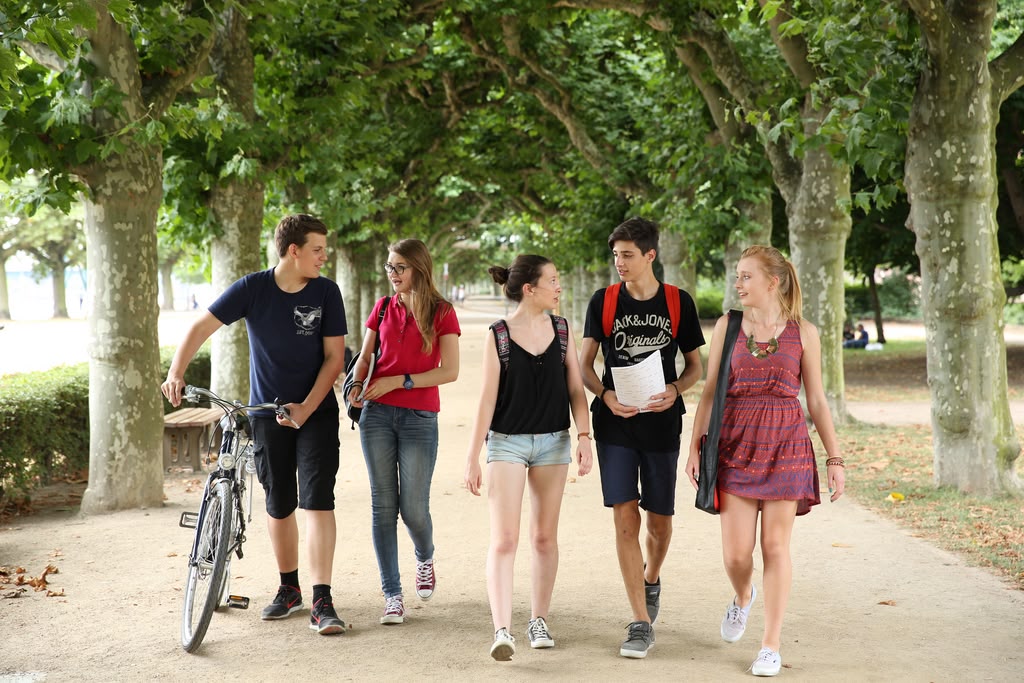
Picture your summer mornings in a bright classroom, practising German with classmates from a dozen different countries. By afternoon, you're exploring Frankfurt's skyline or discovering Munich's Bavarian charm with your new crew.

SPRACHCAFFE  runs supervised German summer camps in Frankfurt am Main (ages 12 to 21) and Munich (ages 16 to 21), with 20 German lessons per week of 45 minutes each (Standard Course), CEFR levels A0 to C1, and full board included. 

Teamers — qualified young-adult activity leaders aged 20 to 30 — supervise around 15 students each, communicate exclusively in German, and follow students through lessons, accommodation, activities, and excursions. 

Juniors

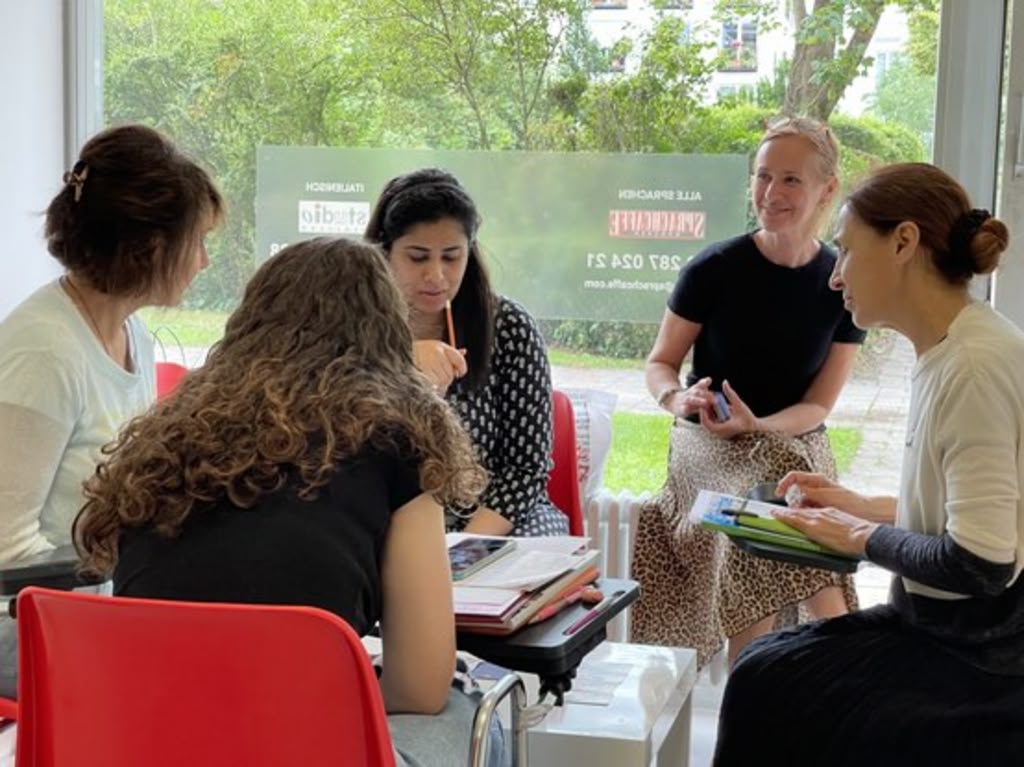
Qualified Native Teachers

Small groups and engaging lessons that build real confidence in German.

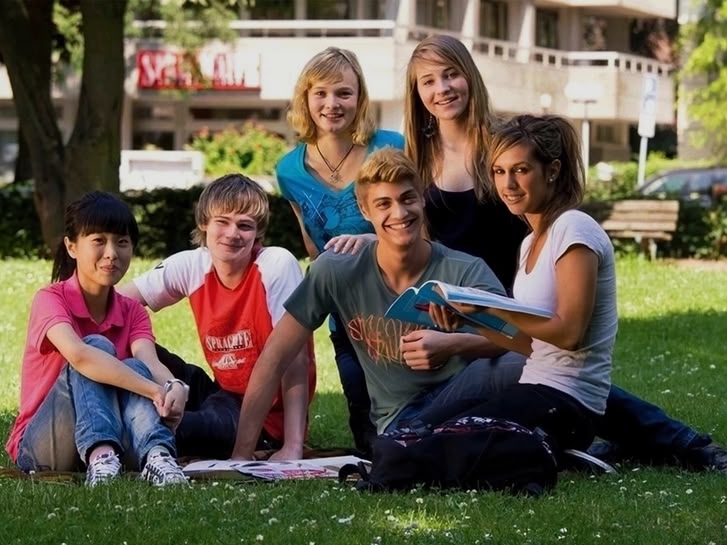
International Friendships

Meet teens from around the world and create bonds that last beyond summer.

Exciting Excursions

Explore Neuschwanstein Castle, BMW World, museums and more every week.

You're in Good Hands

Trained Teamers look after you around the clock so your parents can relax.

Courses for Teens in Germany

Spend summer learning German, making friends from around the world, and exploring two of Germany's most exciting cities. SPRACHCAFFE runs teen language camps in Frankfurt am Main (ages 12 to 21) and Munich (ages 16 to 21) during the German school summer holidays.

Every week of the Standard Course includes 20 German lessons - conversation, grammar, reading, and listening - Monday to Friday from 9:00 to 12:30. Each lesson is 45 minutes. For faster progress, the Intensive Course adds afternoon sessions for 30 lessons per week. A placement test on day one assigns each student to the right group along the CEFR scale (A0 to C1), from complete beginner to advanced. Classes are small, interactive, and built around speaking - not just studying. Every student receives a SPRACHCAFFE certificate at the end of the course confirming the level reached and the number of lessons completed. Exam preparation for the telc Deutsch certificate (issued by telc gGmbH, recognised across Europe) is available for teens with bigger ambitions.

In Frankfurt am Main - Germany's financial capital and headquarters of the European Central Bank - students stay in a central residence in Sachsenhausen, steps from the Old Town and the River Main. In Munich - Bavaria's capital and Germany's third-largest city - carefully selected host families welcome students into daily Bavarian life, with the Englischer Garten (one of the largest urban parks in Europe) and city centre within walking distance.

Both camps include weekly excursions, city tours, and evening activities like karaoke, bowling, and barbecues - plus a Welcome Party on day one so friendships start immediately.

Germany is also a safe, well-organised destination. According to Mercer's 2024 Quality of Living City Ranking, Frankfurt am Main ranks 7th globally for quality of living for international families, alongside Zurich, Vienna, and Copenhagen. Munich ranks 11th, with both cities scoring particularly highly on infrastructure, public transport, and access to education.

source: mercer.com/insights

Why a summer language camp works for teenagers

Adolescence is a particularly effective period for second-language acquisition. According to research summarised by the Bilingualism Matters centre at the University of Edinburgh (founded by Professor Antonella Sorace), teenagers retain strong neural plasticity for language learning into the late teens - combining the cognitive maturity to grasp grammar systems consciously with the pronunciation flexibility typical of younger learners.

Germany is also a safe and well-organised destination. Both Frankfurt and Munich consistently rank among Europe's safest large cities in the Mercer Quality of Living index, with extensive public transport, low youth crime rates, and well-established infrastructure for international student programmes.

Communication is key

Progress starts in the classroom — solid grammar, vocabulary, and all four skills (speaking, listening, reading, writing) — but the real breakthrough happens outside. Ordering lunch in German, chatting with a Munich host family, exploring Frankfurt with classmates from ten different countries.

Qualified native-speaking teachers keep classes small, interactive, and age-appropriate. Whether your teenager arrives as a complete beginner (CEFR A0) or already speaks at A2 or B1, the placement test on day one assigns them to the right group. The included Study Club adds four extra weekly sessions for homework support, revision, or creative projects — at no additional cost.

Teens typically experience a confidence breakthrough within the first 7 to 10 days of camp, as the international mix (Brazilian, Japanese, Italian, French, Polish classmates around the same dinner table) makes German the only shared working language. That's where the SPRACHCAFFE difference shows.

The Goethe-Zertifikat A1: Fit in Deutsch 1 and A2: Fit in Deutsch are German exams developed by the Goethe-Institut specifically for young people aged 10 to 16. Both certificates are aligned with the Common European Framework of Reference for Languages (CEFR) and are recognised by schools and education ministries worldwide as proof of beginner-level German proficiency

source: goethe.de

Our students reviews

Sprachcaffe Language School Frankfurt
4.6

Based on 168 reviews

Mary Armstrong
M
Mary Armstrong
13.08.2025

The class is excellent; well-organized, thorough and well-paced. The teacher is friendly, supportive and has a lot of patience. I enjoy the classes and will continue to study at Sprachcaffe. I am a resident of Frankfurt.

Salvatore G
S
Salvatore G
01.08.2022

it was a nice experience, helpful and kind staff. the teachers do not remain the same throughout the course but they are all prepared and Engaging, Especially Aysha . it is an experience which I would like to do again in the future. The structure is well maintained and The cooking is good. No complaints : D

Andrea Villanueva
A
Andrea Villanueva
31.10.2022

Great experience! nice and helpful staff, prepared tecahers. and Many new landscapes to see Highly recommended :D

"The Fachverband Deutscher Sprachschulen und Sprachreise-Veranstalter (FDSV) is the German association of language schools and language-travel operators, founded in 1977. FDSV members are independently inspected by a scientific advisory board and certified to the European Standard DIN EN 14804, the recognised European quality standard for language-study tour providers. The FDSV seal is awarded only when all quality criteria are met, covering accommodation, supervision, and course delivery."

Full German Immersion for Every Level

A German language holiday for teenagers goes far beyond the classroom. SPRACHCAFFE's immersion programme wraps the language around everything you do - from breakfast conversations with your host family in Munich to treasure hunts through Frankfurt's Old Town.

Each week is packed with activities. In Frankfurt, expect visits to the Senckenberg Natural History Museum (one of the largest natural history museums in Germany), the Main Tower observation deck, the Film Museum, minigolf, bowling, and a full-day trip to the historic university town of Marburg. In Munich, the programme includes BMW Welt, the Allianz Arena Museum, the Botanical Garden, and a full-day excursion to Neuschwanstein Castle (the 19th-century Bavarian castle that inspired Disney's Sleeping Beauty Castle).

At the heart of the experience are the Teamers - qualified young-adult activity leaders aged 20 to 30, specially trained to guide and inspire teenagers. They travel with students, run all activities, and communicate exclusively in German. Each Teamer supervises around 15 students, ensuring every teenager always has a trusted adult close by. Teamers stay in the same accommodation, and students aged 17 and under follow a daily curfew and the full activity schedule, giving parents peace of mind from arrival to departure.

On the first Monday, a placement test assigns each student to the right group - every CEFR level from A0 to C1 is welcome, so no student is bored and none is overwhelmed. Lessons cover speaking, listening, reading, and writing through interactive role plays, group projects, and real-world tasks. For students with bigger ambitions, telc Deutsch exam preparation is available.

The international mix does the rest: with classmates from across Europe, Asia, and Latin America at the same dinner table, German becomes the language everyone shares.

Find out more

What age is best for a teenager to learn German?

Teenagers retain strong neural plasticity for language learning throughout adolescence, combining cognitive maturity (the ability to understand grammar systems explicitly) with pronunciation flexibility typical of younger learners. Research summarised by the Bilingualism Matters centre at the University of Edinburgh confirms that ages 12 to 17 are a particularly productive period for second-language acquisition. SPRACHCAFFE's German camps accept teens from age 12 in Frankfurt and from age 16 in Munich, with maximum age 21 at both schools.

Our trained Teamers are young adults aged 20 to 30, specially trained to guide and inspire teenagers. They travel with your child, run the activities and communicate exclusively in the language being taught. Each Teamer looks after around 15 students, so your teenager always has someone close by who knows their name and their story. Teamers stay in the same accommodation, and students aged 17 and under follow a curfew and the full activity schedule. Teen language travel to Germany with SPRACHCAFFE means professional supervision from arrival to departure.

You'll notice the difference when your teenager returns. They'll be more open, more independent and more comfortable in a language that once felt foreign.

Absolutely. Our junior German courses start at level A0, which means no previous knowledge of German is needed. On the first day, a placement test determines your child's level, and our teachers take it from there. Many of our students arrive without a single word of German and leave with the confidence to hold real conversations.

In Frankfurt, teens stay in a centrally located residence in Sachsenhausen with shared ensuite bathrooms and full board (breakfast, hot lunch, dinner). In Munich, students live with carefully selected host families who provide full board including all three daily meals. Both options include WiFi and are within easy reach of the school. Special dietary requirements (vegetarian, vegan, halal, kosher, allergies, gluten-free) can be arranged at the time of booking - flag them when you register.

Every programme includes a mix of afternoon activities, evening events and excursions. In Frankfurt, highlights include the Main Tower, Senckenberg Museum and a full day trip to Marburg. In Munich, your teenager can look forward to BMW World, the Allianz Arena Museum and a day at Neuschwanstein Castle. The exact number of included excursions depends on the length of the stay. An intensive leisure programme is also available for even more adventure.

Can teenager take an officially recognised German exam at camp?

Yes. SPRACHCAFFE offers exam preparation for the telc Deutsch certificate and aligned with the Common European Framework of Reference at levels A1 to C1. certificates are recognised by employers, schools, and immigration authorities across Europe. For younger teens, the Goethe-Zertifikat Fit in Deutsch (issued by the Goethe-Institut at levels A1 and A2) is the standard junior-level recognition for ages 10 to 16. Exam preparation runs for a minimum of 2 to 4 weeks depending on the certificate; ask your SPRACHCAFFE adviser about the next available exam dates.