
Spanish idioms, or frases hechas, are fixed expressions whose meaning cannot be guessed from the individual words, and learning a few is one of the quickest ways to sound more natural and to understand native speakers. Spanish is spoken across more than twenty countries, so the idioms also vary from place to place, which is part of the fun. This guide gives you the most useful ones with their literal translation and real meaning, plus a tour of regional slang from Spain, Mexico, Peru and Argentina.
Spanish Idioms and Sayings
Common Spanish idioms
These are widely understood across the Spanish-speaking world and a good place to start:
| Idiom | Literal translation | Meaning |
|---|---|---|
| Estar en las nubes | to be in the clouds | to be daydreaming |
| Ser pan comido | to be eaten bread | to be very easy, a piece of cake |
| Tomar el pelo | to take the hair | to tease someone, to pull their leg |
| Estar como una cabra | to be like a goat | to be a bit crazy |
| No tener pelos en la lengua | to have no hairs on the tongue | to speak very frankly |
| Dar en el clavo | to hit the nail | to get it exactly right |
| Costar un ojo de la cara | to cost an eye from the face | to be very expensive |
| Meter la pata | to put the paw in | to put your foot in it, to slip up |
| Ponerse las pilas | to put the batteries in | to get your act together |
| Estar hecho polvo | to be made into dust | to be exhausted |
For example, after a long day of lessons you might say: Después de las clases, estoy hecho polvo (after classes, I'm exhausted).
Mexican slang
Mexican Spanish is full of colour, and these expressions come up constantly in everyday conversation.
| Expression | Meaning | Example |
|---|---|---|
| ¡Qué chido! | how cool, great | ¡Qué chido está tu coche! (Your car is so cool!) |
| Chamba | job, work | Tengo mucha chamba esta semana. (I have a lot of work this week.) |
| No hay bronca | no problem | No hay bronca, yo te ayudo. (No problem, I'll help you.) |
| ¿Qué onda? | what's up? | ¿Qué onda, cómo estás? (What's up, how are you?) |
| Órale | wow, OK, or come on | ¡Órale, qué bien! (Wow, great!) |
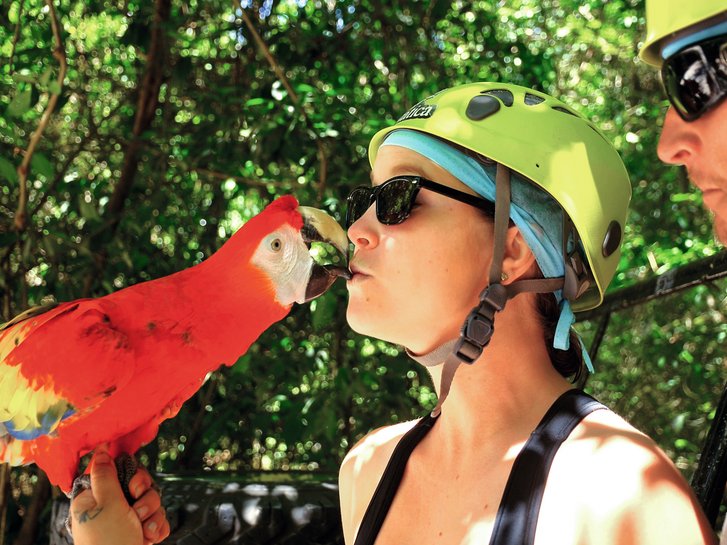
Learn Spanish in Mexico or Cuba

Peruvian slang
Peru has its own everyday vocabulary that visitors quickly pick up.
| Expression | Meaning | Example |
|---|---|---|
| Estar misio | to be broke | Este mes estoy misio. (I'm broke this month.) |
| Al toque | right away | Lo hago al toque. (I'll do it right away.) |
| Bacán | cool, great | La fiesta estuvo bacán. (The party was great.) |
| Pata | friend, mate | Él es mi pata. (He's my mate.) |
Argentinian slang
Argentine Spanish, especially around Buenos Aires, has a distinctive slang known as lunfardo.
| Expression | Meaning | Example |
|---|---|---|
| Che | hey, mate (to get attention) | Che, ¿vamos? (Hey, shall we go?) |
| Quilombo | a mess, chaos | Esto es un quilombo. (This is a mess.) |
| Estar en pedo | to be drunk (also "are you crazy?") | Anoche estaba en pedo. (Last night I was drunk.) |
| Ser más lento que el dulce de leche | to be slower than dulce de leche | Sos más lento que el dulce de leche. (You are so slow.) |
| Copado | cool, great | Está copado el plan. (The plan sounds great.) |
Food idioms
Spanish is rich in idioms built around food and drink, which say a lot about the culture.
| Idiom | Literal translation | Meaning |
|---|---|---|
| Importar un pepino | to matter a cucumber | to not care at all |
| Dar calabazas | to give pumpkins | to reject someone romantically |
| Estar de mala leche | to be of bad milk | to be in a bad mood |
| Ponerse rojo como un tomate | to go red as a tomato | to blush |
| Ser la leche | to be the milk | to be amazing (informal, Spain) |

Summary
Spanish idioms like estar en las nubes (to daydream), ser pan comido (to be easy) and meter la pata (to slip up) are understood across the Spanish-speaking world, while regional slang varies widely, from Mexico's ¡qué chido! to Peru's bacán and Argentina's che and quilombo.
Learn a handful, listen for them in real conversation, and they will quickly stick, especially on a Spanish course in Spain with SPRACHCAFFE. For everyday travel phrases rather than idioms, see our guide to must-know Spanish words and phrases.
FAQ
An idiom, or frase hecha, is a fixed expression whose meaning cannot be worked out from the individual words, such as "estar en las nubes", literally "to be in the clouds", meaning to be distracted.
They are one of the quickest ways to sound natural and to understand native speakers, who use them constantly. A few well-chosen idioms make your Spanish noticeably more fluent.
Yes. Spanish is spoken across more than twenty countries, so slang and idioms differ widely between Spain, Mexico, Argentina, Peru and elsewhere, which is part of the fun.
A handful at a time, used in real sentences, beats memorising long lists. Focus on the most common ones first, then add regional expressions as you travel or study.
Idioms come alive in conversation, which a Spanish course abroad puts you in daily.
Related news






Get the latest on travel, languages and culture