
You speak the language from day two. A Spanish summer camp is a supervised, all-inclusive language stay where teenagers learn Spanish in the morning and use it in real life through the afternoon and evening. SPRACHCAFFE runs these camps in Barcelona and Málaga for teenagers aged 14 to 21, combining 20 to 30 lessons per week with a daily programme of activities in the language. Research helps explain the timing: a major 2018 study in the journal Cognition found that the ability to learn a second language's grammar to a high level stays strong until around the ages of 17 or 18.
Spanish Summer Camps in Spain for Teens
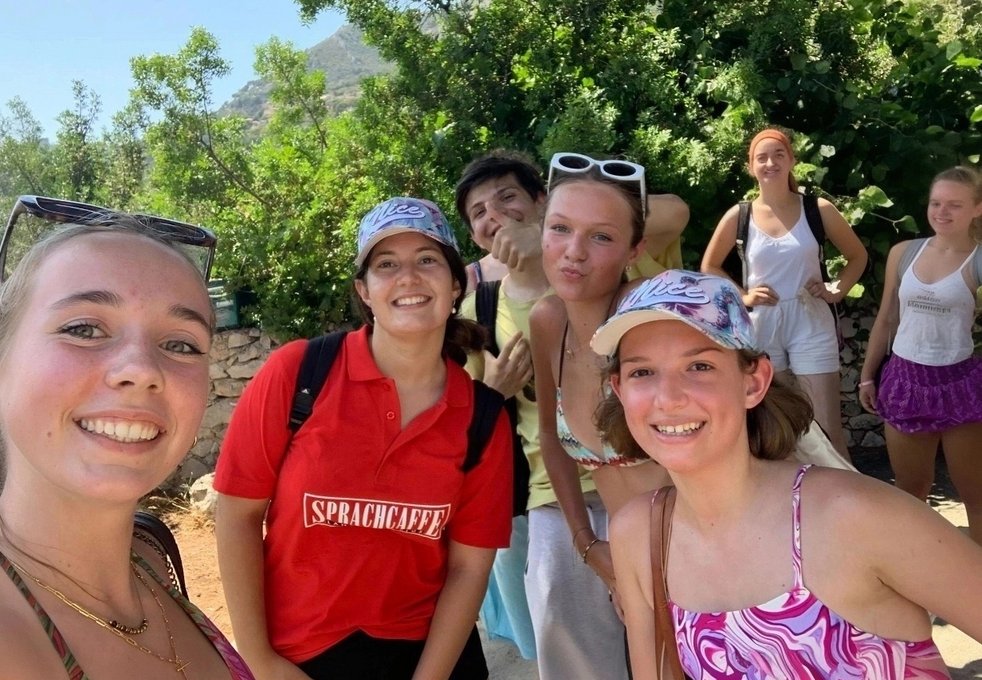
Two iconic destinations
Choose sun-soaked Málaga or vibrant Barcelona.
Genuinely all-inclusive
Course, full board, activities, and excursions in one package.
Small classes
A maximum of 15 students per group means real progress and personal attention.
Full Teamer supervision
Trained young adults are with your teenager every single day.
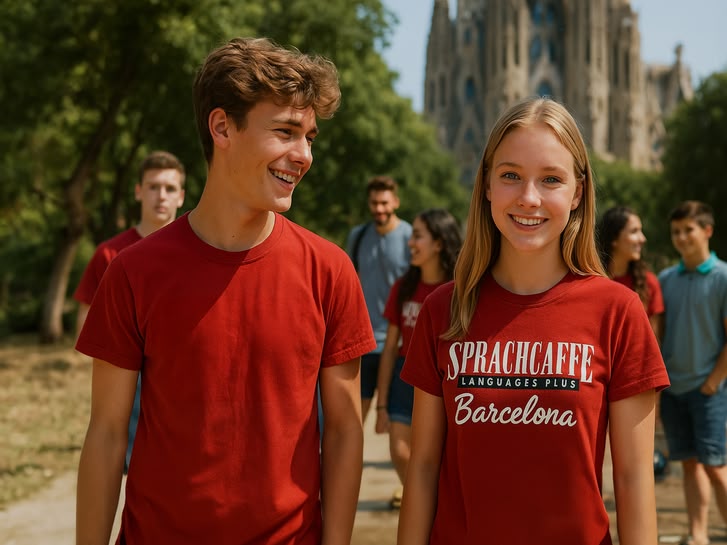
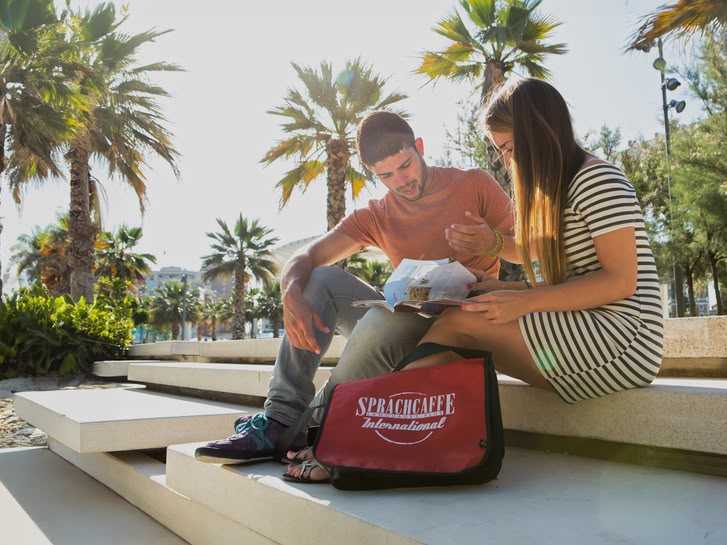
I had a wonderful experience at the Málaga Plus! The lessons were engaging, the atmosphere was so friendly, and I met amazing people from all over the world🥰Everything exceeded my expectations, and I will definitely come back again. Highly recommended! 🌟🌟🌟🌟🌟
Anastasiia Zakhandrevych, student, Málaga
How a Spanish summer camp in Spain works
A SPRACHCAFFE camp in Spain is fully all-inclusive, so the course, accommodation, meals, activities, and excursions are covered from the first day. Programmes like this are sometimes called a Spanish summer school. Teenagers take a CEFR-aligned placement test on arrival and join a group of a maximum of 15 students at their own level, from A0 for complete beginners to C1 for advanced speakers. Lessons run every morning and last 45 minutes each. Meals are full board, with vegetarian, halal, and allergy-friendly options on request. At the end of the course, every student receives a SPRACHCAFFE certificate of completion.
Standard and intensive courses
Both formats follow CEFR levels A0 to C1 and cap groups at a maximum of 15 students.
| Course | Lessons per week | Teaching time | Best for |
|---|---|---|---|
| Standard | 20 | 15 hours | Balanced mornings of study with free afternoons |
| Intensive | 30 | 22.5 hours | Faster progress with extra afternoon sessions |
Why a Spanish summer camp works for teenagers
The teenage years are an effective time to learn a second language. A landmark 2018 study by Hartshorne, Tenenbaum, and Pinker, researchers at MIT, Harvard, and Boston College, was published in the journal Cognition. It analysed data from nearly 670,000 language learners and found that the ability to acquire a second language's grammar to a high level remains strong until around the ages of 17 or 18. Linguists call this the critical period for language acquisition. Teenagers combine the neural plasticity of younger children with the cognitive maturity to understand grammar explicitly, which makes the years from 14 to 21 a particularly productive window for Spanish. A camp adds the part a classroom cannot: constant real-world use outside the lesson, where the language becomes a tool for friendship rather than a school subject.
The atmosphere at the school is like the best family; everyone is open and helpful. The teachers put their whole hearts into not only teaching the language but also showing others their world. Special thanks to Lusia Lara and her energetic teaching style. The only thing I would change about the school is that students were grouped more closely with a stronger emphasis on language proficiency.
Anna, student, Málaga
How much Spanish you can learn in a summer
The U.S. Foreign Service Institute classifies Spanish as a Category I language for English speakers, its easiest category, and estimates that around 600 to 750 classroom hours are needed to reach professional working proficiency at CEFR level B2 to C1. A summer stay covers only part of those hours, but immersion speeds up the early stages. For a teenager, two to four weeks in Spain, combining 20 to 30 lessons per week with daily use in shops, on the beach, and with an international group, typically moves a beginner about half a CEFR level and an intermediate learner a full level. The gain comes less from extra grammar than from hours of unscripted speaking. Spanish immersion abroad
Spain as a destination for a summer camp
A summer camp in Spain is a supervised language stay where teenagers learn Spanish by day and use it in the city, on the coast, and with an international group. The country is a natural setting for it. According to the UN World Tourism Organization (UN Tourism), Spain was the world's second most-visited country in 2024, with 93.8 million international arrivals, behind only France. It is also the institutional home of the Spanish language: the Instituto Cervantes, Spain's official cultural body, operates 103 centres in 51 countries and issues the DELE diploma on behalf of Spain's Ministry of Education. Spain is the most-visited tourism destination in the European Union as well, accounting for 22.2% of all foreign-tourist nights in the EU (Eurostat 2024). That blend of accessibility and authentic language environment is what makes Spain such a strong setting for a summer camp. SPRACHCAFFE runs its junior camps in two contrasting cities, both safe, modern European destinations with international airports and well-established infrastructure for teenage programmes.
Málaga on the Costa del Sol
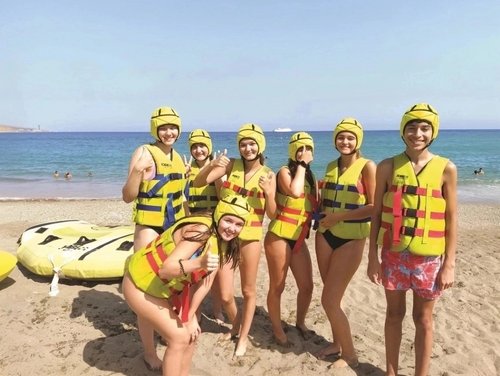
Málaga sits on Andalusia's Costa del Sol and enjoys more than 300 days of sunshine a year, with golden beaches and the Mediterranean on the doorstep. It is the birthplace of Pablo Picasso, born in 1881, and its Moorish heritage is visible in the Alcazaba fortress and the Gibralfaro Castle above the city. A full-day excursion to Seville is part of the programme. Teenagers stay in a host family or a residence, with breakfast and dinner taken there and lunch on campus or as a packed lunch.
Barcelona in Catalonia
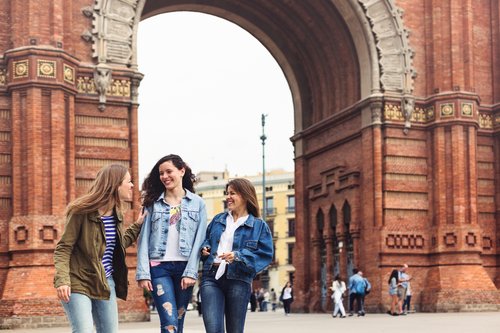
Barcelona is the capital of Catalonia and one of Europe's five most-visited city regions (Eurostat 2024). The architecture of Antoni Gaudí, including the Sagrada Família, Park Güell, and Casa Batlló, is recognised as UNESCO World Heritage, and the Gothic Quarter and the Mediterranean coast sit within easy reach of the school. A full-day excursion to Tarragona is part of the programme. Students stay in a supervised residence close to the city centre, where lessons also take place.
Activities, sport, and daily life at camp
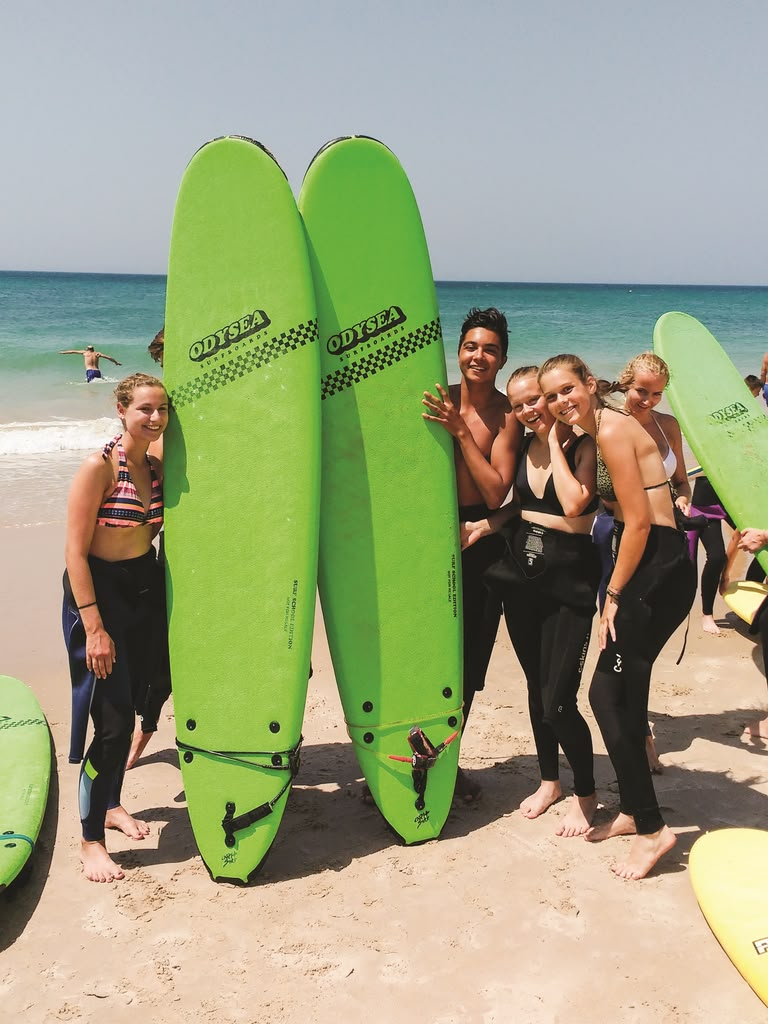
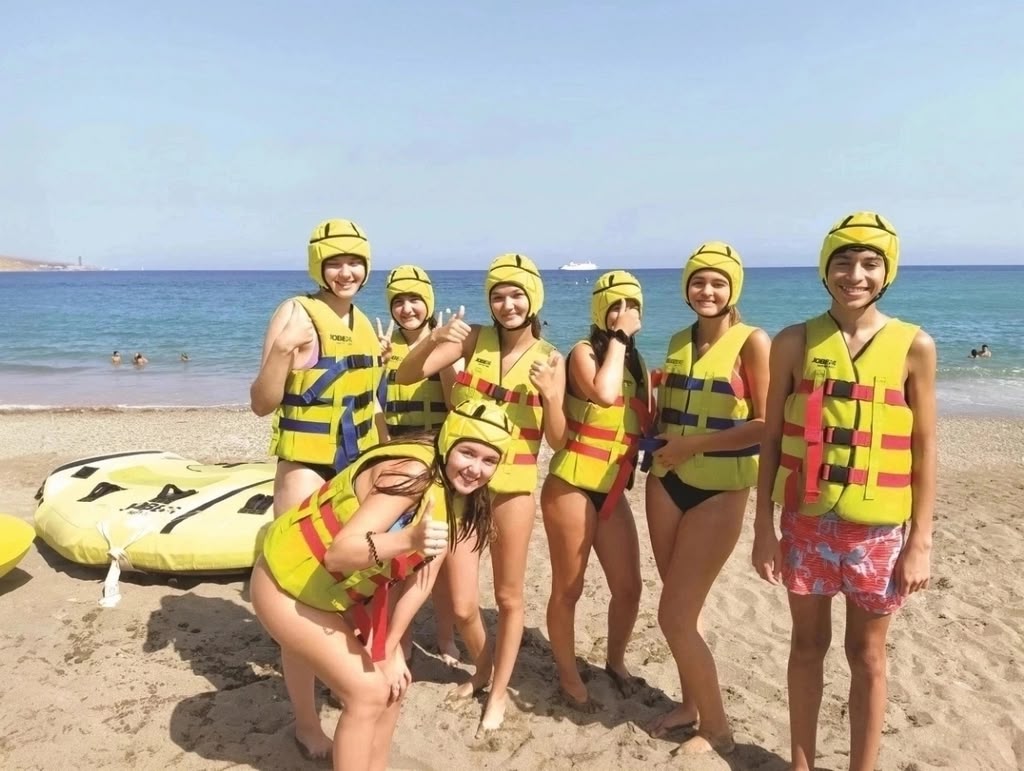
Lessons finish around lunchtime, and the afternoons are where Spanish becomes second nature. Football, beach volleyball, and group games are weekly fixtures, and the Mediterranean is minutes away in both cities. In Málaga, the programme includes a tapas tour, paddle surfing or kayaking, and a farewell paella party. In Barcelona, students enjoy beach time at Barceloneta, a talent show, and an escape room. Our Teamers lead every activity and keep Spanish as the working language, because friendships form fastest over sport and food, and that is where the language gets spoken without anyone thinking about grammar. The group is genuinely international, with classmates from across Europe, Asia, and the Americas, so Spanish is the natural shared language from the first day.


Safety and supervision
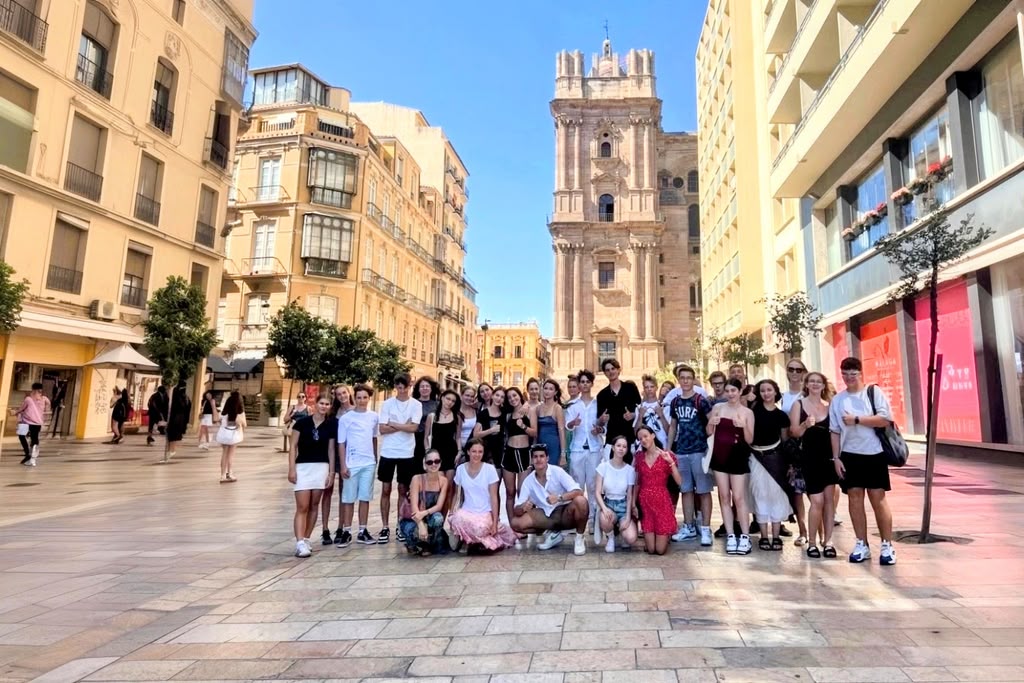
Safety matters as much as the lessons. Every SPRACHCAFFE camp includes full Teamer supervision. Teamers are trained young adults aged 21 to 30, each responsible for around 15 students, present from the morning lessons through to the evening activities and staying in the same accommodation as the group. They communicate primarily in Spanish. Students aged 17 and under follow a structured curfew alongside the full activity schedule, and support is available around the clock. A welcome party on the first day means a new arrival joins a community rather than a room of strangers. Families have trusted SPRACHCAFFE with these stays since 1983, across more than 40 years of junior language travel.
Find out more
SPRACHCAFFE's junior Spanish camps in Barcelona and Málaga are for teenagers aged 14 to 21. Students aged 17 and under follow the full supervised activity schedule and a structured evening curfew, while those aged 18 to 21 receive the same Teamer support with more freedom during their evening free time. Adults aged 18 and over can also book the separate SPRACHCAFFE adult Spanish courses in Spain.
Barcelona and Málaga are major European cities with international airports and well-developed student infrastructure. Every SPRACHCAFFE camp includes full Teamer supervision, with trained leaders aged 21 to 30 who stay in the same accommodation as the group, an evening curfew for students under 18, and support available around the clock.
Two weeks of immersion typically moves a beginner about half a CEFR level and an intermediate learner around a full level. Progress depends on the starting level and the course chosen, since the Intensive Course adds 10 lessons per week over the Standard Course. The fastest gains come from speaking Spanish outside the classroom every day.
The Standard Course has 20 lessons per week, which is 15 hours of teaching, and leaves afternoons free for activities. The Intensive Course has 30 lessons per week, or 22.5 hours, with extra afternoon sessions for faster progress. Both follow CEFR levels A0 to C1 and cap groups at a maximum of 15 students, with each lesson lasting 45 minutes.
SPRACHCAFFE provides an unaccompanied minor service where the airline requires it. Teenagers arrive at Barcelona or Málaga airport, where the team organises group transfers during the standard arrival window. Arrival is on Sunday and departure on Saturday, with private transfers available outside standard hours.