
Monolinguals have more than twice the risk of accelerated aging. That is the headline finding from a 2025 study of 86,149 people across 27 European countries — and it stopped researchers in their tracks.
Your Brain Was Right All Along
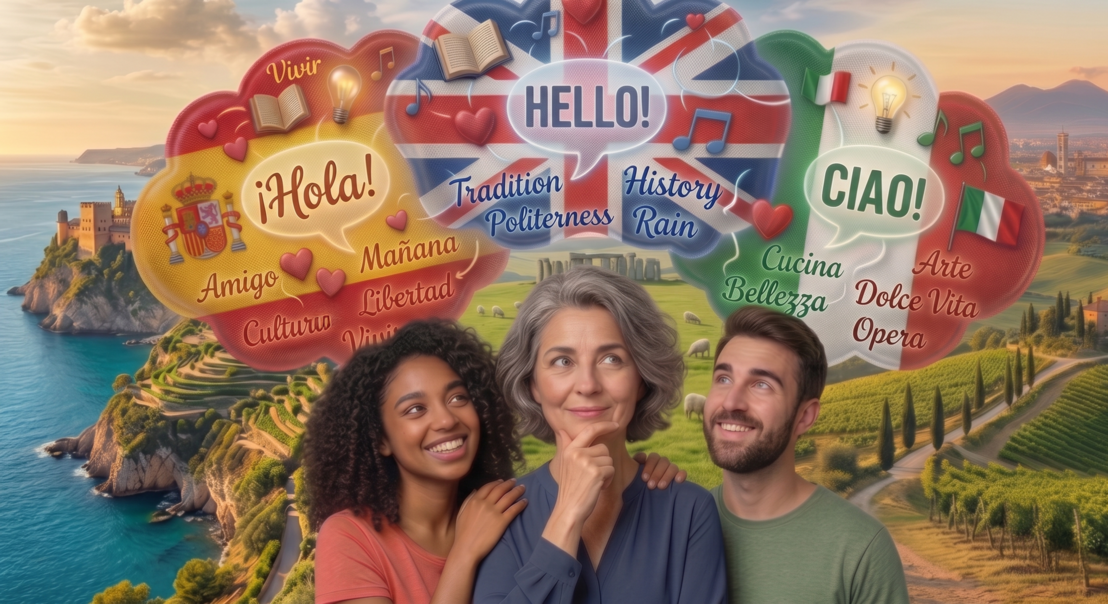
People who speak more than one language age more slowly biologically. That's the short version. And the protective effects go deeper than researchers had long thought.
The study, published in Nature Aging by Amoruso, Hernandez and colleagues, used AI models trained on thousands of health profiles to measure the gap between a person's calendar age and the age their body was actually running at.
They tracked sleep quality, heart health, sensory loss, physical activity, and the single strongest lifestyle factor protecting against faster aging wasn't diet, wasn't exercise, and wasn't sleep. It was speaking more than one language. Multilinguals came out younger - biologically, measurably younger. Monolinguals faced a 2.11 times higher risk of their bodies aging faster than their years.
The bilingual brain, it turns out, ages differently. We have always sensed that language does something to us - that the effort of switching between two worlds, two grammars, two ways of seeing, leaves a mark. Science is now showing us what that mark looks like. And it turns out to be protection.
But Doesn't AI Translate Everything Now?
It does. Point your phone at a menu in Tokyo and it reads back to you in English within seconds. Sit in a meeting in Seoul and a small device whispers a translation into your ear in near real-time. The technology is genuinely impressive, and it is only getting better.
But here is the distinction that matters: AI translates for you. Language learning transforms you. And those are two entirely different things.
Long before the term "brain hacking" entered everyday speech, bilingual people were doing exactly that - without knowing it. We have cars and elevators. We still go running. Not because we need to get somewhere on foot, but because the physical effort itself is what keeps the body healthy. Handing the movement to a machine doesn't keep the benefit - it removes it.
Language works exactly the same way. Translation is an output. It delivers meaning from one place to another. What it cannot do is build the brain wiring that comes from managing two thinking systems at once - the daily mental workout that, as the research now shows, measurably slows aging, builds a buffer against cognitive decline, and delays the onset of Alzheimer's disease by four to five years. No translation app has ever been shown to do any of that. Because the benefit was never in knowing what a word means. It was always in the act of reaching for it yourself.
There is also something the brain science makes quietly clear: AI can remove the friction of talking across languages. But that friction - the search for the right word, the split-second switch, the effort of being understood across a cultural line - is precisely the exercise that makes language learning protective. Removing it removes the benefit.
Use the tools. They are useful. But do not confuse convenience with change. One helps you get through the day. The other changes the brain you bring to it.
Why Childhood is When it Matters Most

The brain is not static. It rewires itself in response to the demands we place on it - and the younger the brain, the more readily it does so. This capacity, known as neuroplasticity, is at its peak in childhood. And language learning is one of the most demanding, most rewarding things a young brain can be asked to do. A study by Ballarini and colleagues (2023), reviewed in the major analysis by Cardaio & Keijzer published in the Journal of Language and Aging Research in 2025, followed bilingual and monolingual adults across different life stages and produced a finding that deserves to be widely known. Children who learned and actively used two languages early on showed far better performance in adulthood across a wide range of thinking skills: learning, memory, focus, working memory, and language ability. Being bilingual during middle life improved memory alone. But early bilingualism? It built the entire cognitive foundation.
The reason is structural. When a young brain manages two languages at once, it builds specific wiring - measurable changes in the brain regions responsible for attention, conflict monitoring, task-switching, and mental control. A child who grows up switching between languages is, in effect, training these systems every single day. The benefits turn out to be not just about words - they are about the architecture of the mind. As Cardaio & Keijzer (2025) show across multiple brain-imaging studies, this creates what scientists call "cognitive reserve" - a neural buffer the brain can draw on decades later, when age or disease begins to take its toll.
The research also confirms something parents and teachers intuitively feel: it is not simply about having learned a language once. The Ballarini study found a cumulative effect - the greater the total bilingual experience across a lifetime, the greater the thinking advantage across all measured areas.
Every year of active language use adds to the reserve. Every immersive experience - a summer language programme abroad, a school year in a foreign country, a family with two languages at the dinner table - builds brain architecture that will still be paying back fifty years later. The benefits of learning a second language early are not a bonus. They are the foundation. A language trip at twelve is not just a summer. It is infrastructure.
Use It or Lose It: Why Maintenance Matters
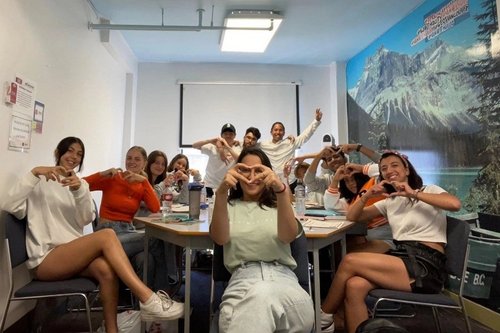
Anyone who once learned French at school and now cannot string a sentence together already knows the truth: what you do not use, you lose. The research now confirms this with force. Cardaio & Keijzer (2025) are clear on this point: it is not simply having once learned a language that builds cognitive reserve. It is the ongoing, regular use of that language.
A second language that has fallen out of daily life does not provide the same protective benefit as one that is actively spoken, read, and thought in. The neural pathways that switching between languages creates need regular traffic to stay strong. Let them go quiet, and the reserve begins to thin.
This is the scientific case for lifelong language engagement - and for returning, again and again, to places where the language is alive around you. A refresher course five years after your first trip is not repetition. It is renewal. The brain treats every return to active use as a signal to maintain and strengthen the networks it built. The science says, clearly: the benefit is not in the certificate. It is in the practice.
What Happens in the Brain When You Keep Going
For older adults, the research arrives like news from a country you always hoped existed. The findings are not merely encouraging - they are, in places, astonishing.
Cardaio & Keijzer (2025) reviewed 18 studies on multilingualism and cognitive decline, including brain scans using PET imaging. What they found, across multiple research groups, was this: bilingual patients with Alzheimer's disease showed more brain damage in their scans than monolingual patients performing at the same level on thinking tests.
Read that carefully, because it is counterintuitive. Their brains were carrying heavier loads of disease - and still working normally. Years of managing two languages had built brain networks so efficient and so resilient that the brain could absorb extensive damage and keep going. Research by Sala and colleagues (2022), published in Human Brain Mapping, went further: the degree of bilingualism - how actively and often the second language was used - was directly linked to how much damage the brain could sustain without showing symptoms. More active language use meant more reserve. More reserve meant more time.
The four-to-five-year delay in the onset of Alzheimer's symptoms, seen across multiple international studies, is not a footnote. For a person and their family, that is four or five years of a life fully lived.
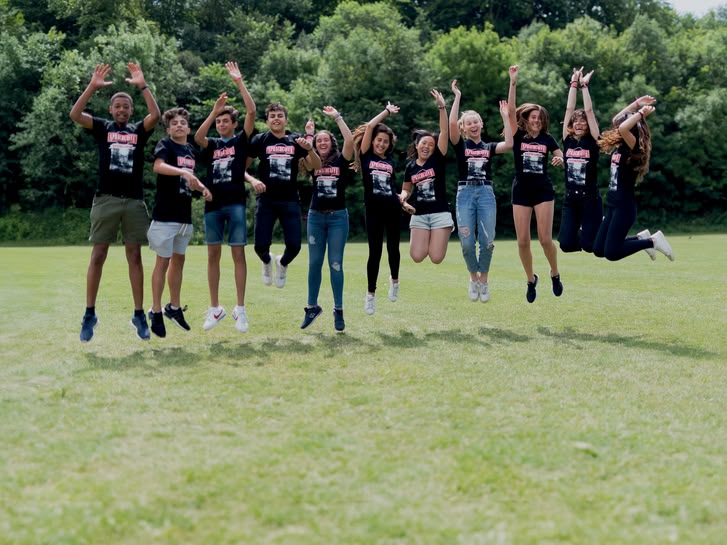

Is It Too Late to Start? No.
The most encouraging part of the research is for those who did not grow up multilingual. Later-life language learning - taking up a new language as an adult or in older age - also shows measurable benefits for the brain. The evidence base is younger and smaller, and the researchers are careful not to overclaim. But what exists points clearly in the right direction.
Tigka and colleagues (2019), in a study reviewed by Cardaio & Keijzer, followed adults with Mild Cognitive Impairment who attended an 18-month English language course and compared them with a control group. The language learners showed clearly better performance on memory tests - the ability to learn new things and resist confusion during recall. Language learning specifically strengthened the mental control processes that Alzheimer's most aggressively erodes. Wong and colleagues (2019) found separately that language training improved thinking ability broadly in healthy older adults, producing gains across multiple areas at once.
The conclusion is measured but meaningful: starting a language in later life is genuinely worthwhile. It activates the brain in ways few other activities can match. It builds memory. It creates social connection. And it works best when the learning is intensive, sustained, and emotionally engaging - conditions that language immersion travel is uniquely positioned to provide.
Why Immersion is What the Science Actually Recommends

There is a framework in the research called the Adaptive Control Hypothesis, developed by Green & Abutalebi (2013), which predicts that the greatest brain benefits from multilingualism arise in dual-language settings - real situations where both languages are active and switching happens in response to social context. Not a classroom exercise. An actual conversation, in a real place, with a real person who does not share your native tongue. Ordering coffee. Asking for directions. Making a joke and being understood.
This is the environment that SPRACHCAFFE has built its entire philosophy around - long before brain scientists arrived to explain in precise terms why it works so well. An older adult on a language trip is doing something extraordinary for their brain: navigating a living language, speaking with native speakers, making social connections across linguistic lines, constantly managing two thinking systems in real time. That is the exact workout the science identifies as most protective.
Language is Connection — and Connection is Medicine
There is one final dimension the science cannot overlook, and it may be the most human of all. Social isolation is a well-established risk factor for cognitive decline and dementia. Evans and colleagues (2018), publishing in PLOS ONE, found that social engagement works as a separate, independent component of cognitive reserve - protective in its own right. Cardaio & Keijzer (2025) note that for older adults at elevated risk of isolation, the social side of language learning may itself add to reserve on its own.
A language trip, at any age, combines multiple reserve-building activities at once: new language learning, cultural engagement, novel settings, physical activity through travel, and - above all - meaningful human connection across borders. Classmates from a dozen different countries. Conversations that could not have happened anywhere else. The group that becomes, over one extraordinary week, something very much like a community.
We have always known this at SPRACHCAFFE, in the way that lived experience teaches you things before the research catches up. Language is not a skill you acquire and file away. It is the primary means by which human beings reach toward one another. Learning it young builds the architecture of a resilient mind. Keeping it alive sustains that architecture through decades. Starting it later - even imperfectly, even tentatively - is one of the most intelligent things a brain can do for itself.
The science has caught up. And the invitation, as ever, is open. - Learn. Travel. Meet Your People.
Sources
Amoruso, L., Hernandez, H., et al. (2025). Multilingualism protects against accelerated aging in cross-sectional and longitudinal analyses of 27 European countries. Nature Aging, 5(11), 2340-2354.
pubmed.ncbi.nlm.nih.gov/41214212/
Cardaio, A. & Keijzer, M. (2025). Comparing the impact of lifelong multilingualism and later-life language learning on cognitive and brain reserve in older adults with cognitive decline due to Alzheimer's disease: A systematic review. Journal of Language and Aging Research, 3(2), 181-223.
journals.sub.uni-hamburg.de/hup2/jlar/article/download/1736/454
Ballarini, T., et al. (2023). Linking early-life bilingualism and cognitive advantage in older adulthood. Neurobiology of Aging, 124, 18-28. [Reviewed in Cardaio & Keijzer, 2025]
www.sciencedirect.com/science/article/abs/pii/S0197458022002597
Sala, A., et al. (2022). Lifelong bilingualism and mechanisms of neuroprotection in Alzheimer dementia. Human Brain Mapping, 43(2), 581-592.
pmc.ncbi.nlm.nih.gov/articles/PMC12488631/
Perani, D., et al. (2017). The impact of bilingualism on brain reserve and metabolic connectivity in Alzheimer's dementia. PNAS, 114(7), 1690-1695. [Reviewed in Cardaio & Keijzer, 2025]
www.pnas.org/doi/10.1073/pnas.1610909114
Tigka, E., et al. (2019). FL Learning Could Contribute to the Enhancement of Cognitive Functions in MCI Older Adults. Intercultural Translation Semiotic, 8(2), 1-24. [Reviewed in Cardaio & Keijzer, 2025]
www.researchgate.net/publication/340298553_FL_learning_could_contribute_to_the_enhancement_of_cognitive_functions_in_MCI_older_adults
Wong, P.C.M., et al. (2019). Language Training Leads to Global Cognitive Improvement in Older Adults. Journal of Speech, Language, and Hearing Research, 62(7), 2411-2424. [Reviewed in Cardaio & Keijzer, 2025]
pubs.asha.org/doi/10.1044/2019_JSLHR-L-18-0321
Green, D.W. & Abutalebi, J. (2013). Language control in bilinguals: The Adaptive Control Hypothesis. Journal of Cognitive Psychology, 25(5), 515-530.
pmc.ncbi.nlm.nih.gov/articles/PMC4095950/
Evans, I.E.M., et al. (2018). Social Isolation, Cognitive Reserve, and Cognition in Healthy Older People. PLOS ONE, 13(8): e0201008.
doi.org/10.1371/journal.pone.0201008
Related news


Get the latest on travel, languages and culture