
Picture yourself on a sunny terrace in Málaga, holding your first real conversation in Spanish with friends from a dozen countries. For adults who want that moment to arrive sooner, Spain is the best place to learn Spanish, because it is the historical home of the language and a country where the practice never stops once class ends. The Foreign Service Institute classes Spanish among the easiest languages for English speakers, estimating roughly 600 to 750 classroom hours to reach professional working proficiency, around B2 to C1 on the CEFR. At SPRACHCAFFE, you can cover that ground faster in two contrasting cities, Málaga and Barcelona, in small classes of no more than 10 learners.
The Best Places to Learn Spanish in Spain

Global Community
Meet classmates from over 30 countries and build lasting friendships.
Small Classes
Max. 10 students per group for personal attention and fast results.
Flexible Courses
Standard, intensive, exam prep, or one to one to match your goals.
Certificates
At the end of your course, you receive a certificate confirming your language level

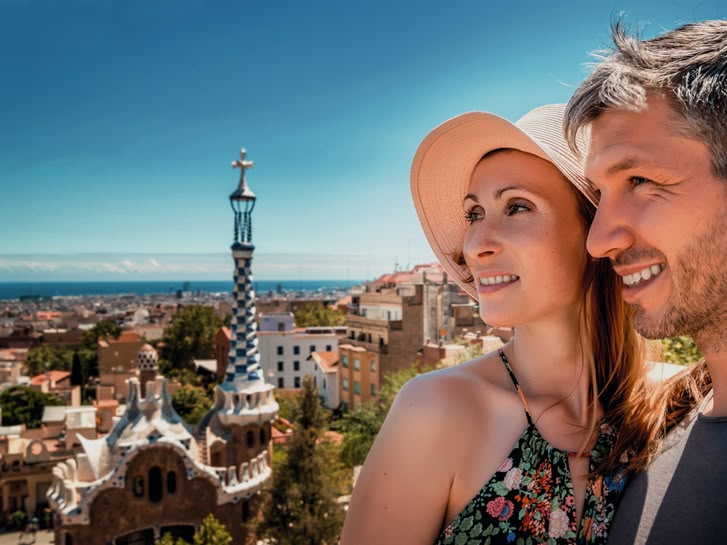
Why Spain is the best place to learn Spanish
Spain is the institutional home of the Spanish language. The Real Academia Española (RAE), founded in 1713, has standardised Spanish for over three centuries and works today with the Asociación de Academias de la Lengua Española (ASALE), a network of 23 national academies that maintain the language across Spain, Latin America, the Philippines and the United States. Spanish learned in Spain is fully intelligible across all 21 Spanish-speaking countries, with regional differences comparable to those between British and American English.
Two practical advantages set Spain apart for adult learners. First, a strong CEFR-aligned teaching tradition: schools test your level on arrival and follow a structured progression from A1 to C2. Second, the most recognised diploma is issued at source. The DELE (Diploma de Español como Lengua Extranjera) is awarded by the Instituto Cervantes on behalf of Spain's Ministry of Education, Vocational Training and Sports, and it is valid for life with no expiry date, unlike English-language tests such as TOEFL or IELTS, which expire after two years. With around 635 million Spanish speakers worldwide, of whom more than 500 million are native speakers (Instituto Cervantes, El español en el mundo 2025), the language surrounds you the moment you step outside.
A well-established study destination
Spain's Spanish-language sector is large and growing. According to the most recent FEDELE Sectorial Report, the industry survey of Instituto Cervantes accredited member schools, FEDELE schools recorded close to 161,000 in-person learners in 2025, the highest figure in the federation's history, alongside roughly 977,500 booked student-weeks across the year.
Málaga or Barcelona: choosing your city
The best city for you depends on the atmosphere you want around your studies. Since 1983, SPRACHCAFFE has run adult courses for learners aged 18 and over, and in Spain you can choose between Málaga and Barcelona, each capped at 10 students and covering CEFR levels A1 to C1.
Learning Spanish in Málaga
In Málaga, our year-round school on the Costa del Sol sits in a charming Andalusian villa in the Pedregalejo district, a short walk from the beach. The school holds Instituto Cervantes accreditation, the official quality seal awarded by the Spanish government for Spanish-language teaching, and welcomes around 120 international learners in peak season. Málaga is the birthplace of Pablo Picasso, the capital of the Costa del Sol and Spain's sixth-largest city, with more than 300 days of sunshine a year, average annual temperatures of around 19°C and an Andalusian seafood tradition to match. It suits adults who want their Spanish wrapped in southern warmth, sea air and an unhurried Andalusian rhythm.
Learning Spanish in Barcelona
Barcelona, the capital of Catalonia and Spain's second-largest city, offers a different energy. Our school of around 90 learners sits in one of Europe's most creative cities, surrounded by Gaudí's architecture; the Sagrada Família, Park Güell and Casa Batlló are all UNESCO World Heritage Sites, the Mediterranean beaches are close by, and the cultural calendar runs all year. Spanish is the working language of the classroom and of business across Catalonia, while Catalan is the regional co-official language, so you will hear both every day. This adds useful immersion exposure and has no impact on your Spanish progress.
Both cities are easy to reach. Málaga-Costa del Sol Airport is one of Spain's busiest, and Barcelona-El Prat is the country's second-largest. For accommodation, you can choose a host family for the deepest cultural immersion, a shared apartment with international flatmates, or, in Barcelona, a modern on-site residence with shared kitchens and a terrace.
The difficulty of the classes was well judged, and our teacher had a real talent for talking with people who are not yet fluent in Spanish while keeping the use of English to a minimum, so we could learn efficiently.
Grzegorz Gurtowski, course participant in Málaga
How long it takes to learn Spanish
For English speakers, Spanish is one of the quicker languages to learn. The Foreign Service Institute places it among the languages closest to English and estimates around 600 to 750 classroom hours to reach professional working proficiency, roughly B2 to C1 on the CEFR. Living in Spain shortens the felt distance, because the language develops along two parallel tracks: structured grammar and vocabulary inside the classroom, and real communicative practice outside it. The CEFR's "can-do" approach is built on exactly this idea, measuring what learners can do in real interaction, not only what they know. Every conversation in a café, market or taxi turns textbook Spanish into reflex Spanish.
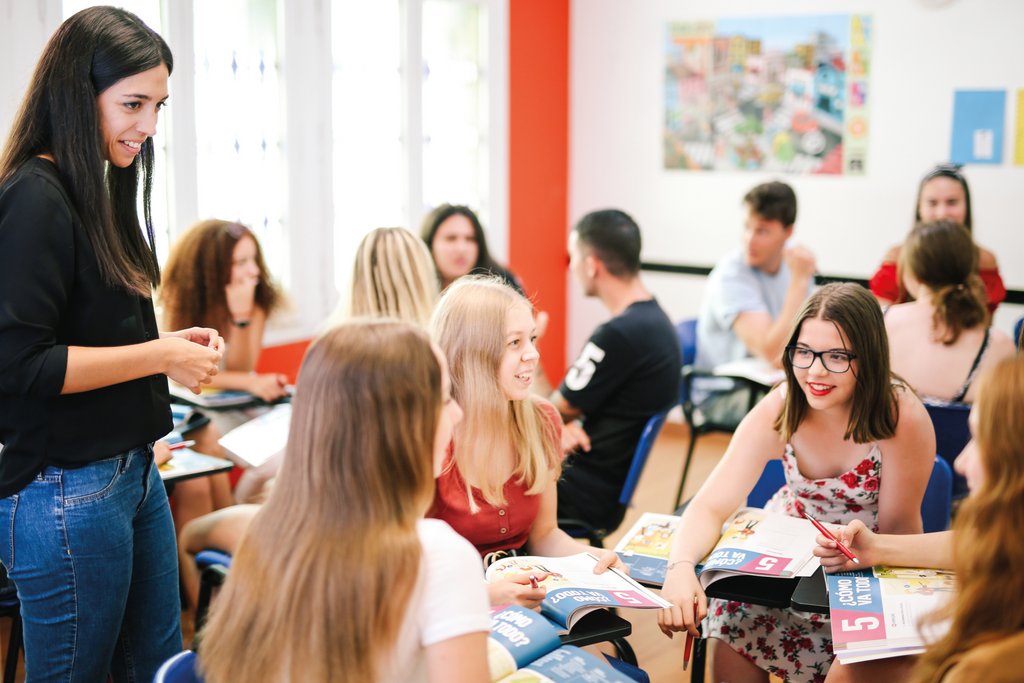
Castilian and Andalusian Spanish: the varieties you'll hear
SPRACHCAFFE classes are taught entirely in standard Castilian Spanish, the variety the Instituto Cervantes teaches and certifies worldwide and the one tested in the DELE and SIELE exams. Around you, the city adds natural exposure to regional variation. In Málaga you practise with the rhythm of Andalusian Spanish, marked by softer endings, dropped consonants and seseo pronunciation, which usually takes a few days to tune into and then stays fully intelligible with every other variety. In Barcelona you hear the measured cadence of Castilian alongside Catalan in daily life. Either way, what you learn is the standardised Spanish defined by the Real Academia Española, much as an English learner meets British, American and Australian accents while learning international English.
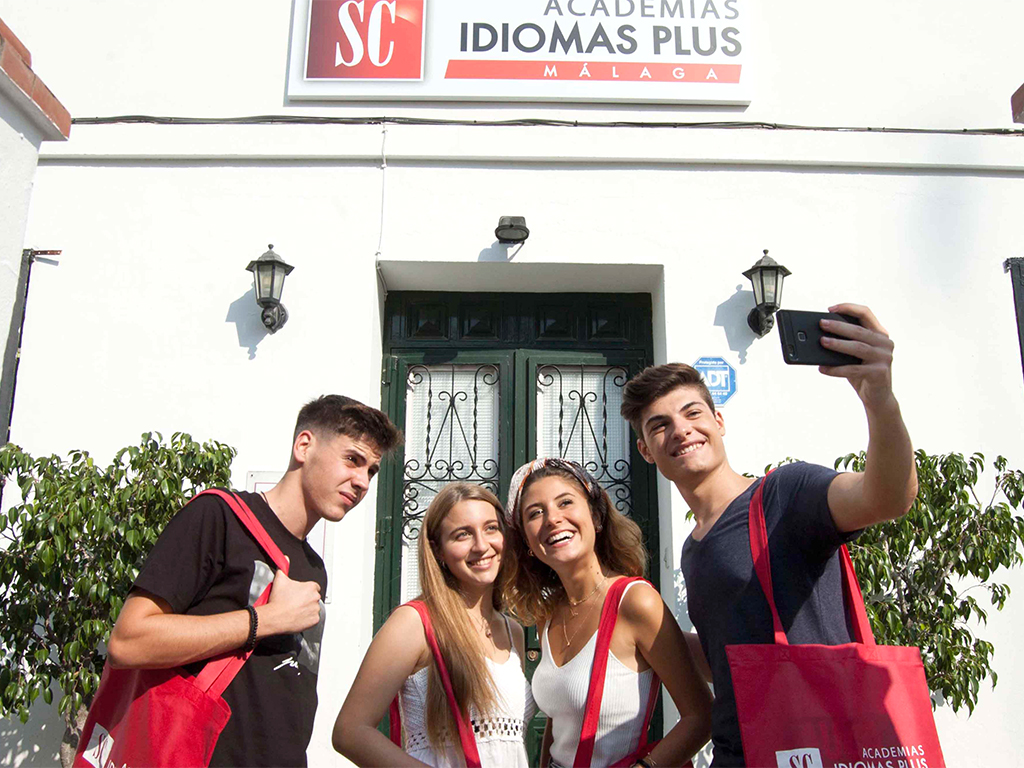

I loved my Spanish course in Málaga. The teacher, Asun, explained the grammar clearly and adjusted to my priorities, with plenty of speaking and vocabulary. She was well prepared, great fun to work with and genuinely kind. I can recommend it without hesitation.
Verena König, course participant in Málaga
Our language schools location
According to the FEDELE Sectoral Report (El Informe Sectorial), the most recent published industry survey of Cervantes-accredited Spanish language schools showed:
Total enrolment of approximately 100,000 students per year in Cervantes-accredited Spanish language schools in Spain
Over 300,000 student-weeks booked annually
Italy, Germany, the United States, France, and the United Kingdom are the top five sending countries, jointly representing around 55% of all foreign students
source: FEDELE, El Informe Sectorial
Courses and what's included
You can choose the format that matches your goals, from a relaxed standard course to focused exam preparation.
| Course | Lessons per week | Hours per week | Class size | Notes |
|---|---|---|---|---|
| Standard Course | 20 lessons (45 min each) | 15 hours | Max. 10 | Mornings only, afternoons free |
| Intensive Course | 30 lessons (45 min each) | 22.5 hours | Max. 10 | Morning + afternoon sessions for faster progress |
| One-to-One | Customised | Customised | 1 | Fully personalised pacing |
| DELE / SIELE Exam Prep | Add-on to Standard or Intensive | Variable | Max. 10 | CEFR levels A1 to C1 |
Every course includes your language lessons, a CEFR-aligned placement test on arrival, learning materials on loan and a certificate of completion confirming your CEFR level. Our free Study Club adds extra support sessions each week, and activities and excursions run regularly, with many included in the programme. You book your accommodation alongside your course, so you can choose the option that fits you best.
Life beyond the classroom
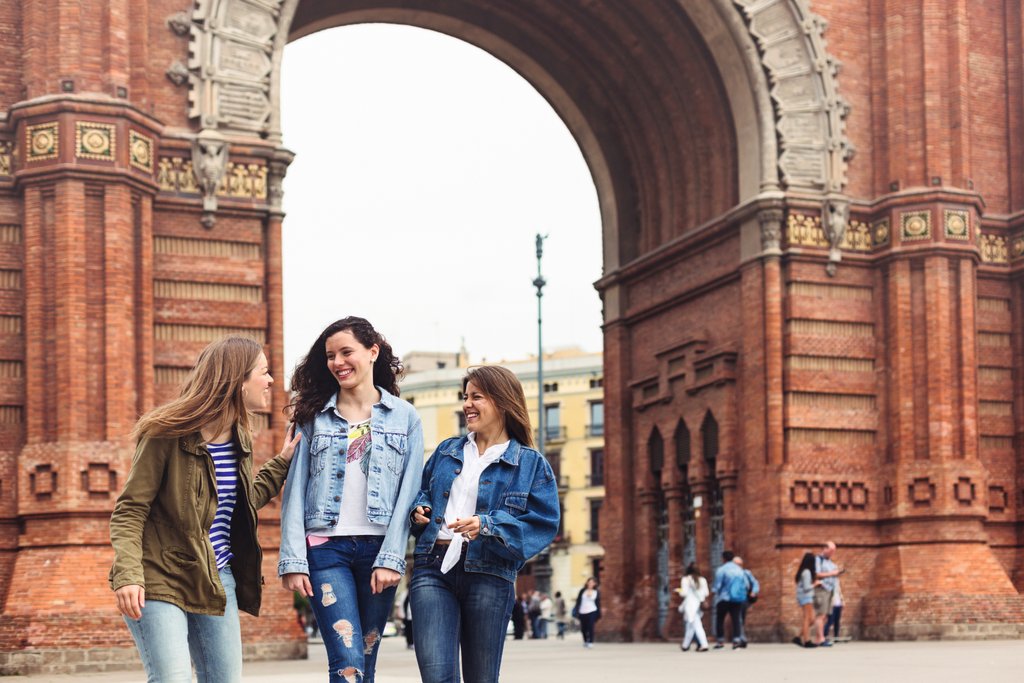
The real learning often happens after class, where Spanish culture stops being a subject and becomes your everyday. In Málaga, your free time can include boat trips along the Costa del Sol, the Picasso Museum in the city where Picasso was born, tapas tours through the Old Town, karaoke nights and weekend excursions to Granada and the Alhambra. In Barcelona, you can join Gaudí city tours, beach games at Barceloneta, day trips to Tarragona and football at Camp Nou. Your classmates, adults from more than 30 countries, become your daily conversation partners, which is exactly how a course turns into friendships that outlast the trip. Málaga has become one of Europe's fastest-growing destinations for study and tourism, with a Mediterranean climate that runs year-round and average temperatures of around 19°C, among the highest annual averages in Europe (source: AEMET).
Find out more
There is no single best city, but Málaga and Barcelona are two of the strongest choices for adults. Málaga, on the Andalusian Costa del Sol, offers a relaxed seaside setting and more than 300 days of sunshine a year. Barcelona, the capital of Catalonia, offers a major cultural city where Spanish is the everyday working language. Both deliver standardised classroom Spanish and authentic immersion outside it.
The Foreign Service Institute estimates around 600 to 750 classroom hours for an English speaker to reach professional working proficiency in Spanish, roughly B2 to C1 on the CEFR. Immersion in Spain can shorten the time it feels to get there, because you practise constantly outside the classroom. Your exact pace depends on your starting level, study intensity and how much you use the language each day.
Yes. Catalan and Spanish are both official languages in Catalonia, but Spanish (Castellano) is spoken fluently by virtually every resident and is the working language of business, retail and tourism across Barcelona. SPRACHCAFFE classes in Barcelona are taught entirely in standard Castilian Spanish, while daily life adds incidental exposure to Catalan and useful practice in switching between languages.
Andalusian Spanish, spoken in Málaga and across the Costa del Sol, has distinctive features such as softer consonant endings, seseo pronunciation and a faster rhythm, which can take a few days to get used to. Once your ear adjusts, it is fully intelligible with every other variety, sharing the same grammar, core vocabulary and writing system standardised by the Real Academia Española. SPRACHCAFFE classes are taught in standard Castilian Spanish, so your formal learning stays consistent wherever you study.
Andalusian Spanish - the regional variety spoken in Málaga and the wider Costa del Sol - has distinctive features (softer consonant endings, seseo pronunciation, faster speech rhythm) that can take a few days to adjust to. Once tuned in, however, Andalusian Spanish is fully mutually intelligible with all other Spanish varieties: the same grammar, the same core vocabulary, the same writing system standardised by the Real Academia Española. SPRACHCAFFE classes are taught in standard Castilian Spanish, while daily life in Málaga gives you authentic regional exposure - comparable to how an English learner in Edinburgh or Houston encounters local accents while learning international English.
Both are CEFR-aligned Spanish certifications from the Instituto Cervantes. The DELE covers levels A1 to C2, is paper-based on fixed dates and is valid for life, and it remains the standard for academic admission in Spain. The SIELE is fully digital, available in over 100 countries, uses a 0 to 1000 scale mapped to A1 to C1, and returns results within about three weeks, which makes it popular for international employment. SPRACHCAFFE offers preparation for both in Málaga and Barcelona.
It depends on your nationality. Citizens of the EU, EEA and Switzerland can live and study in Spain freely and simply register locally. Many other nationalities can attend short courses within standard visa-free travel limits, while longer stays may require a student visa. Visa rules change over time, so always check the current requirements with the official Spanish authorities or your nearest Spanish consulate before you book.