
Canada is officially bilingual, with English and French side by side, but the full picture is far richer: it is one of the most multicultural countries in the world, home to hundreds of immigrant languages and dozens of Indigenous ones. This guide explains the languages of Canada: the two official languages and where each is spoken, why the country is bilingual, and the many other languages you will hear across its cities and regions.
Languages of Canada: Official & Minority
The official languages of Canada

Canada has two official languages at the federal level, English and French, both used by the national government and its institutions. English is the more widely spoken: it is the first official language of around three quarters of Canadians, while French is that of about a fifth, concentrated overwhelmingly in Quebec. Almost all Canadians, around 98 per cent, can hold a conversation in at least one of the two, with English spoken by the large majority and French by roughly a third of the population. Federal institutions must offer services in both languages, though not every job or region requires bilingualism.
How Canada came to be bilingual
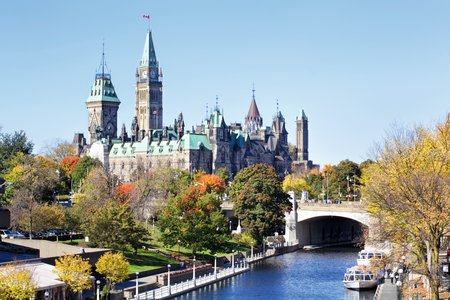
Canada's two languages are a legacy of its history. Long before any Europeans arrived, the ancestors of Canada's Indigenous peoples reached the continent from Asia, across the land bridge of Beringia, thousands of years ago. The first Europeans were the Norse, who reached Newfoundland at L'Anse aux Meadows around the year 1000, though they did not stay. Lasting European contact came later, with the voyages of John Cabot in 1497 and Jacques Cartier in the 1530s, which led to the French colony of New France and, in 1670, the English Hudson's Bay Company. Britain and France competed for the territory until the Seven Years' War ended in 1763 with France ceding Canada to Britain. The French-speaking population remained, and the Quebec Act of 1774 protected their language, religion and customs, later shaping the province of Lower Canada, today's Quebec. Canada gained legislative independence with the Statute of Westminster in 1931 and full control of its constitution in 1982, carrying both languages forward. It remains a constitutional monarchy, with the King of Canada as head of state, represented by the Governor General.


Where English and French are spoken
English is the majority language in every province and territory except Quebec, where French is the clear majority and the sole official language. New Brunswick is the only officially bilingual province, with large English- and French-speaking (Acadian) communities. Beyond Quebec, there are long-established French-speaking communities elsewhere too, notably in eastern and northern Ontario and in Manitoba, while nearly a million Francophones live outside Quebec in total.
Languages in Toronto, Vancouver and Montreal
Canada's big cities show its diversity best. Toronto, in Ontario, the most populous province, is strongly English-speaking but intensely multicultural, home to large Chinese, South Asian, Italian and many other communities. Vancouver, on the west coast in British Columbia, is likewise mostly English-speaking, with sizeable immigrant communities and only a small French-speaking minority. Montreal, in Quebec, is the mirror image: a majority French-speaking city where a large share of people also speak English, alongside Spanish, Arabic, Italian and Haitian Creole.
Immigrant languages
Decades of immigration have made Canada extraordinarily multilingual. After English and French, the most spoken languages include Mandarin and Cantonese, Punjabi, Spanish, Tagalog, Arabic, Hindi, Urdu, Italian and German. Punjabi in particular is strongly rooted, widely spoken around Vancouver in British Columbia and in Calgary and Edmonton in Alberta. In the big cities, it is common to hear a dozen languages in a single day.
Indigenous languages
Canada is home to dozens of Indigenous languages from several distinct families, spoken long before European settlement. The most widely spoken today are the Cree languages, across the Prairies, Ontario and Quebec, and Inuktitut, spoken in the northern territories. Inuktitut is an official language of Nunavut, and the Northwest Territories recognise several Indigenous languages officially. Many of these languages are endangered after generations of decline, and communities and governments are now working hard to revitalise and teach them.
Summary
The languages of Canada begin with its two official languages, English and French: English is spoken by the large majority and French by roughly a third, mainly in Quebec, the only province where French is the sole official language, while New Brunswick is the only officially bilingual one. Beyond these, Canada is deeply multilingual, with major immigrant languages such as Mandarin, Punjabi and Spanish, and dozens of Indigenous languages led by Cree and Inuktitut. It makes Canada a superb place to learn English or French, which SPRACHCAFFE offers in Vancouver.
FAQ
Chiefly in Quebec, where it is the majority language, and in parts of New Brunswick, Ontario and Manitoba. New Brunswick is Canada's only officially bilingual province.
Its bilingualism reflects its founding French and British populations. The Official Languages Act gives English and French equal status in federal institutions.
Yes. Dozens of Indigenous languages, such as Cree, Inuktitut and Ojibwe, are spoken, and there are active efforts to preserve and revitalise them.
A language course in Canada immerses you in one, or both, official languages.
Related news

Get the latest on travel, languages and culture