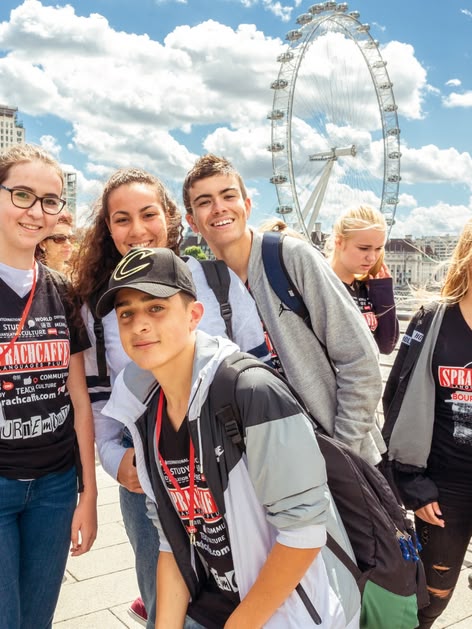
UK Etiquette: British Customs and What Not to Do
Picture the scene. You step off the plane at Heathrow, breeze through passport control, and the first stranger who crosses your path beams at you and asks: "You alright?" You freeze. Do you look unwell? Is something stuck to your jacket? Is your hair really that catastrophic after the flight? Welcome to the UK, a country where almost everything operates just slightly differently from what you might expect.

Choosing to learn English in the UK is far more than booking an English course with a side of sightseeing. It's an immersive crash course in British culture, British humour, and all those unwritten conventions that no textbook will ever quite manage to capture. And that's precisely the magic of it. When you study English in England, you don't merely accumulate vocabulary, you absorb an entire way of life. To help you settle in confidently from day one, we've gathered the most common cultural pitfalls, peculiarities and insider observations every visitor should know.
„You alright?" — Why Brits keep asking how you are
The first source of confusion on almost any language trip to the UK comes down to a single phrase: "You alright?" In most other countries, that question would suggest genuine concern about your wellbeing. In Britain, however, it's simply a greeting, the local equivalent of "Hi". Nobody is genuinely waiting for an honest update on your mood, your jet lag or your evening plans.
The rule of thumb is straightforward: if someone greets you with "You alright?", a casual "Yeah, you alright?" in return is all you need to offer. That's it. Once that subtle exchange clicks, the daily rhythm of British life suddenly feels considerably more familiar.
Driving on the left: look right. Then look right again.
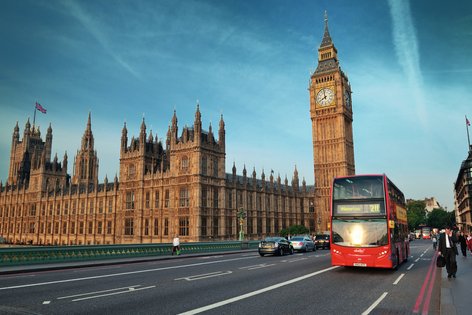
The most genuinely dangerous moment on any UK trip often happens on day one, at your very first zebra crossing. Out of pure habit, you glance left, take a confident step forward, and a red double-decker bus comes hurtling in from your right.
Driving on the left in the UK isn't merely about cars and roundabouts. It shapes how people walk along the pavement, board buses and even stand on escalators. If you're heading to London, there's also a second rule worth remembering: don't walk too close to the kerb. Buses and taxis often pass surprisingly close to the pavement, and the gust of wind from a speeding double-decker can ruin your hairstyle faster than any London drizzle.
A practical piece of advice: stick closer to the buildings as you walk. Even on the narrower streets of central London, that's reliably the safer side.
„Cheers, mate" — British politeness in two words
You hold a door open for a stranger. You hand a tourist their dropped scarf. You let someone board the bus before you. What you'll hear back, almost without exception, is: "Cheers, mate." And no, no one is asking you to clink glasses.
In everyday British English, "cheers" simply means "thanks". The added "mate" is a casual, affectionate form of address mostly used between men of any age. Younger speakers tend to favour "bro" instead. And if you happen to be called "love" or "darling" by someone behind a pub bar, don't read anything romantic into it. These are warm pleasantries, nothing more, woven into the everyday fabric of conversation.
These small turns of phrase are exactly what no English language school can fully teach you within a classroom. You absorb them at the café, on the bus, at the supermarket till, in queues at the cinema, wherever the texture of real life happens.
Tea time in the UK: but not the way you think
It's a stubborn cliché: the British dropping everything at 5pm sharp to ceremoniously sip Earl Grey from a delicate porcelain cup. The reality, as so often, is more charming and considerably more ordinary.
Tea is part of daily life in the UK like the umbrella is part of summer. But "tea" in many regions actually refers to the evening meal itself, and yes, often accompanied by an actual cup of tea on the side. So if your host family invites you for "tea" during your language course in the UK, don't arrive with an empty stomach expecting only a hot beverage.
What is genuinely sacred, however, is how the tea is prepared. Tea bag first, then hot water, then milk, never the other way around. Anyone offering to brew tea in a British household will be quietly observed and silently evaluated. This is where you discover whether you've truly settled in.
„Sorry" — the most versatile word on the island
Nowhere in the world is "sorry" deployed as frequently as in the UK. You bump into someone? "Sorry." Someone bumps into you? Also "Sorry", from you, because you must have been somehow in the way. Trying to squeeze past in a packed café? "Sorry." Asking politely for the menu? "Sorry, could I have…?"
In British English, "sorry" is rarely an actual apology in the strict sense. It functions more as a social lubricant, a politeness signal, an unobtrusive opener for almost any sentence. Master its many uses, and you'll start sounding remarkably like a local in no time.
The sacred art of queuing
If there's one British virtue that towers above all others, it's an almost ceremonial patience in a queue. "Queueing" in the UK is practically an art form, perhaps even a national sport. At the bus stop, in the supermarket, outside the pub on a Friday evening, people line up calmly behind one another, without pushing, without complaint, without even much commentary.
Skip the queue and you've committed a small but unmistakable cultural taboo. No one might say a word, but you'll certainly feel the eyes on you. Wait your turn, smile politely, and don't forget to call out "Thank you, driver" as you step off the bus. It's exactly these little gestures, almost invisible to outsiders, that make all the difference in British culture.


Why a language trip to the UK is more than an English course
These delicate cultural codes aren't found in textbooks. You learn them when you order your morning coffee, when you debate films and politics with classmates from around the world, when you sit around the dinner table with your host family on a rainy Sunday evening. That's exactly what makes a language course in the UK one of the most rewarding investments you can possibly make in your English - and in yourself.
At SPRACHCAFFE, we've spent over 40 years watching this transformation unfold. The best memories of any language trip rarely come from the classroom. They come from the moments in between. From a pub conversation when you finally understand a British joke. From an afternoon excursion to Brighton when the whole class kicks off their shoes and walks barefoot along the pebbled beach. From a breakfast with the host family when your English suddenly flows effortlessly, without you even noticing.
The UK isn't a country you simply visit. It's a country you genuinely live in for a while. And once you've experienced it that way, with all its quiet quirks, with "cheers" and "sorry" and tea in the evening, you bring home considerably more than mere language skills. You bring home stories. And friendships that often last far longer than any accent.
So go on: look right, take your tea with milk, say "cheers" to the barista, and enjoy every single minute on the island. The UK is already waiting for you.
FAQ
It is a casual greeting, not a question about your health. The expected reply is simply "Yes, thanks, you?". It works much like "How are you?" elsewhere.
Often, and rarely as a real apology. "Sorry" softens requests, signals mild surprise or simply acknowledges another person, so there is no need to read too much into it.
Yes. The weather is a safe, friendly opener that everyone shares. A quick comment about the rain or the sun is a natural way to start almost any conversation.
Living the culture is the fastest way to learn it, which is exactly what an English course in the UK offers.
Queuing is treated as basic fairness, and pushing in is one of the surest ways to cause offence. Wait your turn, and you will fit right in.