
Learning English does not have to cost much at all: with nothing but internet access you can make a real start for free. The bigger question is not price but value, which method gives you the most progress for the time and money you put in. This guide compares the main ways to learn English, from free self-study to a language trip abroad, so you can find the best way to learn English for your goal, your level and your budget.
Cost of Learning English: Best Methods
Free self-study: start here, but mind the ceiling
You can genuinely begin for free. Between YouTube channels, learner podcasts, websites and a one-off coursebook that costs very little, you can cover grammar, vocabulary and pronunciation and work through it at your own pace. The trade-off is that you get no feedback from a teacher, so mistakes can go uncorrected and motivation can dip when a topic feels too hard. Free resources are excellent for input and for building a daily habit, and they are the natural first step, but most learners hit a ceiling without guidance.
Learning apps: motivating, but limited on their own
Apps are a great way to get started. Their design and built-in gamification make them motivating for beginners, and the free tiers are genuinely useful, though they show ads that can distract from learning. Paid tiers, usually a monthly subscription, remove the ads and unlock all the features. The honest limitation is depth: apps tend to stay fairly surface-level, so they suit A-level beginners or a bit of practice on your commute, but for real progress at a higher level you will need something more intensive.
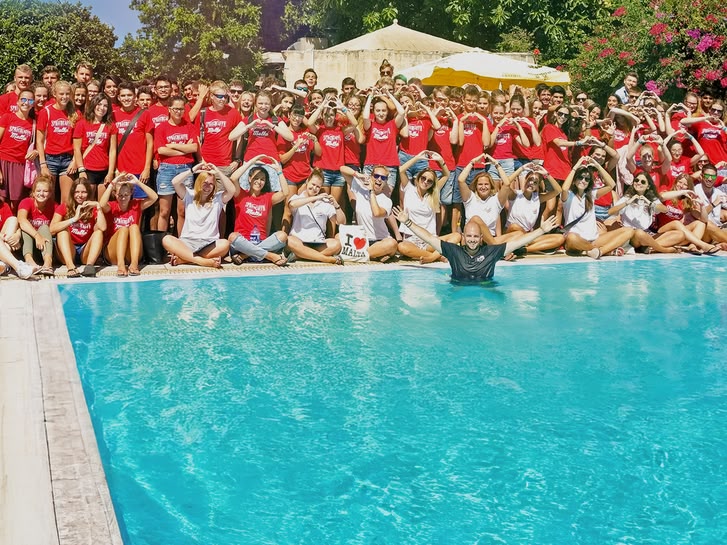
Visit Malta, learn English

A course with a teacher: where progress speeds up
This is where learning accelerates, because you study with a trained teacher who adapts to your level and learning style, corrects you in real time, and keeps you on track. Courses come in several shapes to suit different budgets and goals: one-to-one lessons (the most focused), semi-private lessons for two (much better value than pure private tuition), and group or evening courses (the most economical, with the bonus of practising alongside other learners). Whether
online or on-site, a good teacher is what turns scattered self-study into steady, measurable progress.
A language trip abroad: the fastest, and the biggest investment
A language study trip is the most effective way of all, and, understandably, the largest investment of time and money. In an English-speaking country you are surrounded by the language all day and use it in real situations, so you make the most progress in the shortest time, with a course adding structure on top of the immersion. A typical package bundles the course, accommodation, transfers, a placement test and a certificate, and in some countries the stay can even be recognised as educational leave. The cost and the time commitment are the trade-off, but for sheer speed and depth of progress nothing else compares.

Which method is worth it
There is no single right answer, only the right mix for you. Start free to build the habit, add an app for daily practice, and, when you want real progress, invest in a course with a teacher, ideally combined with a stay abroad. Think of it as a ladder: free self-study and apps get you moving, a guided course builds genuine competence, and immersion abroad delivers the fastest leap in fluency. Spend where it counts, and the investment pays off long after the course ends.
Summary
The best way to learn English depends on your goal and budget, but the pattern is consistent: free resources and apps are ideal for starting and for daily habit; a course with a qualified teacher is where progress really speeds up; and a language trip abroad, while the biggest investment, gives the fastest, deepest results. Mix the methods, put your money where it makes the most difference, and you will learn faster and stay motivated. A language course or a stay abroad with SPRACHCAFFE is a reliable way to make that leap.
FAQ
Free self-study using YouTube, podcasts, apps and libraries costs nothing and is a genuine option for motivated learners. Its limit is the lack of speaking practice and feedback, which tends to slow progress at higher levels.
Apps are affordable and good for daily vocabulary, habit and early grammar, so they offer real value as part of a wider plan. On their own, they rarely take a learner to confident, spontaneous conversation.
A course with a teacher speeds up progress, because you get structure, correction and speaking practice that free tools lack. For many learners this is where money translates most directly into faster results.
It depends on your goal and budget: free tools to start, apps for habit, a course for real progress, and a language trip abroad for the fastest results. A SPRACHCAFFE course combines teaching and immersion in one step.
Related news



Get the latest on travel, languages and culture