
Here's how to overcome this obstacle and go unnoticed during a German conversation: vocabulary, idioms, and sayings...like simply saying good morning, meeting someone, or wishing them a happy birthday. You'll be able to handle any situation!
German Survival Guide
Everyday German phrases locals really use

Knowing "Guten Morgen" and "Auf Wiedersehen" will only get you so far in a real German conversation.
What makes you sound natural is the handful of everyday phrases and bits of slang that locals actually use, the small words that fill the gaps between the textbook ones. Here are the most useful, with what each means and when to say it, so you can hold your own in almost any situation.
A few things worth knowing Two small habits make these phrases land properly. First, Germans shake hands when they meet, so "Es freut mich" and a handshake go together. Second, German pronounces every letter, so sound the final -e in keine and Güte rather than swallowing it. And while the full "happy birthday" is Herzlichen Glückwunsch zum Geburtstag, do not panic at the length: most of the time a simple Alles Gute does the job.
German Survival Guide: Everyday Phrases and Slang
| Phrase | Meaning | When to use |
| Morgen! | Morning! (informal good morning) | A quick morning greeting; switch to "Hallo!" later in the day |
| Es freut mich | Pleased to meet you | On being introduced, usually with a handshake |
| Keine Ahnung | No idea | When you simply do not know |
| Alles klar | Got it, all good | To confirm you have understood; "Alles klar?" also asks if all is well |
| Genau | Exactly | To agree or nod along in conversation |
| Gott sei Dank | Thank goodness | To express relief; "Meine Güte" and "Oh mein Gott" work too |
| Alles Gute! | All the best | The everyday short form of "happy birthday" |
| Zack, zack! | Chop chop, quick quick | To hurry things along |
| Quatsch! | Nonsense, rubbish | When you hear something far-fetched; "Ach, Quatsch!" sounds very German |
| Mahlzeit! | Enjoy your meal | Around mealtimes; "Guten Appetit" is the standard version |
| Mach's gut | Take care | A warm, informal goodbye |
| Tschüss! | Bye | An informal goodbye to almost anyone |

Summary
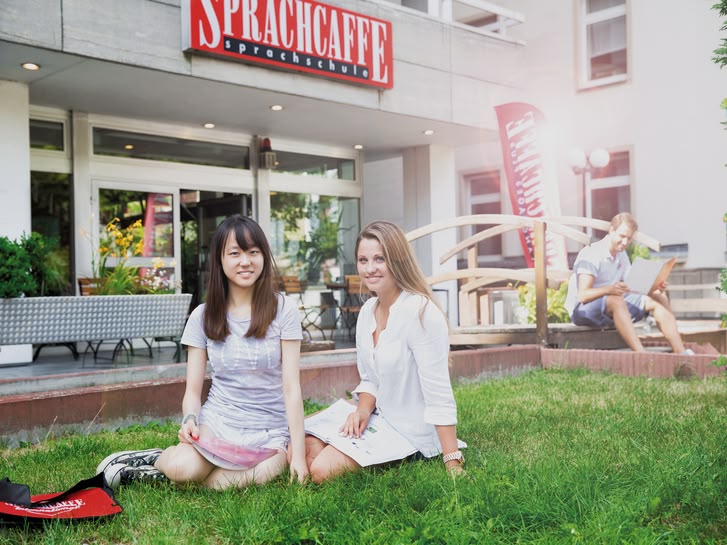
A little everyday German goes a long way: greet with Morgen! or Hallo!, meet people with Es freut mich, agree with Genau, confirm with Alles klar, brush off nonsense with Quatsch!, hurry along with Zack, zack!, and say goodbye with Mach's gut or Tschüss. None of it appears in the first textbook chapter, but all of it is what real conversations are made of. The fastest way to pick it up is to hear it in use, on a German course in Germany with SPRACHCAFFE in Frankfurt or Munich.
FAQ
The handful that appear in almost every conversation are "Morgen" for an informal good morning, "Alles klar" to confirm you have understood, "Genau" to agree, "Keine Ahnung" for "no idea" and "Tschüss" as a casual goodbye. Learning these first gives you natural replies long before your grammar is complete, because they carry a conversation without needing full sentences.
Yes. Textbooks teach the correct forms, but daily speech leans on short reaction words and fillers such as "Quatsch" (nonsense), "Na?" (a casual "how are things?") and "Genau". These are informal rather than incorrect, and locals use them constantly, so recognising them is often the difference between following a real conversation and losing the thread.
"Du" is the informal "you" for friends, family, children and, increasingly, colleagues of a similar age, while "Sie" is the polite form for strangers, older people and formal settings. When unsure, start with "Sie" and switch to "du" once the other person offers it. Native speakers notice this more than a few grammar slips.
Related news



Get the latest on travel, languages and culture