
When you study Chinese in China, you learn the language where its standard is set. Beijing is the home of Putonghua (普通话), the official spoken Mandarin used across the mainland, so the Mandarin you study in class is the Mandarin you hear on the street. With SPRACHCAFFE you learn in small international groups, with qualified teachers and a cultural programme that turns the whole city into your classroom, whether you come as an adult or join a supervised summer camp.
Study Chinese in China: Learn Mandarin in Beijing

Standard Mandarin
You learn Putonghua at its source, the pronunciation standard for education and broadcasting across China.
Full immersion
Mornings in class, afternoons and evenings in Beijing, from hutong markets to the Great Wall.
HSK-aligned learning.
Courses follow the official HSK framework, from HSK 1 to HSK 6, with an end-of-course certificate.
For juniors and adults
Supervised summer camps for ages 15 to 21 and year-round courses for adults aged 18 and over.

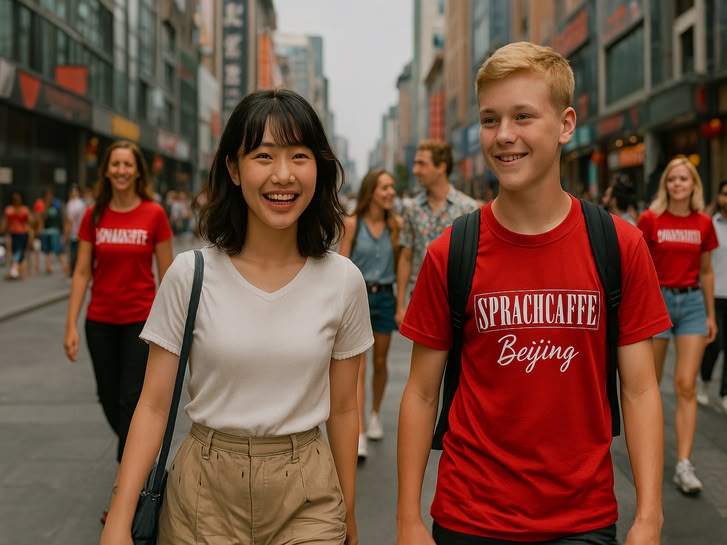
Two programmes in Beijing: adults and juniors
SPRACHCAFFE Beijing runs two programmes built around different ages and learning rhythms. Both begin with a placement test on the first day, so you join a group that matches your level, and both follow the HSK framework from beginner to advanced. Whichever you choose, you learn Chinese in China in small international classes with qualified teachers.
Chinese courses for adults in Beijing (18+)
Our adult programme runs year round and suits students, working professionals and senior learners at any level. You can choose a Part-Time course of 10 lessons a week, a Standard Chinese language course of 20 lessons a week, or one-to-one lessons for personalised pacing and HSK exam preparation. For a longer stay, an academic course on the Changping District campus (20 lessons a week, levels A1 to B2) combines study with campus accommodation.
Chinese summer camp for juniors (ages 15 to 21)
Our junior programme is a supervised Chinese summer camp that combines Mandarin lessons in small international groups with a guided cultural programme. It includes full board with a warm lunch, accommodation in a supervised residence, qualified teachers, and SPRACHCAFFE teamers on site. For parents, this means a first trip to China with a clear framework of supervision and regular contact. Teenagers get something else out of it: a group of friends from around the world by the end of the first week.
Why Beijing is the best city to learn Mandarin
Beijing combines three advantages for international learners that no other Chinese city offers together. Taken together, they are the reason Beijing is the established first choice to learn Mandarin in China.
The pronunciation standard
Beijing's local speech is the basis for Putonghua, the standardised Mandarin used in government, broadcasting and education across mainland China. Locals speak the standard form, so you skip the dialect gap you would meet in Shanghai, where the local language is Shanghainese (a Wu-family variety), or Guangzhou, where it is Cantonese (a Yue-family variety).
Institutional depth
Beijing hosts the institutions that define and certify the language. These include the State Language Commission (国家语言文字工作委员会), China's official language standardisation body; the Ministry of Education, the issuing authority for HSK certification; Beijing Language and Culture University (BLCU), founded in 1962 and China's leading institution for teaching Mandarin to international students; and Peking University, consistently ranked among the world's top 50.
Cultural depth
Beijing has seven UNESCO World Heritage Sites, including the Forbidden City, the world's largest preserved imperial palace, and several accessible sections of the Great Wall at Badaling, Mutianyu and Jinshanling. Alongside them sit the hutong courtyard alleyways, the 798 Art District and Tiananmen Square, so the culture you study in class is a short walk from the classroom.
Beijing compared with Shanghai, Kunming, Chengdu and Taipei
Other cities have their strengths. Shanghai is strong for business Mandarin, though locals also speak Shanghainese. Kunming offers cleaner air and lower costs with standard Mandarin. Chengdu has a distinctive food culture and a Sichuanese accent. Taipei uses traditional characters and is relevant for cultural and historical study. For most beginners, professionals and supervised teen camps, Beijing offers the strongest combination of standard pronunciation, institutional credibility and immersion infrastructure.

Why learning Chinese abroad works
To learn Mandarin in China is to turn theory into real communication far faster than classroom study alone. The language surrounds you in markets, cafés, public transport and at cultural sites, so every errand becomes practice. In class you build tones, characters, grammar and vocabulary at your level; outside, you use them straight away. The single biggest factor in how quickly you improve is how much you speak, and a Chinese immersion programme gives you constant reasons to.
Living in Beijing also builds independence, adaptability and intercultural awareness alongside your language skills. As your confidence grows, you start to think directly in Chinese rather than translating. That shift, from learning about the language to living in it, is what makes an immersion stay stick.
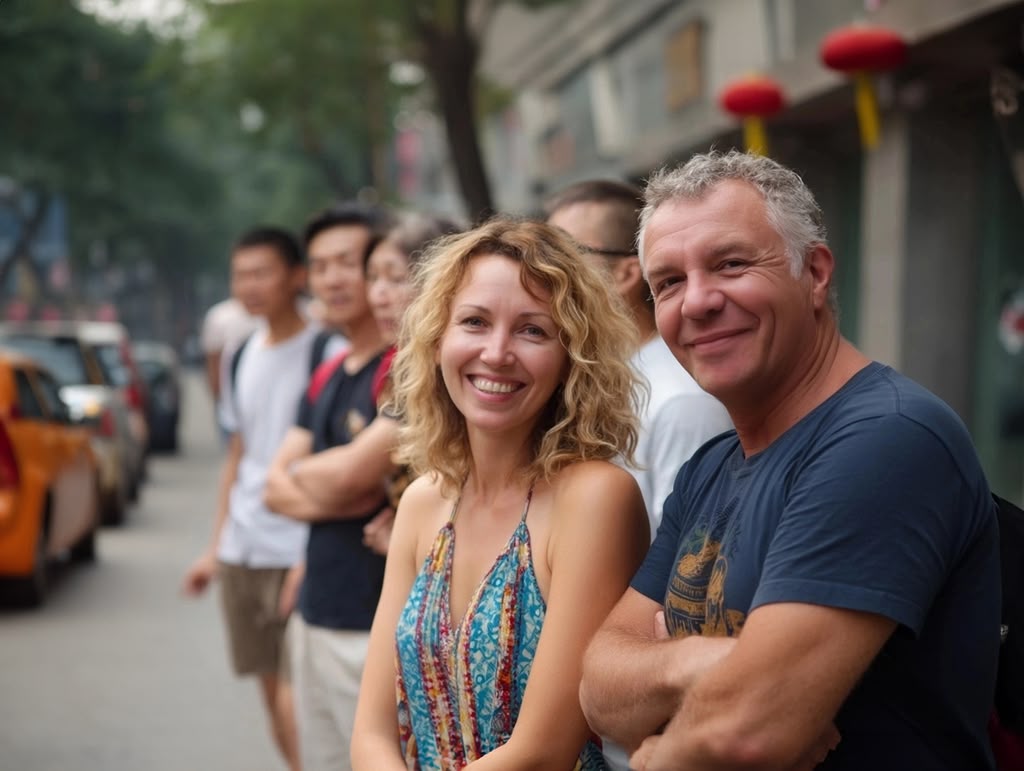

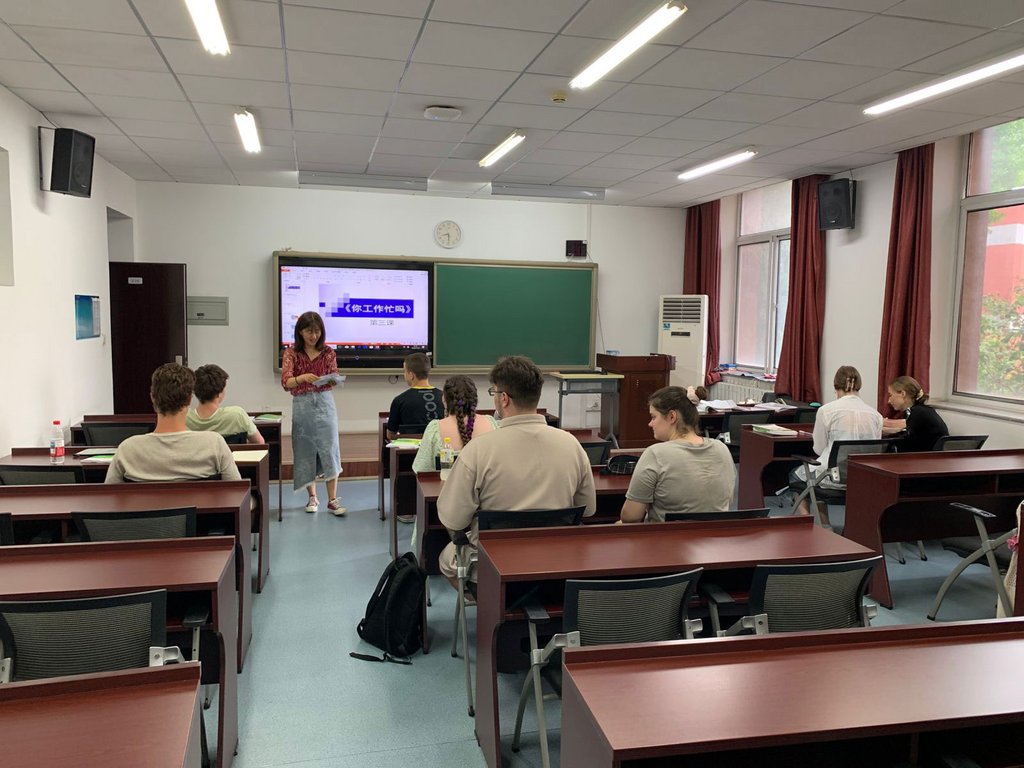
Studying Chinese abroad
Studying Chinese abroad means learning Mandarin at its source. In Beijing the language surrounds you in daily life, in markets, cafés, public transport and at cultural sites, which turns theory into confident communication far faster than classroom study alone.
At SPRACHCAFFE Beijing, structured lessons in small international groups cover tones, characters, grammar and conversation at your level, with a placement test on the first day and regular feedback so you can track progress. Beyond the classroom, cultural activities such as historic landmarks, local food and genuine exchanges with residents deepen your understanding of Chinese society and sharpen your listening and pronunciation naturally. This is what a Chinese immersion programme adds that home study cannot.
Living in Beijing also supports personal growth: independence, adaptability and intercultural awareness develop alongside your language skills. As your confidence builds, you start to think directly in Chinese rather than translating. That combination of professional teaching, academic structure and full immersion is precisely why learning Mandarin in China works:
- Full Mandarin immersion from morning to evening
- Faster fluency through real-life communication
- Immediate practice of tones, characters and vocabulary
- Greater cultural awareness and lasting confidence
What's included
A SPRACHCAFFE programme in Beijing typically includes a Standard or intensive Mandarin course, a placement test, small international classes with qualified teachers, course materials on loan, an end-of-course certificate, accommodation, and local support throughout your stay. You can add one-to-one lessons or extra cultural activities. For current programme options, dates and prices, see the Beijing programme page.
Find out more
Beijing is the established first choice for international Mandarin learners, for three reasons:
- Pronunciation standard - Beijing's local accent is the basis for Putonghua (普通话), the standardised Mandarin used in education, broadcasting, and government across mainland China. Locals naturally speak the standard; you don't need to "translate" from a local dialect.
- Institutional density - Beijing hosts the Ministry of Education (issuing authority for HSK), Beijing Language and Culture University (China's foremost institution for teaching Mandarin to foreigners since 1962), and Peking University (consistently ranked in the global top 25).
- Immersion infrastructure - Beijing has long-established networks for international students, English signage on public transport, and a substantial expatriate community for support - particularly valuable for first-time visitors and parents of teen students.
Alternatives have their merits:
- Shanghai - China's commercial centre; strong for business Mandarin but locals also speak Shanghainese (Wu-family dialect)
- Kunming (Yunnan) - Cleaner air, lower cost; standard Mandarin spoken; smaller international student community
- Chengdu (Sichuan) - Distinctive food culture; Sichuanese-accented Mandarin
- Taipei (Taiwan) - Traditional characters and slightly different vocabulary; relevant for cultural and historical specialists
For most beginners, intermediate learners, professionals, and supervised teen camps, Beijing offers the strongest combination of standard pronunciation, institutional credibility, and immersion infrastructure.
SPRACHCAFFE Beijing runs two programmes:
- Adult Mandarin Course (18+) - Year-round; Standard, Intensive, Business Chinese, or One-to-One options. Suitable for students, working professionals, and senior learners at any level from HSK 1 (complete beginner) to HSK 5+ (advanced).
- Junior Camp (15-17) and Young Adult Programme (18-21) - Supervised summer camps with structured Mandarin lessons, full cultural and excursion programme, supervised residence accommodation, and 24/7 on-site staff. Designed for teenagers travelling independently to China for the first time, with full safeguarding and parental communication.
Closed school groups for under-18s outside the standard summer dates can also be arranged on request - contact the SPRACHCAFFE team to discuss group size, dates, and supervisor arrangements.
Yes - nearly all foreign students need a student visa to study Chinese in China. Visa requirements depend on your nationality and length of stay:
- Short-term study (under 180 days) - X2 visa, applied for at the nearest Chinese embassy or Chinese Visa Application Service Center (CVASC) before travel.
- Long-term study (more than 180 days) - X1 visa, which converts to a residence permit (居留许可) after arrival in Beijing.
For junior students under 18, the same visa categories apply but the application requires additional supporting documents - typically parental consent letters, copies of parents' passports, and authorisation for the on-site staff to act in loco parentis for emergency situations. SPRACHCAFFE provides the documentation needed for these applications.
SPRACHCAFFE provides the official admission documents required for your visa application, including the JW202 Visa Application Form for Study in China (issued by the Beijing partner institution) or a Letter of Acceptance depending on visa type. Our team guides you through the documentation process.
Working in China on a student visa: Student visas in China do not permit paid employment. Working without specific authorisation can result in visa cancellation, fines, and deportation. The only exception is part-time campus-based work or formally approved internships with explicit authorisation from both the host institution and the local Public Security Bureau (PSB). For nearly all SPRACHCAFFE language students, we recommend treating your Beijing stay as a dedicated learning experience without paid work - focusing on Mandarin immersion and cultural exploration.
Visa rules and procedures can change - always confirm the current requirements with the Chinese Embassy or Chinese Visa Application Service Center (CVASC) in your country before booking.
No. Chinese student visas do not permit paid employment, and working without authorisation can lead to fines or deportation. A SPRACHCAFFE stay in Beijing is best treated as dedicated time for study and cultural immersion.
From your very first day at SPRACHCAFFE in Beijing, you become part of an international learning community. You study alongside participants from Europe, Latin America, Asia and many other regions. Mandarin quickly becomes your shared language, allowing you to practise naturally and build confidence together.
In class, you meet motivated adults who share similar goals - improving their language skills, preparing for academic opportunities or developing their professional profile. Small group sizes create a supportive atmosphere where everyone can actively participate and make visible progress.
Beyond lessons, you connect during cultural activities and daily life in Beijing. Exploring historic sites, enjoying local cuisine or discovering modern city districts together helps you build meaningful friendships.
You will also work with experienced and qualified teachers who guide you professionally and encourage you to speak from day one. Our local team is always available to support you, ensuring you feel welcome, secure and fully integrated throughout your stay.
There are two programmes. Adults aged 18 and over can join year-round Standard, Part-Time, one-to-one or academic long-stay courses at any level. Teenagers and young adults aged 15 to 21 can join a supervised summer camp with a cultural programme, supervised accommodation and on-site teamers. Closed school groups can be arranged on request.