
Chinese has more native speakers than any other language in the world, which is reason enough to think about learning it. With its tones and its thousands of characters, it also gives the brain a real workout, and some studies suggest it engages both hemispheres more than alphabetic languages do. Here are five fascinating facts about the Chinese language to give you a feel for it.
5 Fascinating Facts About the Chinese Language
The Most Spoken Language in the World: Key Facts and Global Reach
Chinese is the most widely spoken native language. It is the official language not only in mainland China, but also in Taiwan, Hong Kong, Malaysia, Singapore, and Macau. Over 955 million people speak it, meaning approximately 15% of the world's population speaks Chinese.
Perhaps this is also why many famous people, like Mark Zuckerberg and Malia Obama, have studied Chinese. It is also one of the six official languages of the United Nations.


2. Characters and Calligraphy
The Chinese language doesn't have a true alphabet of letters. Instead, it uses characters that represent minimal units of meaning, which can be phonetic compounds or logical aggregates.
Therefore, the Chinese language is composed of tens of thousands of characters. But the good news is that approximately 98% of written Chinese is composed of the same 2,500 characters.
To understand a basic text, like a newsletter, you only need to know about 2,500 characters, but if you want to use Chinese characters regularly, you need to know at least 5,000 characters.
Another interesting fact about Chinese characters is that the writing system is over 3,000 years old. Traces of it can be found as far back as 1600 BC.
There are two distinct types of characters: traditional characters and simplified characters.
Chinese characters have evolved from scratch and are still evolving. The most significant development in modern times has been the introduction of simplified characters in place of traditional ones. When the People's Republic of China was founded in 1949, the literacy rate in China was approximately 20%.
The government launched a Chinese character simplification program to improve literacy and education throughout the country. Approximately 2,000 traditional characters have been modified, primarily by reducing the number of strokes and/or merging characters. Traditional Chinese retains the orthodox characters that have been used for thousands of years, while simplified Chinese is primarily considered the simplified version of traditional Chinese characters.
Over time, Simplified Chinese was adopted in mainland China, Malaysia, and Singapore, while people in Hong Kong, Taiwan, and Macau continued to use the traditional writing system.
Fun fact: New words are still being added to Simplified Chinese. Chinese has five traditional forms of calligraphy: seal script, official script, formal script, running script, and cursive hand. Another fact about writing is that it is considered one of the most unrecognizable due to the wide variation in writing styles and the changes that occur between typed text and handwritten characters.
3. Dialects
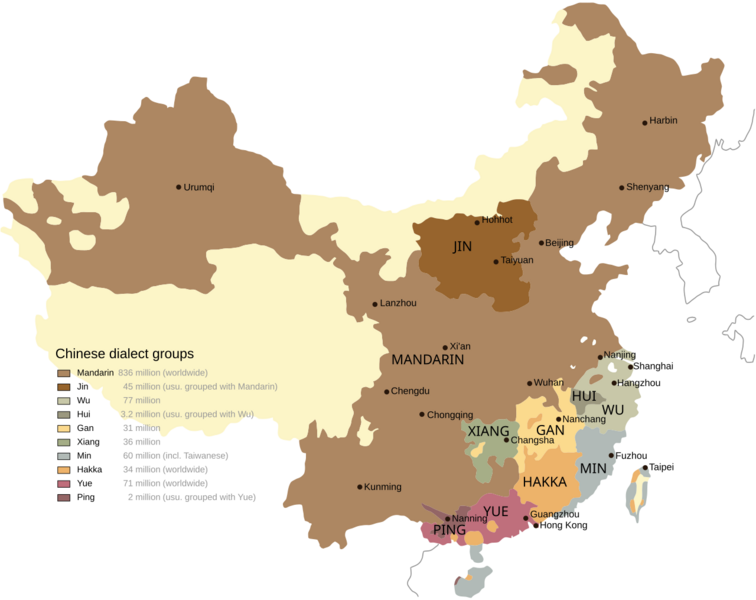
In China, the official language is Mandarin. However, different regions of China speak different dialects.
This means that people from different regions can only communicate in Mandarin. The map below provides an overview of the different dialects.
As you can see, each region has its own dialect.
4. Pronunciation

Of all the world's languages, Chinese is considered one of the most difficult to learn. This is because it has a different writing system, grammar, pronunciation style, and sounds than English. The language is tonal, meaning that the pronunciation of a word can influence its meaning.
The language has four different tones, from high to low. For example, the phrase "wǒ xiǎng wèn nǐ" can have two different meanings.
If you pronounce the word "wen" with a falling tone, it means "I want to ask you something." But if you pronounce the word with a rising tone, it means I want to kiss you.
5. Grammar

Chinese has relatively simple grammar. Unlike Indo-European languages, it lacks verb conjugations and noun declensions. For example, while someone learning English must learn various verb forms like "speak/spoke/spoken," in Chinese, you only need to remember one word: shuo (说).
While in English you have to distinguish between "language" and "languages," in Chinese there is only one form: yuyan (语言). Simply put, there is no need to memorize verb tenses and all the grammatical variations for gender, articles, and plurals in Chinese, making it easier for beginners to learn.
If you want to learn Chinese, a language course would definitely be the right choice. Here, you'll be taught the language properly by a professional teacher. Did you know that Sprachcaffe also offers Chinese language courses? You can learn more about this here.
Chinese Language School in Beijing for Young People
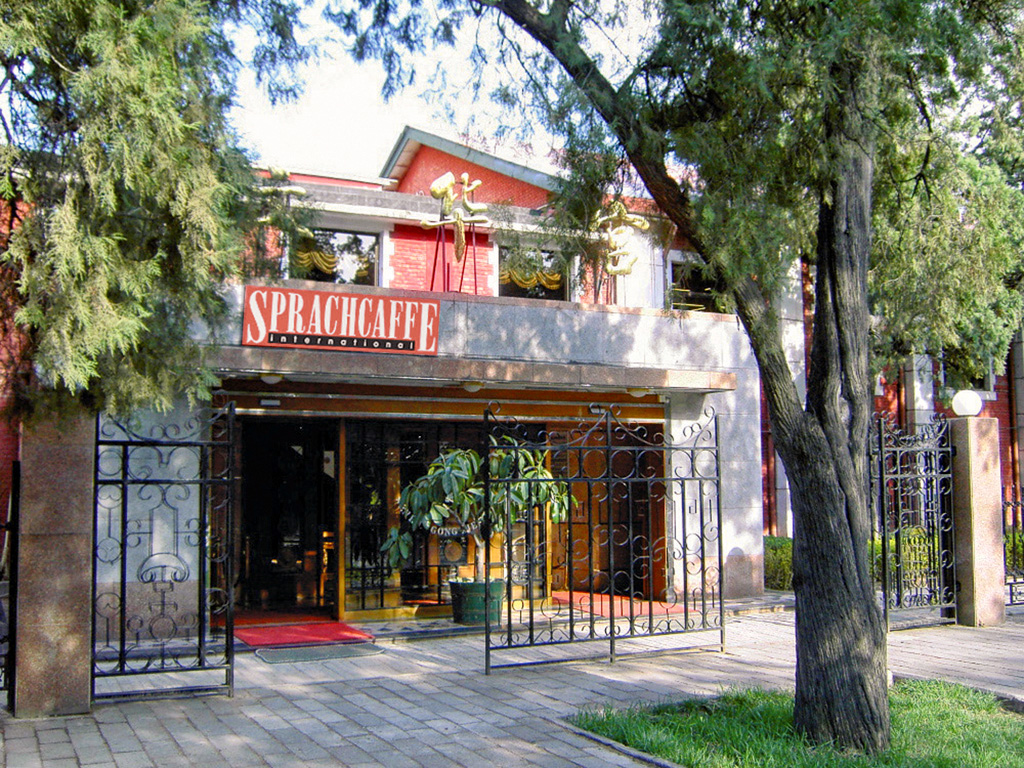
Located nearby the heart of Beijing's Forbidden City, our school offers you a tranquil, exciting and liberating learning environment. Learn every nuance of the Chinese language in our school, surrounded by lush green parks, or ouside in the streets, shops and museums of Beijing. With the combination of an effective classroom environment, natural beauty and lovely architectural charm, you will never be short of breathtaking inspiration.
With the help of our qualified and friendly language teachers you will be sure to enjoy a personalized and effective learning experience. Our teachers make sure you make the most of your class time, ensuring that you reach your language goals while enjoying an invigorating vacation in one of the world's most charismatic destinations. Enjoy the tranquil beauty of the Ancestral Temple and the lush Imperial Gardens or take a walk to the famous shopping street of Wangfujing.
With a true abundance of breathtaking sights surrounding the school, you will have ample opportunity to make the most of your free time and explore your surroundings. From relaxing in the parks, enjoying a snack in the nearby restaurants or discovering the cultural palace of Wen Hua Gong, your free time is all set to be memorable and exciting while giving you the extra opportunity to build your confidence as your language skills progress.
The Forbidden City, the heart of Beijing, is without doubt the most beautiful and tranquil place in the capital. It served as the residence of the Ming and Qing emperors in past eras. It is the largest and best-preserved example of ancient architecture in the world. To this day, the area surrounding the Forbidden City, with its magnificent buildings and picturesque footpaths, is a popular spot for Beijingers seeking recreation.
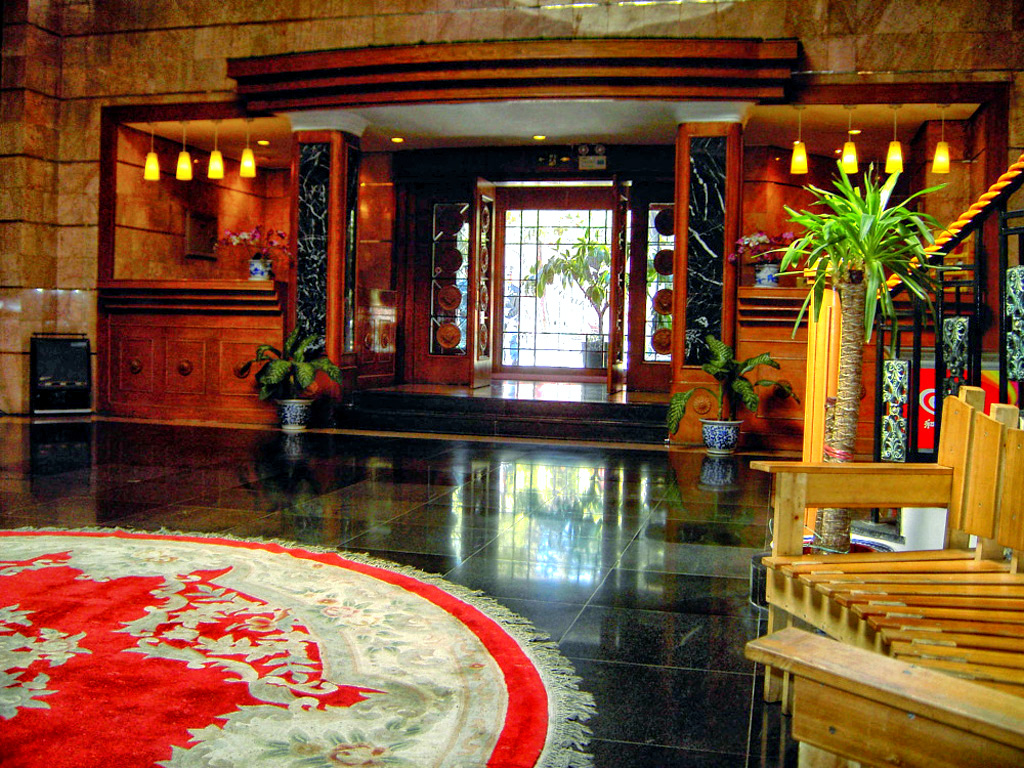
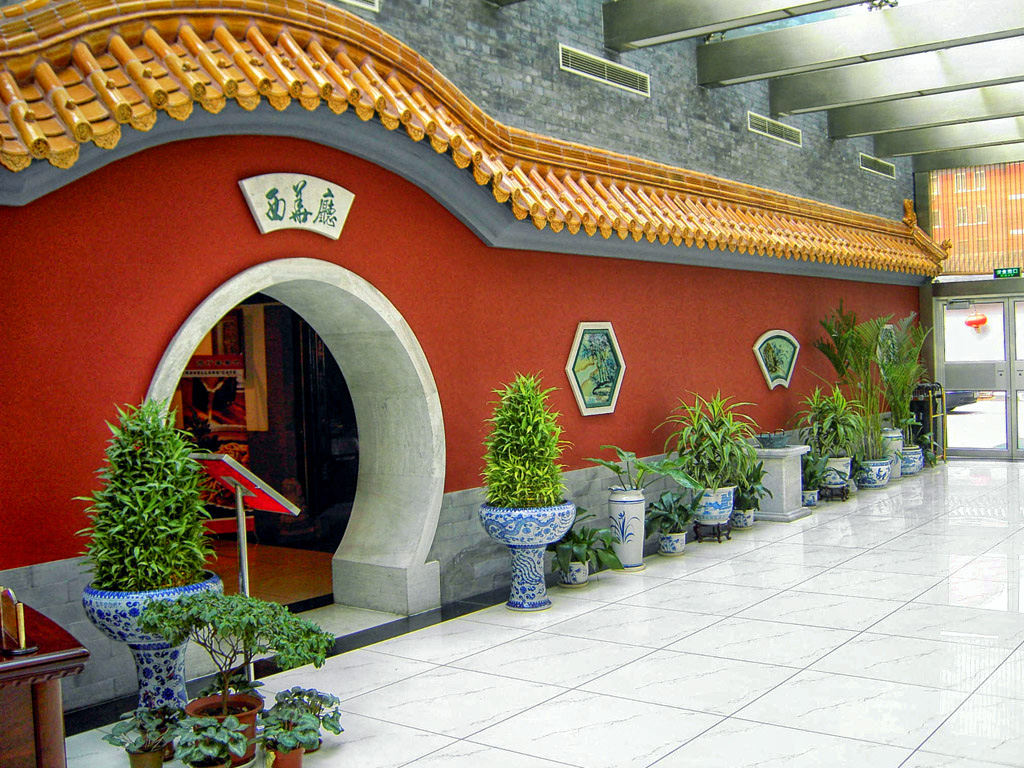
Classes are held in small groups with a maximum of 15 participants. All teaching materials are provided for the duration of the course. The very modern classrooms at our language school in Beijing offer participants enough space to learn the Chinese language effectively. Due to the location of the Sprachcaffe language school in Beijing near a large park, you have the opportunity to go outside at any time or, for example, to read in one of the pavilions.
Summary
The Chinese language has more native speakers than any other, uses thousands of characters rather than an alphabet (about 2,500 cover most everyday text), comes in many spoken varieties held together by Mandarin, is tonal (so pitch changes meaning), and has strikingly simple grammar with no conjugations or plurals. It is a rich and rewarding language to learn, and the best way to start is with a proper course, such as a Chinese course with SPRACHCAFFE in Beijing.
FAQ
Mandarin Chinese has the most native speakers of any language, spoken by over a billion people, mainly in China. This is one reason it is increasingly studied worldwide.
No. Chinese is written with characters, each representing a syllable and meaning rather than a sound in an alphabet. There are thousands of characters, though a few thousand cover most everyday reading.
"Chinese" covers several spoken varieties, including Mandarin, Cantonese and others, which can be mutually unintelligible. They share the same written characters, which is why speakers who cannot converse can still read the same text.
Related news



Get the latest on travel, languages and culture