
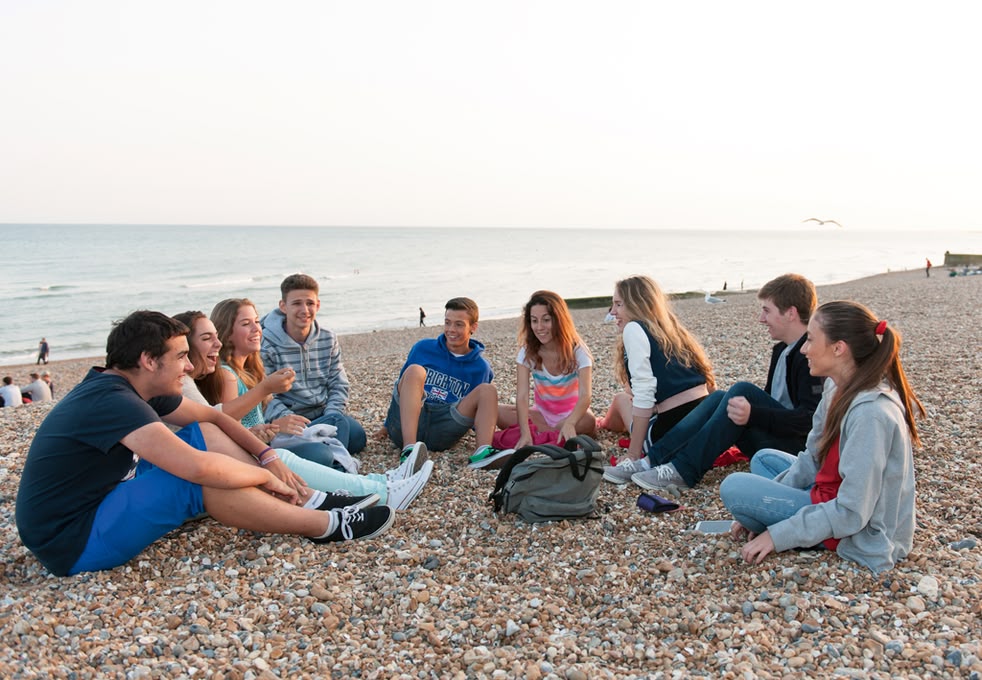
Two to four weeks in Nice, and your teenager will not just study French, they will live it. Mornings in the classroom, afternoons on the Promenade des Anglais, evenings with new friends from Italy, Japan, Brazil, and everywhere in between. A French summer camp in France is a supervised residential programme where teenagers learn French in structured lessons and then use it in real daily life on the French Riviera. SPRACHCAFFE has run supervised French camps for teenagers in Nice since 1998, welcoming students aged 13 to 18 across CEFR levels A1 to C1, at a school that holds the official Qualité FLE quality label.
Full supervision
Trained Teamers (ages 20-30) supervise 15 students each. Curfew for under-18s. 24/7 emergency support.
French Riviera
Study French just steps from Monaco, Cannes and the Mediterranean coast.
40+ Years of Language Travel
Trusted by thousands of kids worldwide since 1983.
Small Classes, Real Progress
Max 15 students per class, every level from beginner to B2.
What a French summer camp in France is
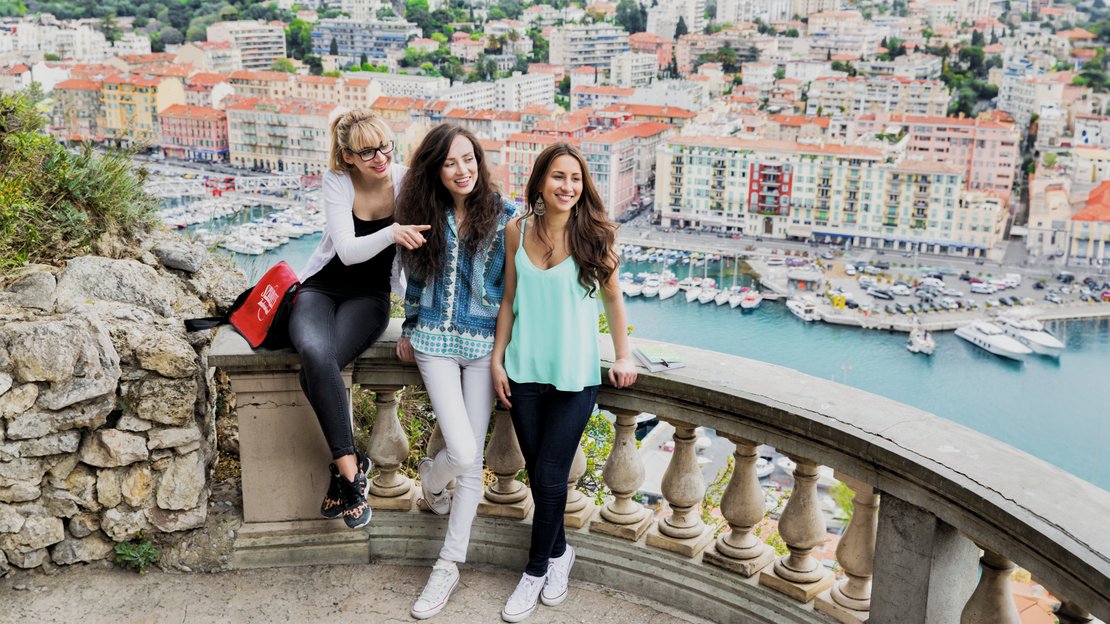
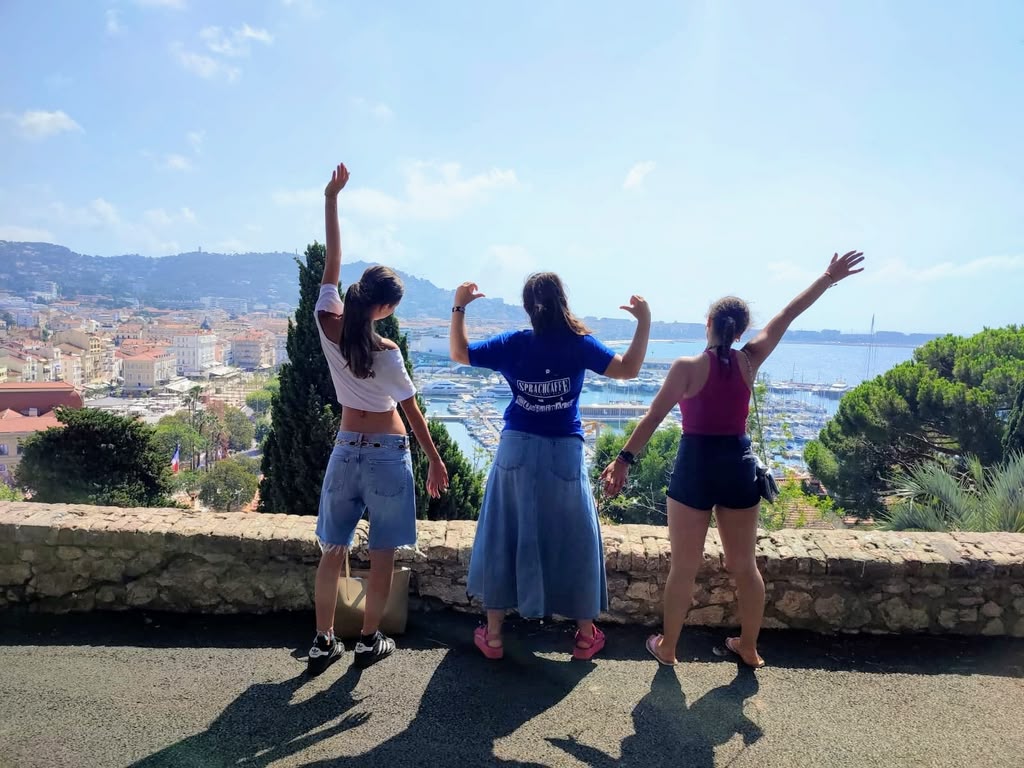
A French summer camp in France, sometimes called a French immersion camp, combines a language course with full board, supervision, and an activity programme in one residential stay. Teenagers take French lessons on weekday mornings, then spend afternoons and evenings on organised activities and excursions with their group. The aim is immersion: enough structured teaching to make real progress, and enough daily life in French to turn that progress into confidence. Unlike a classroom course at home, a summer camp puts the language into every part of the day, from meals in the residence to trips along the coast.


Who these camps are for
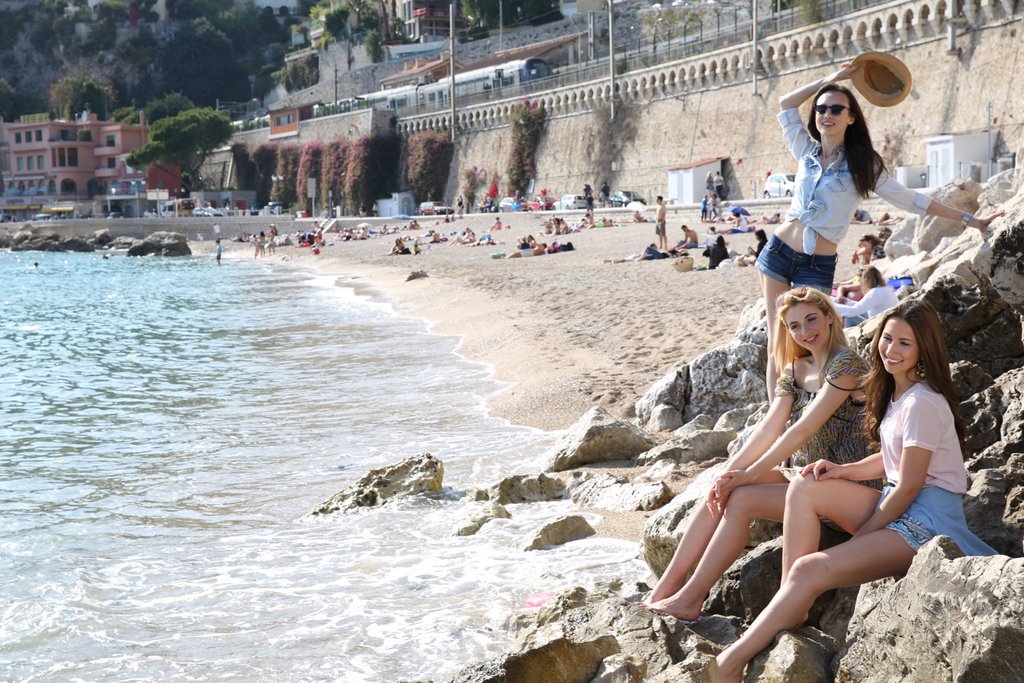
Our French camps in Nice welcome teenagers aged 13 to 18, and they are built for young learners who want to learn French in France rather than only in a classroom back home. Students take a placement test on arrival and are grouped by both age and French level, so beginners and more advanced learners each work at the right pace. No prior knowledge of French is required for beginner groups. Every student aged 17 and under follows the full supervised schedule, which makes these camps suitable for a first trip abroad without parents.
Nice and the French Riviera
Nice, once the ancient Greek settlement of Nikaia, blends Roman ruins, a medieval Old Town, and Belle Époque architecture along the French Riviera. The Promenade des Anglais runs about seven kilometres along the Mediterranean coastline and gives students a natural, open setting for after-class walks and group activities. Nice enjoys around 300 days of sunshine per year and a mild Mediterranean climate, among the highest annual sunshine totals in Europe. The city centre is compact and highly walkable, and the modern tram network makes getting around safe and simple for teenage students. Monaco lies about 20 minutes away by train, and Cannes and the wider Côte d'Azur are just as close for weekend excursions.
The French language school in Nice: courses and CEFR levels
Our French language school in Nice holds the Qualité FLE label, the official French government quality mark for teaching French as a foreign language. It is issued jointly by the Ministry of Higher Education and Research, the Ministry of Culture, and the Ministry for Europe and Foreign Affairs, and the school is audited on a regular cycle to keep it. On arrival, every student takes a placement test based on the Common European Framework of Reference for Languages (CEFR) and is then assigned to a group by age and level. Lessons last 45 minutes each and run from Monday to Friday.
| Course | Lessons per week | Class size | CEFR levels |
|---|---|---|---|
| Standard Course | 20 lessons (45 min) | Max. 14 | A1 to C1 |
| Intensive Course | 30 lessons (45 min) | Max. 14 | A1 to C1 |
The CEFR scale runs from A1, a complete beginner, to C1, an advanced speaker. Most teenagers on a summer camp sit in the A1 to B2 range, and the placement test makes sure each student joins a group that matches their real level rather than their school year.
What a junior French camp in France includes
Every SPRACHCAFFE camp in Nice is a full package, so families know what is covered before arrival:
- 20 lessons of French per week (45 minutes each), Monday to Friday
- A CEFR placement test on arrival and all course materials on loan
- Full board accommodation in a supervised residence, with breakfast, lunch, and dinner
- A daily afternoon and evening activity programme
- Weekly full-day excursions to Monaco, Cannes, Èze, the Matisse Museum, and Mediterranean beaches
- Trained Teamer supervision throughout and a 24/7 emergency line
- A welcome party on arrival day
- A SPRACHCAFFE certificate confirming the CEFR level reached and the lessons completed
What most students remember is not the timetable but the group: the classmates from a dozen countries who become the people you explore the coast with, share dinner with, and stay in touch with long after the summer ends.
Safety, supervision and support for parents
Sending a teenager abroad is a big decision, and SPRACHCAFFE has earned families' trust for over 40 years. Every camp is led by trained Teamers, young-adult leaders aged 20 to 30, each responsible for around 15 students. They lead the activities, stay in the same residence, and remain a constant point of contact from morning to evening. Students aged 17 and under follow a clear curfew and the full supervised activity schedule, with free time supervised throughout. A dedicated emergency line is available around the clock, and on-site staff are always reachable. Full board is included, and dietary requirements such as vegetarian, halal, or allergy-specific meals can be arranged at booking.
France is a stable, well-established destination for international students. In the Global Peace Index 2025, published by the Institute for Economics and Peace, France ranks in the more peaceful half of the 163 countries assessed. The index measures 23 indicators across three domains: societal safety and security, ongoing conflict, and militarisation.
Getting to Nice and travelling as a minor
Standard arrival is on a Sunday and standard departure on a Saturday, with group transfers organised during these windows. Optional transfers from Nice Côte d'Azur Airport (NCE) can be arranged, along with an unaccompanied-minor service where an airline requires it. Most major airlines offer an unaccompanied-minor escort for children aged roughly 5 to 12, where it is mandatory, and 13 to 17, where it is optional and booked at the parents' request. On arrival at NCE, SPRACHCAFFE staff or transfer providers meet the student and bring them directly to the residence. Private transfers can be arranged outside the standard hours.
Entry and visa requirements for France
Visa requirements depend on your teenager's nationality and the length of stay. Citizens of the EU, the EEA, and Switzerland can travel to France with a valid national ID card or passport and need no visa. Visa-exempt non-EU citizens, including those from the US, Canada, Australia, the UK, Japan, and most Latin American countries, can enter France under the standard Schengen short-stay rules, up to 90 days within any 180-day period, which comfortably covers a full summer camp. A new online travel authorisation, the European Travel Information and Authorisation System (ETIAS), is being introduced for these visa-exempt travellers, so check whether it applies before you book. Other nationalities may need a Schengen short-stay visa, applied for at the nearest French consulate through france-visas.gouv.fr.
Many countries also require a child travelling without both parents to carry a consent letter signed by the absent parent or parents. SPRACHCAFFE provides a letter of acceptance to support visa applications where one is needed. Always confirm the current rules with the French Ministry for Europe and Foreign Affairs at france-visas.gouv.fr or with your local French consulate before booking.
Find out more
SPRACHCAFFE's French summer camp in Nice welcomes teenagers aged 13 to 18. Students are grouped by both age and CEFR French level (A1 to C1). No prior knowledge of French is required for beginner levels. Students aged 17 and under follow a structured curfew and the full supervised activity schedule.
Every SPRACHCAFFE junior camp in Nice is supervised by trained Teamers - young-adult activity leaders aged 20-30, each responsible for around 15 students. Teamers accompany the group throughout the day, lead all afternoon and evening activities, and stay at the same residence. Students aged 17 and under follow a structured curfew, and 24/7 emergency support is available throughout the stay. The school holds the Qualité FLE label - France's official government quality mark for French-language teaching.
Visa requirements depend on your teenager's nationality and the length of stay:
- EU, EEA, and Swiss citizens can travel to France with a valid national ID card or passport. No visa is required.
- Visa-exempt non-EU citizens (US, Canada, Australia, UK, Japan, and most Latin American countries) can enter France visa-free under the standard Schengen short-stay regime - up to 90 days within any 180-day period - sufficient for a full summer camp. From late 2025, the ETIAS (European Travel Information and Authorisation System) will require an additional online travel authorisation for visa-exempt travellers.
- Other non-EU nationalities may need a Schengen short-stay visa for any length of stay. These are applied for at the nearest French consulate via france-visas.gouv.fr.
The UK and most other countries also require children travelling without both parents to carry a consent letter signed by the absent parent(s). SPRACHCAFFE provides a letter of acceptance to support visa applications where required. Always check the current rules at the French Ministry for Europe and Foreign Affairs (france-visas.gouv.fr) or your local French consulate before booking.
Yes. SPRACHCAFFE provides an Unaccompanied Minor (UM) service where airlines require it. Most major airlines provide an unaccompanied-minor escort service for children aged approximately 5 to 12 (mandatory) and 13 to 17 (optional, by parental request). On arrival at Nice Côte d'Azur Airport (NCE), SPRACHCAFFE staff or transfer providers meet the student and bring them directly to the residence.
Standard arrival is Sunday and standard departure is Saturday, with group transfers organised during these windows. Private transfers are available outside standard hours for an additional charge.
- 20 lessons per week of French (45 minutes each)
- Full board accommodation in a supervised residence
- CEFR placement test on arrival
- All course materials on loan
- Daily afternoon and evening activity programme
- Weekly full-day excursions to Monaco, Cannes, and Côte d'Azur destinations
- Trained Teamer supervision throughout
- 24/7 emergency support
- Welcome party on arrival day
- SPRACHCAFFE certificate confirming CEFR level and lessons completed
Optional add-ons: airport transfers (standard or private), unaccompanied-minor service, flights (booked separately), travel insurance.